Japanese Researchers Win Ig Nobel Prize for Painting Cows with Zebra Stripes
Reduced Insecticide Use and Cow Stress... 19th Consecutive Year for Japanese Winners
Teflon Powder, Commonly Used in Cookware, Added to Food
Diet Effect Shown in M
Research such as painting black cows like zebras and adding Teflon powder to food has won this year's Ig Nobel Prize, often referred to as the "quirky Nobel Prize."
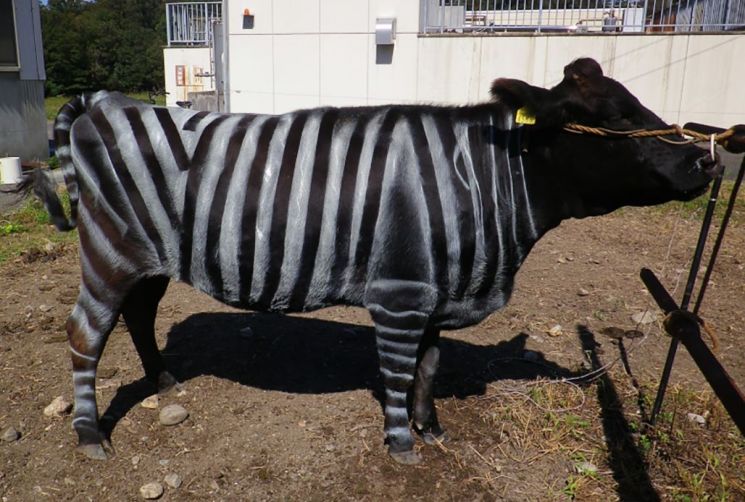 Japanese researchers painted black cows with stripes similar to those of zebras, resulting in a 50% reduction in the number of mosquitoes and horseflies landing on them. Research report by Japanese researchers in the journal PLOS ONE
On September 18 (local time), the 35th Ig Nobel Prize ceremony was held at Boston University in the United States, announcing winners in over ten categories. The Biology Prize went to researchers from Japan's National Agriculture and Food Research Organization. Their winning topic was none other than "the effect of painting cows with zebra stripes in reducing blood-sucking insects." Inspired by previous studies showing that zebra stripes repel biting flies, the researchers conducted experiments by painting white stripes on black-haired cows.
As a result, cows painted with stripes had less than half the number of flies and horseflies on their bodies compared to regular cows, and behaviors such as head shaking or foot stomping to chase away flies also decreased by about 25%. This effect is expected not only to reduce stress in cows but also to contribute to disease prevention by decreasing the use of insecticides. However, a limitation is that the paint currently used fades within a few days, so developing a technology that can maintain the effect long-term remains a challenge. This research was jointly conducted by the Aichi Prefectural Agricultural Research Center and Kyoto University from 2017 to 2018, and the same effects were confirmed in regional farm experiments in Yamagata and Iwate Prefectures.
 A study that found weight loss effects in mice after adding Teflon powder, used in cooking utensils, to food won the Ig Nobel Prize. Photo to aid understanding of the article. Photo by Pexels
Painting Black Cows Like Zebras Halves the Number of Mosquitoes and Horseflies
According to a broadcast by NHK Japan on the 19th, the specific experimental process was as follows. First, black-haired cows were divided into three groups: ▲ untreated, ▲ painted with white and black stripes like a zebra using white paint, and ▲ painted only with black paint instead of white. The three cows were lined up side by side and left for 30 minutes while researchers observed the number of flies and horseflies landing on them as well as the number of times the cows exhibited behaviors such as shaking their heads or tails to chase away insects.
The results showed that cows with no paint had an average of 129 blood-sucking insects on them. Cows painted only with black paint had an average of 112 insects. Cows painted with black and white stripes had an average of 56 insects, less than half. The number of insect-chasing behaviors per 30 minutes also decreased by about 25%, with unpainted cows averaging 53 times, black-painted cows 54 times, and striped cows 40 times.
Tomotaka Kojima, the lead researcher, told NHK after hearing about the award, "The starting point for this research was a request from farmers for insect control measures," adding, "I hope that someday a method that is both easy to apply and long-lasting will be developed." This marks the 19th consecutive year that a Japanese national has won an Ig Nobel Prize.
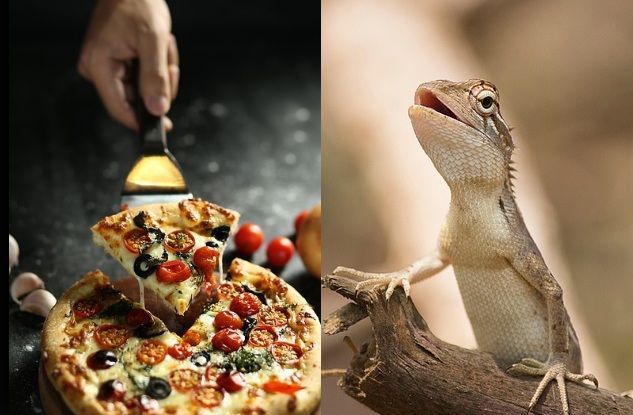 A study revealing that the rainbow lizard of Togo extremely prefers pizza with four kinds of cheese despite being given a choice has won the Ig Nobel Prize. Photo image to aid understanding of the article.
Feeding Mice Zero-Calorie Teflon Powder Leads to Weight Loss
The Chemistry Prize was awarded to a team from Rutgers University who proposed the idea of mixing a calorie-free filler, commonly known as Teflon powder (PTFE, polytetrafluoroethylene), into food to suppress hunger. Mice that consumed food containing 25% PTFE for 90 days experienced weight loss and showed no signs of toxicity. The researchers obtained a patent (U.S. Patent No. 9924736B2) for using PTFE as an indigestible food additive to enhance satiety. However, they had to abandon the idea. The U.S. Food and Drug Administration (FDA) did not approve the use of PTFE as a food additive, and attempts at human clinical trials ended in failure.
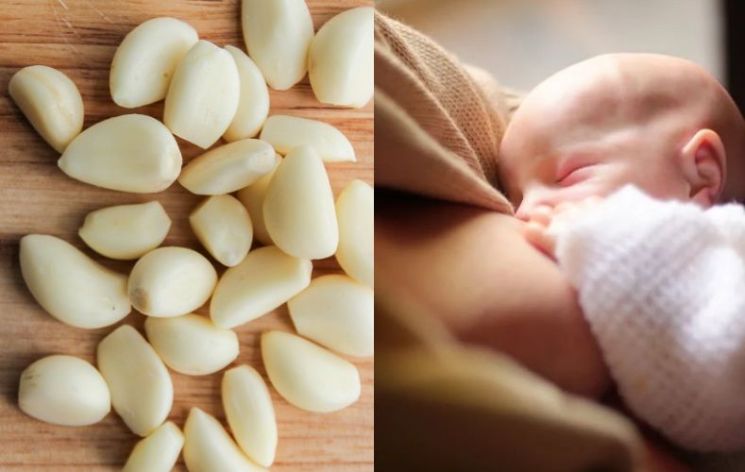 A study showing that babies breastfeed longer after their mothers eat garlic won the Ig Nobel Prize. Image to aid understanding of the article.
Lizard Prefers Four-Cheese Pizza... Babies Breastfeed Longer After Mothers Eat Garlic
The Peace Prize went to a team from Germany, the Netherlands, and the United Kingdom who demonstrated that a shot of vodka improves people's foreign language skills. The Aviation Prize was awarded to researchers who administered ethanol to Egyptian fruit bats. The bats moved more slowly and their echolocation (the method of using sound waves and echoes to determine location) was weakened, resembling the slurred speech of an intoxicated person. The team concluded that bats that binge on fermented fruit "may be at greater risk of colliding with obstacles."
The Pediatrics Prize was awarded to researchers who found that babies breastfeed longer after their mothers eat garlic, based on a study of how diet affects the taste of breast milk. Another research team received the Nutrition Prize for discovering that the rainbow lizard of Togo extremely prefers pizza with four kinds of cheese even when given a choice. The Psychology Prize went to researchers who found that people who are told they have above-average intelligence actually believe it and tend to boast.
© The Asia Business Daily(www.asiae.co.kr). All rights reserved.














