Innovation in Skin Research Expected Through Real-Time Measurement
Sungkyunkwan University announced on September 20 that the research team led by Professor Suyeon Cho from the Department of Chemical Engineering has developed an ultra-precise sensor interface utilizing a near-infrared (nIR)-based nanosensor array.
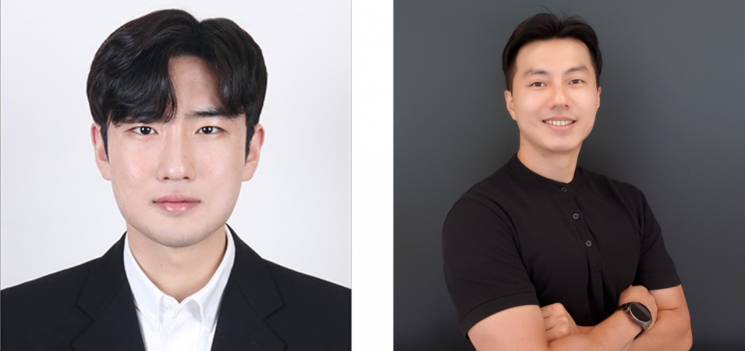 (From left) First author Youngwook Cho, research fellow at Sungkyunkwan University, corresponding author Suyeon Cho, professor. Sungkyunkwan University
This technology is drawing attention as it enables real-time, high-resolution spatiotemporal analysis of subtle cellular responses in skin cells at the single-cell level caused by everyday ultraviolet (UV) exposure.
Photoaging of the skin progresses gradually due to repeated exposure to ultraviolet rays, damaging cellular structure and function, which leads to wrinkles and reduced elasticity. Conventional research methods rely on staining and protein extraction, making continuous analysis difficult and causing damage to cells.
The research team developed a sensor by combining DNA and biocompatible substances with carbon nanomaterials that are thinner than one ten-thousandth the thickness of a human hair, allowing skin cells to grow stably while sensitively detecting subtle oxidative stress.
This sensor is in direct contact with skin cells, enabling the detection of even very small reactive oxygen species responses under everyday UV conditions, and also visualized the phenomenon of 'photo-adaptation,' where cells adapt to ultraviolet exposure.
In particular, the team applied antioxidants such as vitamin C, vitamin E, and plant extracts to track changes in intracellular oxidative stress in real time.
Through this, they demonstrated that it is possible to visually and quantitatively compare the oxidative stress-reducing effects of each ingredient, enabling much more precise and reliable analysis compared to conventional subjective or indirect evaluation methods.
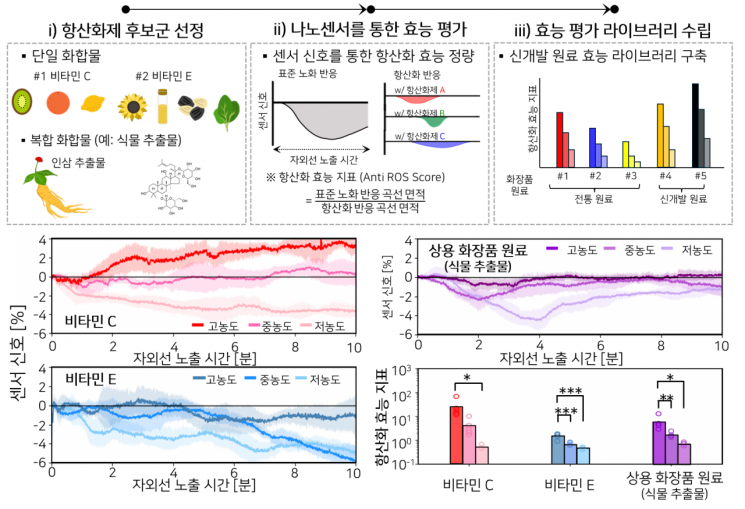 Roadmap for Utilization as a Quantitative Evaluation Platform for Cosmetic Efficacy and Actual Ingredient Measurement Results. Sungkyunkwan University
This research was supported by the Ministry of Health and Welfare's Innovative Growth Skin Health-Based Technology Development Project and the Ministry of Science and ICT's Excellent Young Researcher Program.
The results were published online on September 12 in Science Advances (IF 14.1), a world-renowned international academic journal, further establishing the team's global academic standing.
Professor Suyeon Cho emphasized, "This technology has opened a new paradigm for precisely analyzing both skin aging and antioxidant efficacy under conditions close to daily life," adding, "It will serve as an innovative analytical tool in the cosmetics and pharmaceutical industries."
© The Asia Business Daily(www.asiae.co.kr). All rights reserved.

![Clutching a Stolen Dior Bag, Saying "I Hate Being Poor but Real"... The Grotesque Con of a "Human Knockoff" [Slate]](https://cwcontent.asiae.co.kr/asiaresize/183/2026021902243444107_1771435474.jpg)
















