KDCA Stresses the Need for Prevention Through Improved Work Environments
A new study has found that frequent night and evening shifts, as well as prolonged consecutive work hours, increase the risk of sudden cardiac arrest. Experts point out that proactive prevention and management in the workplace are essential to protect heart health.

According to the "Longitudinal Study on the Causes and Risk Factors of Cardiac Arrest" released on September 18 by the Korea Disease Control and Prevention Agency and conducted by Professor Cha Kyungchul's team at Yonsei University Wonju Severance Hospital, conditions such as heart failure, myocardial infarction, arrhythmia, stroke, diabetes, and hypertension were identified as major risk factors for sudden cardiac arrest.
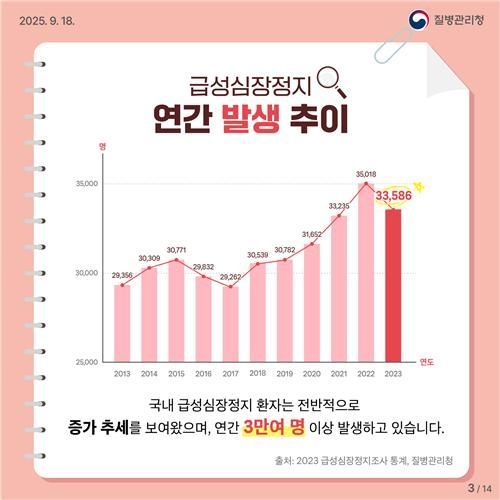
Sudden cardiac arrest is a medical emergency in which the heart abruptly stops functioning and blood circulation ceases. Without prompt intervention, it can quickly lead to sudden death. According to the agency, the number of sudden cardiac arrest cases in South Korea increased from 29,356 in 2013 to 33,586 in 2023, with more than 30,000 cases occurring annually.
The "adjusted odds ratio (Adjusted OR)," which indicates how much more likely people with certain conditions are to experience sudden cardiac arrest compared to those without, was 22.60 for heart failure (22.6 times higher), 8.55 for myocardial infarction, 2.79 for arrhythmia, 2.85 for stroke, 1.63 for diabetes, and 1.55 for hypertension.
Work patterns and hours were also linked to the risk of sudden cardiac arrest. Night and evening shifts, as well as excessive consecutive work, were found to increase this risk. Related international studies have shown that working more than 11 hours a day raises the risk of acute myocardial infarction by about 1.63 times compared to standard work hours (7 to 9 hours).
Acute myocardial infarction is known as one of the major risk factors for sudden cardiac arrest, and these findings suggest that long working hours can negatively impact heart health. Creating a healthy work environment and ensuring adequate rest are essential to prevent sudden cardiac arrest.
The Korea Disease Control and Prevention Agency recommends the following daily habits to prevent sudden cardiac arrest: quitting smoking, engaging in moderate to vigorous exercise at least once a week, getting sufficient sleep (6 to 8 hours a day), eating fruits and vegetables at least once a day, and reducing red meat consumption. In the workplace, it is important to avoid excessive consecutive work, minimize evening and night shifts, and ensure adequate rest and sleep after work to maintain healthy lifestyle habits.
Im Seungkwan, Commissioner of the Korea Disease Control and Prevention Agency, emphasized, "Sudden cardiac arrest can occur without warning, but improving lifestyle habits and work environments significantly increases the chances of prevention. Social attention and practical efforts are needed not only for individual health but also to create healthy work environments in the workplace."
© The Asia Business Daily(www.asiae.co.kr). All rights reserved.













