Youth and Family Settlement Policies Take Shape
Study Incentives, Youth Programs,
and Childcare Infrastructure Form a "Three-Pronged Approach"
"So That No One Leaves, So That Everyone Wants to Stay" - Andong, long classified as a high-risk area for regional extinction, is reaching a turning point in its population policy.
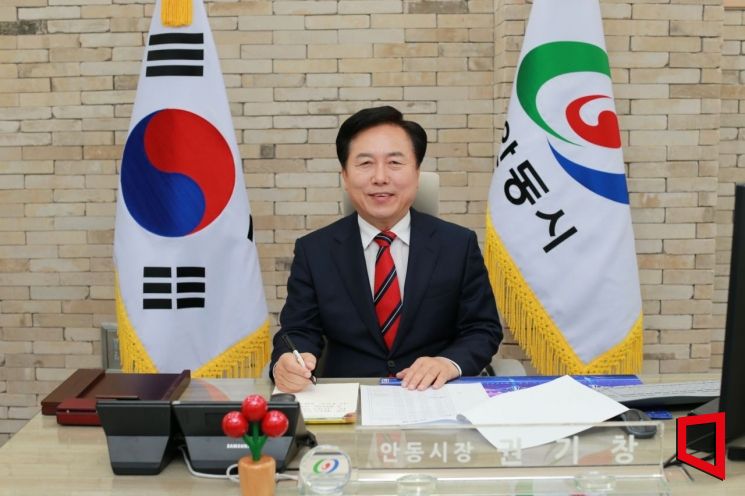
This shift is driven by the success of a "settlement ecosystem" strategy targeting young people and families, including university study incentives, youth-tailored policies, and expanded birth and childcare infrastructure. Andong is now declaring its transformation from simply trying to retain its population to becoming a city where people choose to stay.
◆ Study Incentives Aim to Retain Students
The university study incentive program introduced by Andong last year is a prime example of this success. The city provides 1 million won per academic year to students enrolled at the three local universities-Andong National University, Catholic Sangji College, and Andong Science College-and offers additional incentives to students who move their residence registration into the city.
The impact of this policy is evident in the numbers. In April 2025 alone, the population increased by 1,080 compared to the previous month, with the largest gains seen among those aged 18 to 22, the typical university age group. The rate of students moving their residence to neighborhoods near the universities, such as Yongsang-dong, Taehwa-dong, and Ok-dong, has shown a clear upward trend, bringing renewed vitality to previously stagnant commercial districts.
A university official commented, "With reduced tuition and living expenses, there is less reason for students to keep their official address elsewhere. Since the policy was introduced, the number of students actually considering moving their residence has noticeably increased." This is why local governments concerned about declining youth populations are paying close attention to the "Andong model."
◆ 11 Billion Won Invested in 40 Youth Policies... Tangible Results Grow
To address the diverse needs of young people, Andong is investing 11 billion won this year alone to implement 40 different youth policies. These policies cover six key areas: employment, housing, welfare, education, culture, and civic participation.
Practical programs such as suit rentals for job interviews, youth cultural spaces, and mental health counseling have been particularly well received. With the Youth Policy Committee participating regularly in both the design and implementation of these policies, demand-driven policy planning has become possible, resulting in a more than 20% increase in youth participation compared to the previous year.
A city official emphasized, "We focused on what young people actually need and improved policy accessibility through collaboration among various departments. By incorporating youth opinions into policy design, satisfaction has increased."
◆ Expanding Birth and Childcare Infrastructure... Settlement Ecosystem in Full Swing
Strengthening birth and childcare infrastructure is essential for the "settlement" of the youth population.
Andong is currently working to establish a public postpartum care center and is also developing "Milky Way Land" (tentative name), a complex facility for birth and childcare, as well as the Gyeongbuk Ae Maru All-Care Center. The goal is to create a one-stop integrated system that supports the entire process from marriage to pregnancy, childbirth, and childcare in a single space.
Additionally, the city has confirmed the supply of 100 units of public rental housing tailored for young people and newlyweds.
This is a strategic move to lay the groundwork for long-term settlement, going beyond simply providing housing. A city official explained, "We designed the system to ensure that young people and families can stay stably by simultaneously securing housing, childcare, and child-rearing infrastructure. The housing demand survey has also shown positive responses."
◆ Expert Assessment: "From In-Migration to Settlement-Sustainability Is Key"
Experts positively assess Andong's achievements but emphasize the importance of policy sustainability and long-term settlement strategies.
A local community expert noted, "So far, the focus has been on attracting new residents, but the next step must be ensuring they settle down. After graduation, there must be support for jobs, culture, and housing."
Another expert advised, "Rather than relying on short-term incentives like childbirth bonuses, improvements in the childcare environment, prevention of career breaks for women, and housing stability must be pursued together to truly boost the birth rate."
◆ Nationwide Impact... The Potential of the "Andong Model"
Andong's case offers important lessons for other local governments. It could serve as a concrete model for building settlement ecosystems in rural, agricultural, and fishing communities across the country grappling with youth outflow and low birth rates.
If Andong, facing the existential crisis of regional extinction, succeeds in transforming into a "city where people stay," it could be seen not just as a local phenomenon but as a breakthrough at the national level.
◆ "So That No One Leaves, So That Everyone Stays" - Andong's Ultimate Goal
A city official stated, "Our top priority is to ensure that young people and families do not leave the region. By providing integrated support across education, housing, childcare, and employment throughout the entire life cycle, we aim to truly reverse the trend of population decline."
Once known as the epitome of a "city people leave," Andong is now drawing attention as it strives to reinvent itself as a "city where people stay." Experts predict, "If policy sustainability and structural improvements are maintained, Andong will become a model case for responding to regional extinction."
"The focus on Andong's transformation goes beyond simple population changes. The key is whether a sustainable population structure can take root, moving from in-migration to settlement and eventually to generational succession. Andong's experiment will serve as a litmus test for the future of Korea's regional extinction response policies."
© The Asia Business Daily(www.asiae.co.kr). All rights reserved.












