Even With a 15% Tariff, Profit Sharing Remains Unfavorable
Experts Warn: "Rushing to Sign Is Risky"
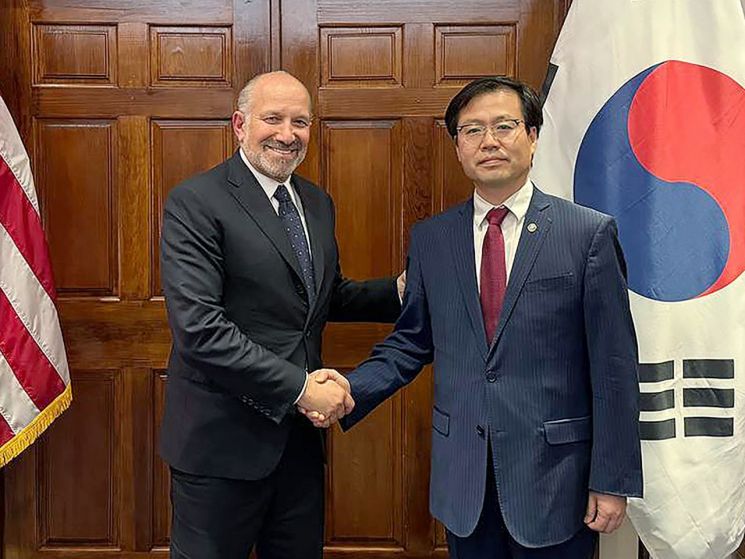
The government has entered into careful calculations regarding the signing of a mutual tariff agreement with the United States. The United States has proposed that if South Korea participates in investments and guarantees worth $350 billion (approximately 480 trillion won) within the United States, it will lower the tariff rate from 25% to 15%. On the surface, tariff relief appears beneficial, but considering the investment burden and uncertainty of recovery, it is not a straightforward decision to simply accept the offer. For this reason, some within and outside the government argue that there is no need to rush into signing under unfavorable terms, even if it means bearing the immediate burden of higher tariffs.
According to industry sources on September 16, if the 25% tariff becomes a reality, the shock to South Korea’s industries is expected to be significant. In particular, major industries such as automobiles, steel, and semiconductors would see a sharp decline in export price competitiveness.
In the case of automobiles, since Japan has already secured a 15% agreement, if only South Korea faces a 25% tariff, a decrease in local market sales is inevitable. Steel and semiconductors would also face increased cost burdens, weakening profitability. The Bank of Korea has analyzed that this could result in an annual loss of 7 trillion to 9 trillion won in gross domestic product (GDP) for the domestic economy. An automotive industry official expressed concern, stating, "A 25% tariff is virtually a measure that restricts market access."
However, the conditions set by the United States are by no means light. In the case of cash investments, there is direct pressure on the national budget and corporate finances. Even if an agreement is reached through a guarantee structure, if the investment cannot be recovered, the burden will ultimately be passed on to taxpayers.
Furthermore, there are concerns that the United States’ insistence on prioritizing its own interests in profit distribution could solidify a disadvantageous structure for South Korea. Currently, the United States is demanding a structure in which, before investment recovery, profits are split equally between South Korea and the United States, but after recovery, the United States takes 90% of the profits and South Korea receives only 10%. This is the same condition as Japan. The South Korean government has stated that such terms are "an unfavorable structure in which the United States monopolizes most of the investment profits" and that it is difficult to accept them.
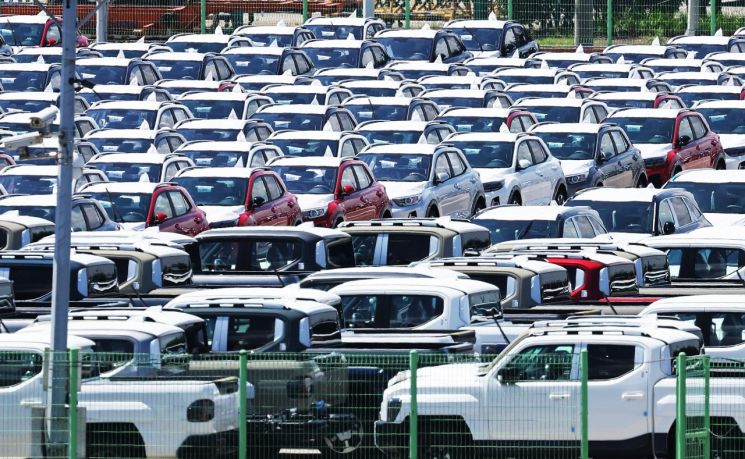
The best scenario for the South Korean government would be to secure a 15% tariff rate while minimizing investment requirements or designing a flexible guarantee mechanism. However, since negotiations are not easy, there is a growing sentiment that a backup plan should be considered. As a result, some argue that it may be better to accept the 25% tariff while the government implements industrial support measures to mitigate the impact. Rather than forcibly injecting $350 billion as the United States demands, it may be preferable to use the same amount to support domestic companies.
The logic is that supporting corporate research and development (R&D) and facility investments through subsidies, tax benefits, and low-interest loans could actually strengthen mid- to long-term competitiveness. As this argument gains traction, there are moves within the government to consider a more flexible approach than before. A government official stated, "Since negotiations are ongoing, it is difficult to comment in detail," but added, "We are prioritizing the national interest and keeping all options open for review."
Globally renowned economist Gene Grossman, a professor of international economics at Princeton University, also supports this view. In an interview with Asia Economy, he stated, "Rhetorical concessions to placate President Donald Trump may be possible, but actually meeting his demands should not be done," and emphasized, "Placing foreign investment under his control is risky for both countries. Above all, the United States is currently neither a friendly market nor a reliable partner. It is desirable to strengthen cooperation with countries that respect international norms, such as Europe, Japan, and Canada."
Dean Baker, senior economist at the Center for Economic and Policy Research (CEPR), also stated on the research center’s website that if the mutual tariff, reduced to 15% by the United States, is raised back to 25%, South Korea’s exports to the United States would decline by $12.5 billion, which is 0.7% of South Korea’s GDP. He questioned why South Korea should pay $350 billion to the United States to maintain this arrangement.
However, choosing to endure the 25% tariff comes with another risk: the possibility that the United States could raise tariffs even higher than 25% out of displeasure, using what is known as a "retaliatory penalty" card. In fact, the Trump administration previously imposed a 25% tariff on most imports from Canada and Mexico without warning when those countries failed to meet U.S. expectations, and when India continued to import Russian oil, the United States imposed punitive tariffs, bringing the total tariff on Indian goods to 50%, restricting market access.
If such measures are implemented, the shock to the South Korean economy could be even greater than it is now. An industry official stated, "The greater risk than immediately facing a 25% tariff is the uncertainty," adding, "The key is how well the government can establish safeguards during negotiations."
© The Asia Business Daily(www.asiae.co.kr). All rights reserved.
![A Woman with 50 Million Won Debt Clutches a Stolen Dior Bag and Jumps... A Monster Is Born [Slate]](https://cwcontent.asiae.co.kr/asiaresize/183/2026021902243444107_1771435474.jpg)

















