Even Adjusted for Inflation, Gold Surpasses 1980 Record
"Gold Reflects Global Uncertainty"
Bloomberg News reported on September 12 (local time) that the recent surge in gold prices has surpassed the all-time high from 45 years ago, even when adjusted for inflation.
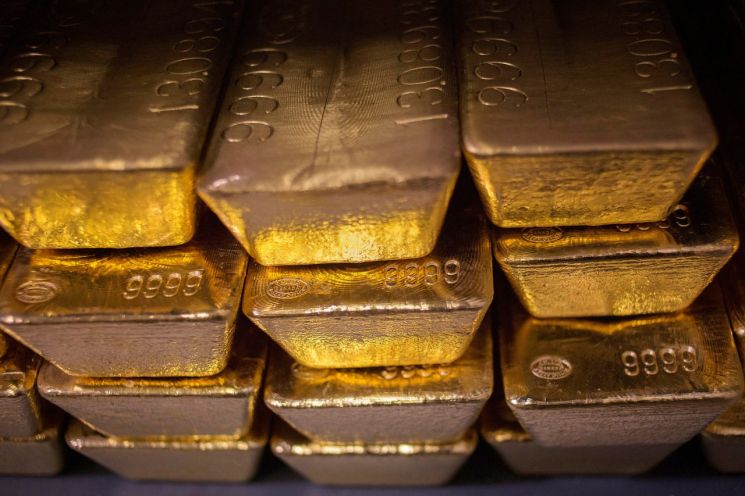
On September 9, the spot price of gold reached an all-time high, trading at one point at $3,674.27 per ounce on the London Bullion Market Association (LBMA). According to Bloomberg News, the spot price of gold has risen by about 5% just this month and has climbed nearly 40% since the beginning of the year. This year alone, it has broken its all-time high more than 30 times.
Bloomberg News further reported that the rally, which began at the end of last month, has also surpassed the previous inflation-adjusted record. The previous record was set on January 21, 1980, at $850, which, adjusted for today’s prices, would be about $3,590. Bloomberg News pointed out, "Gold’s status as a centuries-old hedge against rising prices and currency depreciation has only been reinforced." Robert Mullin, portfolio manager at Marathon Resource Advisors, said, "Gold is a unique asset that has historically played this role for hundreds of years," adding, "Asset managers are entering a period of concern about the scale of fiscal deficit spending and doubt whether central banks truly prioritize and are committed to fighting inflation."
The rally in gold prices continues as President Donald Trump of the United States launches a global trade war, implements tax cuts, and attempts unprecedented control over the Federal Reserve, the U.S. central bank. Amid concerns about a slowdown in U.S. employment and a possible recession, there is growing speculation that the Federal Reserve will cut interest rates.

Bloomberg News noted that a similar situation unfolded in the early 1970s. At that time, former President Richard Nixon pressured the Federal Reserve to keep interest rates low, causing the value of the dollar to fall. Following the oil shock, the price of gold peaked at $850 per ounce in January 1980. This period was marked by a sharp decline in currency value, soaring inflation, and the onset of a recession, with the United States struggling economically. In addition, former President Jimmy Carter froze Iranian assets in response to the Iran hostage crisis at the U.S. embassy, which led gold prices to double in two months, eventually reaching $850.
Jim Rogers, co-founder of the Quantum Fund and a renowned commodities investor, commented on the situation at the time, saying, "Every country was piling up massive debts, printing money, and devaluing their currencies," and added, "I could see that gold and silver were the way to protect myself in such times."
However, Bloomberg News pointed out that the recent rise is much more gradual than the sharp spike and drop of 1980. This is because investors now have greater access to the gold market, the market is more liquid, and the investor base is broader. Carmen Reinhart, former chief economist at the World Bank, said, "Gold not only reflects the renewed realization that inflation remains a problem, but also mirrors global uncertainty," adding, "Gold has always played an important role in times of uncertainty."
© The Asia Business Daily(www.asiae.co.kr). All rights reserved.













