Intensified High-Level U.S.-China Contacts
Summit Likely Before Tariff Truce Ends
Key Issues: Tariff Talks, Fentanyl, TikTok
Coordination Expected on Unresolved Disputes
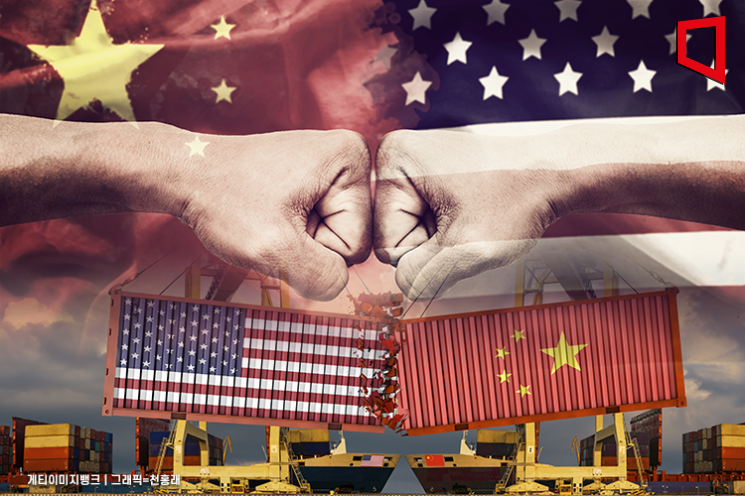
With a series of high-level meetings between U.S. and Chinese officials, there is growing speculation that U.S. President Donald Trump and Chinese President Xi Jinping could hold a summit as early as next month. As trade and security tensions between the two countries continue even after China’s Victory Day celebrations, attention is focused on whether this summit could serve as an opportunity to resolve bilateral conflicts. Notably, as the likelihood of the summit taking place before the “tariff truce” ends on November 10 increases, it appears that the main agenda will center around trade negotiations.
The South China Morning Post (SCMP) reported on the 11th that "senior officials from the United States and China have held a series of contacts this week, laying the groundwork for President Trump’s visit to China." The report added that the visit is likely to take place around early November, coinciding with the Asia-Pacific Economic Cooperation (APEC) summit to be held in South Korea.
The Washington Post (WP) also reported, "With high-level diplomacy continuing this week between U.S. and Chinese officials, expectations are rising that President Trump could meet President Xi as early as next month."
According to the Chinese Ministry of Foreign Affairs, Wang Yi, Director of the Communist Party Central Foreign Affairs Office and Foreign Minister, held a phone call with U.S. Secretary of State Marco Rubio on September 10. The Chinese Ministry of Foreign Affairs stated, "Both foreign ministers assessed that the call was timely, necessary, and effective." This contact came immediately after President Xi showcased China’s global leadership ambitions with a large-scale military parade in Beijing.
This phone call between the two officials took place about two months after their first face-to-face meeting at the ASEAN (Association of Southeast Asian Nations) Foreign Ministers’ Meeting in Malaysia at the end of July. Prior to this, on September 9, there was also communication through military channels between the U.S. and China. The Chinese Ministry of National Defense announced that Dong Jun, China’s Minister of National Defense, and U.S. Secretary of Defense Pete Hegseth held their first video call on the evening of the 9th.
There is speculation that these ongoing high-level diplomatic and military dialogues are preparatory steps ahead of the U.S.-China summit. Ryan Fedasiuk, a researcher at the American Enterprise Institute (AEI) and former State Department advisor on China, analyzed, "This meeting is an essential preliminary step for a summit at the end of this year," adding, "Further coordination is needed on unresolved issues such as tariffs, fentanyl, and TikTok ownership."
If the summit between the two leaders takes place, it will be the first meeting since President Joe Biden and President Xi met at the APEC summit in San Francisco in November 2023, nearly two years ago. For President Trump, now in his second term, it will be his first reunion with President Xi in about six years, and the first since the U.S.-China tariff war began in earnest.
The upcoming summit is expected to focus on negotiations over additional tariffs, which have been suspended until November. There is also speculation that China may use its rare earth supply chain as leverage to pressure the United States. In response to the U.S.’s imposition of high tariffs, China has not only retaliated with counter-tariffs but also restricted exports of rare metals essential to the U.S. defense industry. Although some regulations were eased after the tariff truce agreement in June, exports for military use remain strictly controlled.
Qian Qi, a professor of international relations at Tsinghua University, stated, "If the United States takes further measures, China could respond by tightening export controls on rare metals," adding, "Both sides have already exhausted most of their unilateral means of pressuring each other."
Wu Xinbo, director of the Center for American Studies at Fudan University in Shanghai, commented, "Rare metals have been the most effective card China has played against the United States this year," and noted, "This is one of the areas President Trump is most wary of."
The South China Sea and Taiwan issues are also cited as the biggest sources of conflict between the United States and China. China defines Taiwan as "part of China" that must be unified, even by force if necessary. The United States does not officially recognize Taiwan's independence, but it opposes military invasion and continues to supply Taiwan with defensive weapons, drawing strong objections from China. Ma Bo, a professor at the Graduate School of International Relations at Nanjing University, predicted, "Maritime security in the South China Sea will become an important topic in U.S.-China dialogue."
© The Asia Business Daily(www.asiae.co.kr). All rights reserved.












