Developed by Professors Chun Geuna and Kim Hwiyeong of Severance, and Professor Kim Bungnyeon of Seoul National University
Early Detection in Daily Life Expected Before Physician Diagnosis
A domestic research team has developed an artificial intelligence (AI) model that allows parents to record the voices of infants and toddlers and check for autism spectrum disorder at home using a smartphone.
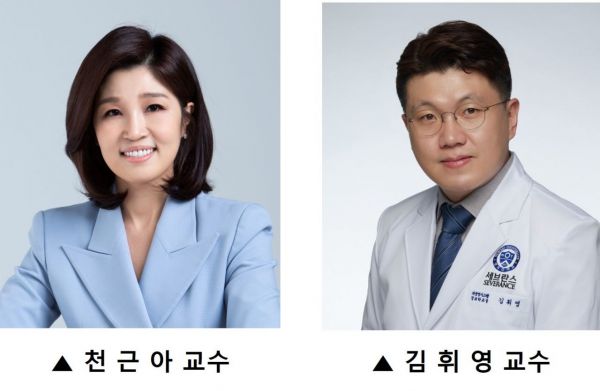
Severance Hospital announced on September 10 that a research team led by Professor Chun Geuna from the Department of Child Psychiatry, Professor Kim Hwiyeong from the Department of Neurosurgery, and Professor Kim Bungnyeon from Seoul National University Hospital developed this AI model based on data from 1,242 infants and toddlers aged 18 to 48 months who visited nine hospitals in South Korea.
Autism spectrum disorder is a developmental disorder characterized by difficulties in communication with others and restricted, repetitive behaviors. If symptoms are identified and treatment begins early, language development and social interaction skills can be positively influenced to the greatest extent possible. However, if diagnosis and treatment are delayed, secondary issues such as language delays and learning difficulties may arise. Many parents find it difficult to notice symptoms in their young children, which often leads to delays in seeking medical attention.
According to the National Autism Surveillance Study (NASS) published by the U.S. Centers for Disease Control and Prevention (CDC) in 2020, nearly one in three children with autism spectrum disorder are not diagnosed until after the age of eight.
This AI model, developed for use on smartphones, presents tasks such as ▲ prompting a response when the child's name is called ▲ imitating parental behavior ▲ playing with a ball ▲ engaging in pretend play with toys ▲ requesting help, and so on, with the number of tasks varying by age. Children aged 18 to 23 months are given four tasks, those up to 35 months are given five tasks, and those up to 48 months are given six tasks.
When the recorded voice of the child is input, the AI conducts an integrated analysis along with the results of previously completed autism screening tests by the parents, such as M-CHAT (Modified Checklist for Autism in Toddlers), SCQ (Social Communication Questionnaire), and SRS-2 (Social Responsiveness Scale). While traditional tests have an accuracy rate of about 70%, the research team explained that using the child's voice data-which includes tone, rhythm, and vocal patterns from real-life interactions-enables multidimensional analysis and thus improves accuracy.
The AI model developed by the research team distinguished between typically developing children and those at risk for autism with over 94% accuracy, and differentiated between high-risk groups and actual autism cases with 85% accuracy. The results also showed an 80% concordance with ADOS-2 (Autism Diagnostic Observation Schedule), the most widely used international diagnostic test.
Professor Chun Geuna, the lead researcher, stated, "In actual clinical settings, many children come for their first visit only after their autism spectrum disorder has become more severe. With this newly developed AI, early diagnosis can be made at home, potentially leading to much better treatment outcomes." Professor Kim Hwiyeong added, "By performing the standardized voice tasks provided by the AI, anyone can easily check for autism spectrum disorder. This is a digital screening tool that parents can trust and use before receiving a specialist's diagnosis."
This study, supported by the National Center for Mental Health's Developmental Disabilities Digital Therapeutics R&D project, was published in the latest issue of the world-renowned journal 'npj Digital Medicine.'
© The Asia Business Daily(www.asiae.co.kr). All rights reserved.
![From Hostess to Organ Seller to High Society... The Grotesque Scam of a "Human Counterfeit" Shaking the Korean Psyche [Slate]](https://cwcontent.asiae.co.kr/asiaresize/183/2026021902243444107_1771435474.jpg)
















