Nipah Virus Infection Newly Designated as a Class 1 Statutory Infectious Disease and Quarantinable Disease
Immediate Reporting Urged for Fever or Headache After Visiting India or Bangladesh
The city of Ulsan announced that, starting September 8, Nipah Virus Infection has been newly designated and announced as a Class 1 statutory infectious disease and a quarantinable disease, and will therefore strengthen its surveillance system.
Nipah Virus Infection can affect both humans and animals, as it is caused by the Nipah virus.
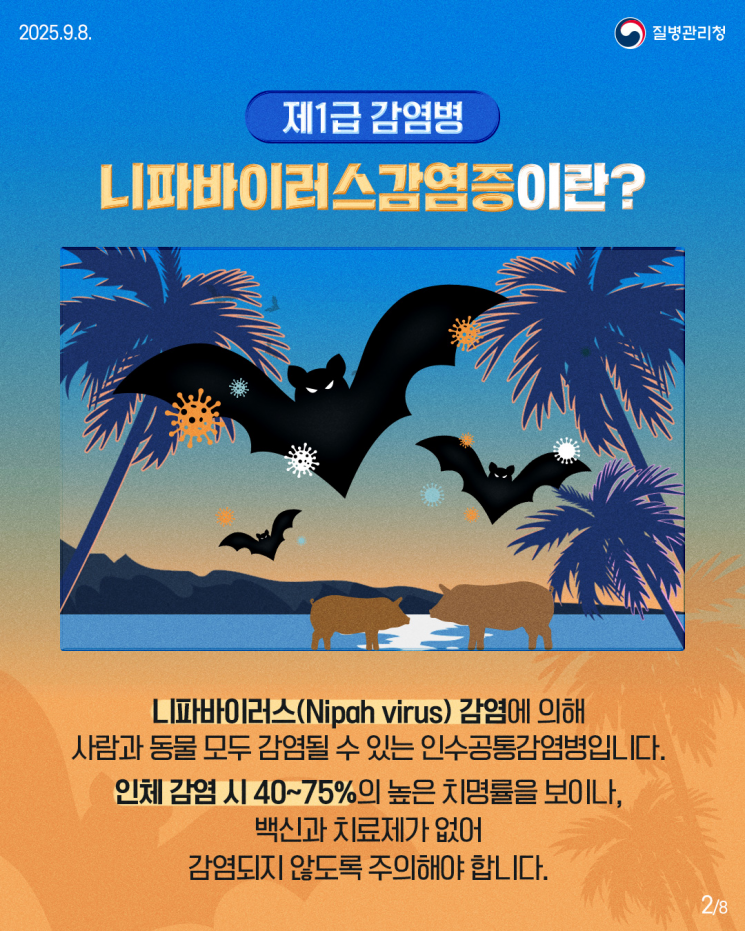
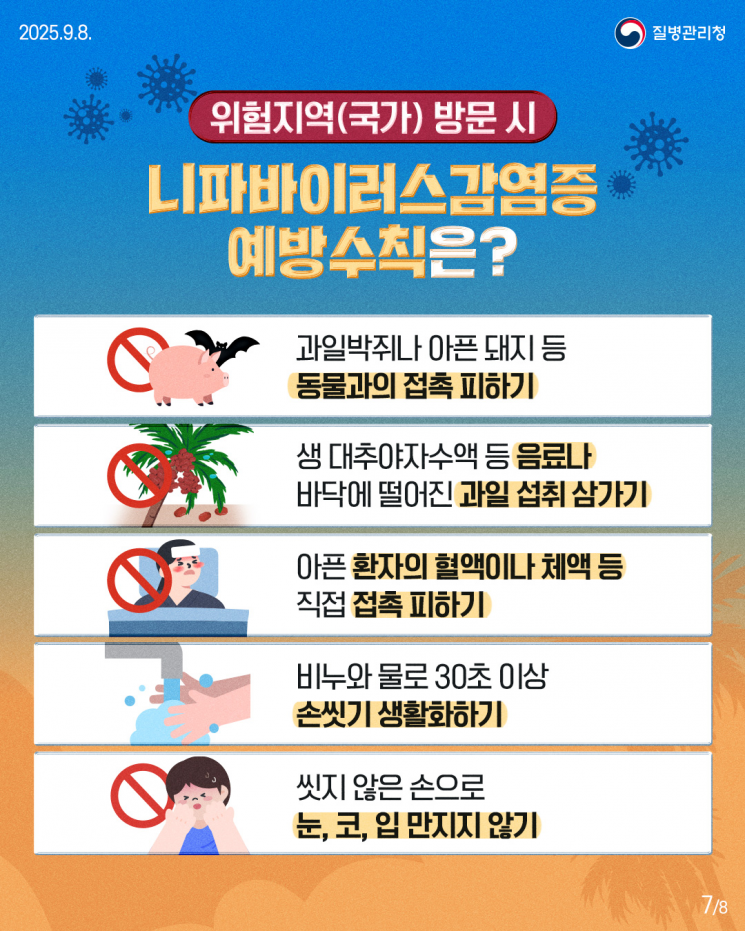
It is known that the routes of infection are diverse, including contact with infected animals (such as fruit bats and pigs), consumption of contaminated food (such as date palm sap), and human-to-human transmission through close contact with the bodily fluids of infected patients.
Although sporadic cases have occurred in Asian countries, special caution is required when visiting India and Bangladesh, as recent cases have been reported in these countries.
The main affected countries are Malaysia, Singapore, the Philippines, India, and Bangladesh. In India, there were 2 cases (2 deaths) in 2024 and 4 cases (2 deaths) in 2025. In Bangladesh, there were 5 cases (5 deaths) in 2024 and 3 cases (3 deaths) in 2025.
Nipah Virus Infection has an average incubation period of 4 to 14 days before symptoms appear. Initial symptoms include fever, headache, and muscle pain, which can progress to neurological symptoms such as dizziness, drowsiness, and decreased consciousness, and may result in death.
In particular, the fatality rate is extremely high at 40 to 75 percent. Since there is no preventive vaccine or specific treatment, only symptomatic care is possible, making early detection and isolation essential.
Accordingly, the Korea Disease Control and Prevention Agency has designated India and Bangladesh, where cases continue to be reported, as quarantine management areas. In addition, travelers entering Korea who exhibit symptoms such as fever are required to report their health status to quarantine officers via the pre-entry quarantine information system (Q-CODE) or a health declaration form.
The city of Ulsan is also instructing medical institutions to immediately report any suspected cases to the local public health center. The city will keep its emergency infectious disease response network in operation at all times and will strengthen its surveillance and response system by operating an epidemiological investigation team consisting of six groups and 58 personnel.
An official from the city of Ulsan stated, "We urge citizens who have visited high-risk countries such as India and Bangladesh to refrain from visiting medical institutions if they develop symptoms such as fever or headache within two weeks of returning, and to immediately contact the Korea Disease Control and Prevention Agency call center or the local public health center."
© The Asia Business Daily(www.asiae.co.kr). All rights reserved.













