Emergency Measures Taken for Road and Slope Damage in Maehwa and Giseong Due to Heavy Rain
Average Rainfall of 60mm Provides Much-Needed Relief from Drought
Uljin County in North Gyeongsang Province (Governor Son Byungbok) announced that, although welcome rain fell during the drought on September 4, emergency equipment was deployed to complete restoration work after heavy rainfall caused concentrated damage in areas such as Maehwa-myeon and Giseong-myeon.
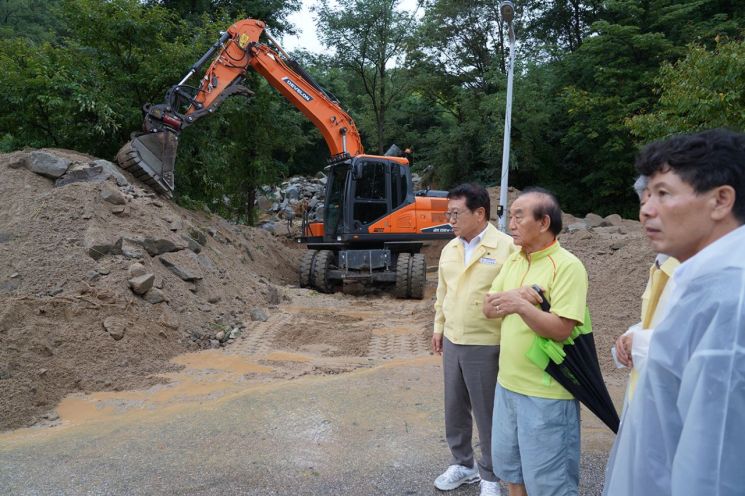
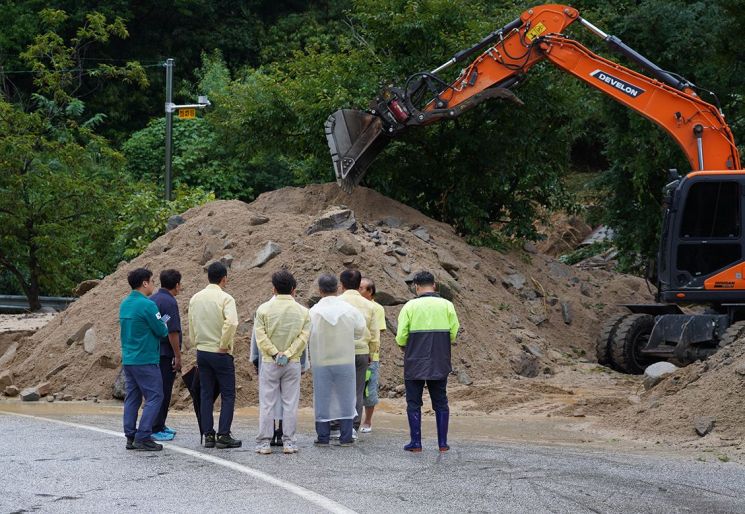
Due to the heavy rain that day, emergency restoration work was carried out for six cases of damage to public facilities and four cases affecting private property. The public facility damage included: slope collapse on Bangyul-ri road, soil loss at the entrance to Gulsan-ri Gulguji, road collapse at Sinheung-ri, soil runoff in Mangyang-ri, a house (vacant) on Mangyang-ro, and the collapse of the retention pond at Marine Country Club golf course.
Restoration work is also planned for rice paddies and orchards that were flooded.
Governor Son Byungbok personally visited the affected sites that day, directing administrative resources to ensure rapid restoration and prevent further damage, and promised prompt support and safety for the affected residents.
On September 1, the county convened an emergency response meeting to address drought concerns, reviewing each department’s drought response system and making efforts to overcome the crisis.
This rainfall brought an average of 60mm of much-needed rain to Uljin County, which had been suffering from drought throughout the summer, providing significant relief. From 8 a.m. to 4 p.m. on September 4, cumulative rainfall measured 176mm in Maehwa-myeon, 153mm in Giseong-myeon, 68mm in Geunnam-myeon, 56mm in Geumgangsong-myeon, 50mm in Hupo-myeon, 47mm in Uljin-eup, and 45mm in Pyeonghae-eup. The average cumulative rainfall across all towns and townships was 60mm, and all heavy rain advisories for the Uljin area were lifted as of 4 p.m. that day.
The water levels at major intake stations also recovered quickly. The Uljin intake station, the main water source, rose from 3.0m to 5.24m; Pyeonghae intake station increased from 6.9m to 7.28m; and Onjeong intake station from 4.15m to 4.18m, all approaching normal levels. With most intake operations returning to normal, this rainfall provided significant drought relief.
Farmers who had been struggling with the drought could not hide their relief. Mr. Kim, a farmer in Giseong-myeon, said, "Field crops are especially affected by rainfall. Thanks to this rain, the drought in the rice paddies has been alleviated and the field crops that were dying are reviving."
Previously, in an effort to minimize drought damage, Uljin County had supplied water to rice paddies using water trucks and provided pumps and hoses to farmers, working together with them to overcome the crisis.
Governor Son Byungbok stated, "Due to climate change, natural disasters such as droughts and heavy rains are becoming more frequent and less predictable. We plan to promote water conservation as a way of life and establish permanent drought countermeasures to prepare for future drought crises, which are likely to recur."
He added, "We will restore essential facilities such as roads, farmland, and housing as quickly as possible to minimize inconvenience, and we will prioritize the safety of county residents while thoroughly responding to prevent additional damage."
© The Asia Business Daily(www.asiae.co.kr). All rights reserved.
![Clutching a Stolen Dior Bag, Saying "I Hate Being Poor but Real"... The Grotesque Con of a "Human Knockoff" [Slate]](https://cwcontent.asiae.co.kr/asiaresize/183/2026021902243444107_1771435474.jpg)

















