Losses from 2,892 No-Show Scam Cases Total 41.4 Billion Won
Arrest Rate Remains at Only 0.7%
Losses from 'no-show scams,' in which fraudsters impersonate public institutions or corporations, have exceeded 40 billion won. However, the arrest rate has been revealed to be less than 1%.
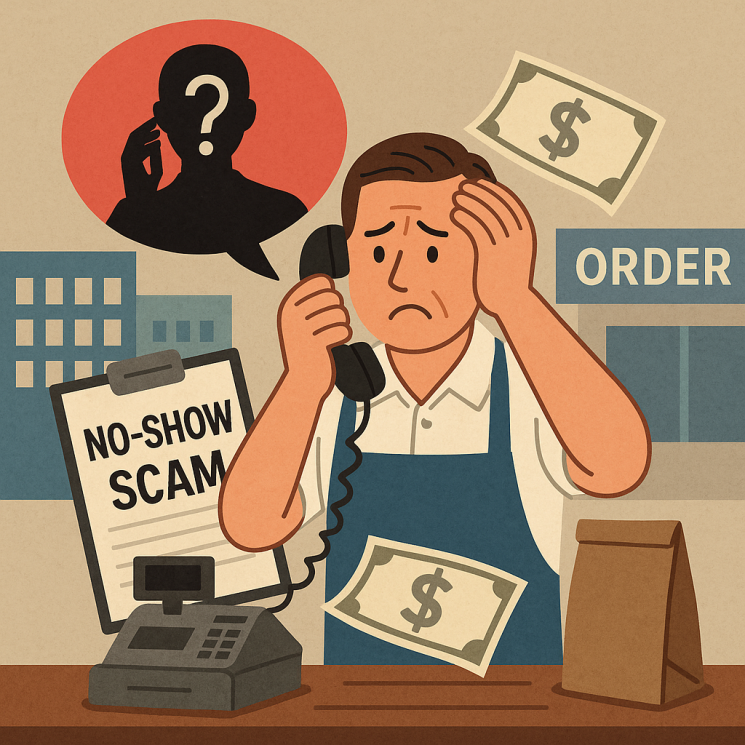
According to the 'Regional Status of No-Show Scams' submitted by the National Police Agency to Assemblyman Park Junghyun of the National Assembly Public Administration and Security Committee on September 5, a total of 2,892 no-show scam cases occurred nationwide between January and July this year. The total damages amounted to 41.4 billion won, with most of the losses concentrated among small business owners and self-employed individuals.
No-show scams are a new type of fraud in which perpetrators impersonate well-known public institutions or large corporations, place large orders, demand advance payment or proxy purchases, and then fail to appear at the site.
In May, a restaurant owner in Suwon received a call from someone claiming to be an employee of a famous singer's agency and purchased 30 million won worth of premium wine in advance, only to suffer losses when no one showed up on the reservation day. In the same month, in Cheonan, South Chungcheong Province, a scammer impersonating a secretary of the Democratic Party of Korea claimed to be reserving a gathering for a minister and a member of the National Assembly, demanded expensive wine, and caused some restaurants to suffer financial losses in the range of 10 million won.
By region, Gyeonggi Province suffered the largest losses with 577 cases (7.9 billion won), followed by North Gyeongsang Province with 284 cases (3.8 billion won), Seoul with 281 cases (3.3 billion won), and North Jeolla Province with 216 cases (3.5 billion won).
Although there were 2,892 phone order scam cases nationwide, only 22 cases (involving 81 suspects), or about 0.7% of the total, resulted in arrests. In particular, not a single case was solved in Sejong, Seoul, Busan, Ulsan, Northern Gyeonggi Province, North Gyeongsang Province, or Jeju.
Assemblyman Park stressed, "Phone order scams are vicious crimes that exploit the names of public institutions and corporations to deceive small business owners. The police must pay more attention to eradicating these heinous crimes that harm ordinary people and to raising the arrest rate, which currently remains at only 0.7%."
© The Asia Business Daily(www.asiae.co.kr). All rights reserved.












