Forum on Improving the Regional Special Account
Incentivizing Regional Self-Reliance
Strengthening Both Authority and Responsibility
As the Lee Jaemyung administration has significantly expanded the scale of discretionary funding within the Special Account for Regional Balanced Development (Regional Special Account), there have been calls for institutional reforms to ensure genuine autonomy for local governments.
On September 3, Lim Ija, Chairperson of the National Assembly's Strategy and Finance Committee and a member of the People Power Party, held a forum at the National Assembly to discuss improvements to the Special Account for Regional Balanced Development and shared these views. The Regional Special Account, introduced in 2005 to address economic disparities between regions, is divided into two main categories: a support account allocated by central government ministries and a discretionary account that local governments can use autonomously. While the overall size of the account has increased since its inception, the discretionary account accounted for only about 20% as of 2023. In response, the Lee Jaemyung administration announced plans to dramatically expand the discretionary account from 3.8 trillion won in 2025 to over 10 trillion won next year.
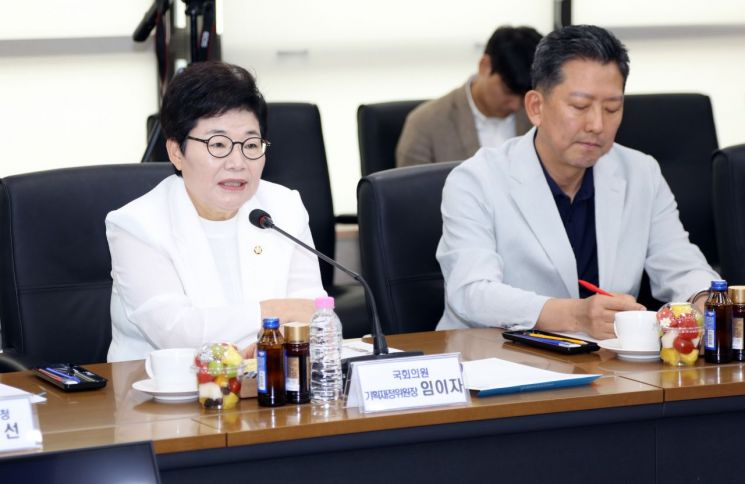
Both local governments and academia have welcomed the expansion of the discretionary account but emphasized the need for institutional reforms to ensure its effectiveness. They pointed out that simply increasing the number of eligible projects from 47 to 121 could result in nothing more than a broader allocation of funds without meaningful autonomy. Lee Hyunjung, a research fellow at the Korea Institute of Local Finance, stated, "If the number of eligible projects increases, local governments may only be able to undertake projects limited to specific objectives, so it is necessary to convert the system into a genuine block grant."
There were also calls to guarantee local governments' autonomy in setting detailed project guidelines and expenditure limits. Jang Minjoo, Director of Policy Planning at Sejong Special Self-Governing City, suggested, "If the Ministry of Economy and Finance sets a comprehensive spending cap, local governments should be granted the authority to allocate funds autonomously."
In the long term, experts suggested that the design of the Regional Special Account system itself needs to be overhauled. They argued that the account should be transformed from unconditional grants to conditional grants. Instead of transferring a fixed percentage to local governments from the outset, the central government should set a long-term support ratio and introduce conditions such as a sunset clause. There were also calls to shift the system's objectives to more concrete indicators such as the financial independence ratio of local governments and the growth rate of Gross Regional Domestic Product (GRDP). Yeom Myungbae, Professor Emeritus at Chungnam National University, said, "It is necessary to provide incentives for regional self-reliance, thereby strengthening both authority and responsibility."
Chairperson Lim emphasized, "The Special Account should not merely serve as a framework for financial subsidies, but rather as a growth foundation that enables regions to foster their own industries and talent. Rational allocation based on the economic scale and development potential of each region, as well as institutional reforms that guarantee both autonomy and accountability, are urgently needed."
© The Asia Business Daily(www.asiae.co.kr). All rights reserved.
![Clutching a Stolen Dior Bag, Saying "I Hate Being Poor but Real"... The Grotesque Con of a "Human Knockoff" [Slate]](https://cwcontent.asiae.co.kr/asiaresize/183/2026021902243444107_1771435474.jpg)
















