School Spaces as Platforms for Global Citizenship
Reaffirming the Role of Educational Environments in Fostering Democracy and Peace
International Experts Highlight the Importance of Reconciliation, Collaboration, and Inclusive Design
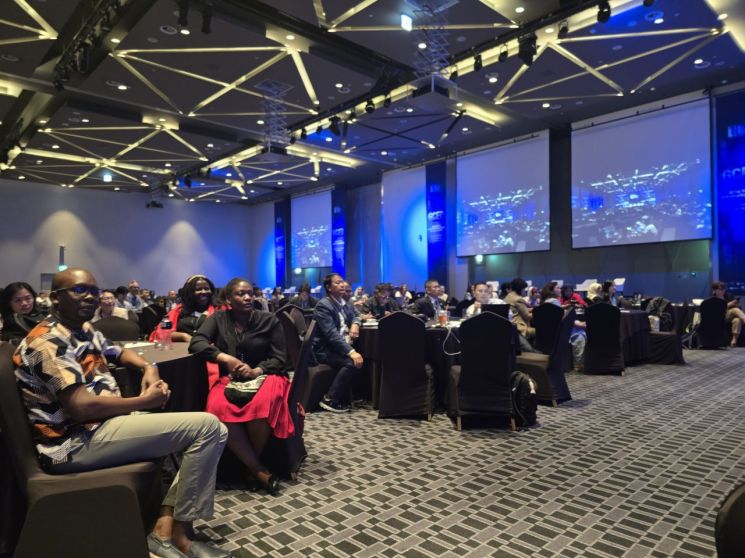 Participants from various countries at the UNESCO Global Citizenship Education International Conference (Photo by Daejeon Office of Education)
It was reaffirmed that school spaces are not merely physical buildings, but valuable environments where democracy and global citizenship education can flourish. Furthermore, it was confirmed once again that when the philosophy of reconciliation, cooperation, healing, and empathy is applied to these spaces, students can grow into global citizens who create peace beyond conflict.
The Daejeon Office of Education received an enthusiastic response from international education officials when it presented on the theme of "Global Citizenship Education and School Space Restructuring" at the 10th UNESCO Global Citizenship Education International Conference, held from August 27 to 30 at Seoul Dragon City and the Asia-Pacific Centre of Education for International Understanding (APCEIU).
This international conference brought together around 500 participants, including UNESCO activists, professors, and teacher educators from the Asia-Pacific region, who engaged in in-depth discussions on the theme of "Global Citizenship Education and Democracy in the Era of Post-Truth Crisis."
The participants shared the value of school spaces not just as physical entities, but as environments where students can experience peaceful values and learn responsibility and solidarity as global citizens.
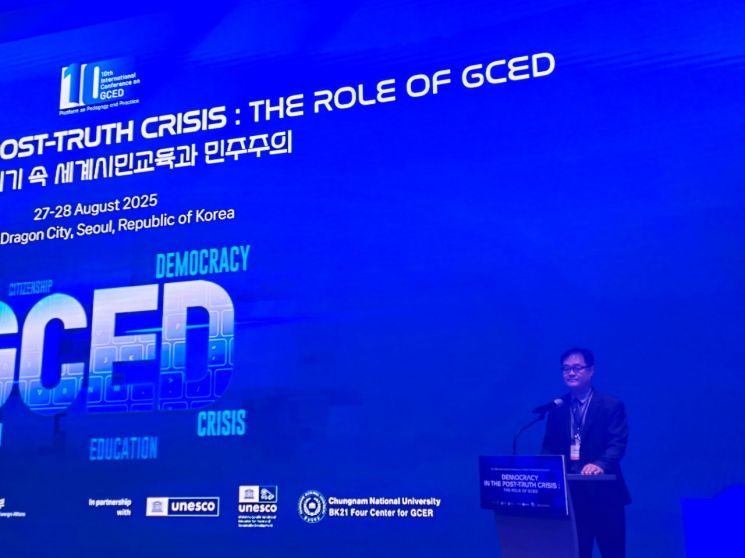
Cho Sungjun, supervisor at the Facilities and Future Schools Division of the Daejeon Office of Education, who participated as a representative of Korea, emphasized in his presentation, "Restoring the collective narrative of peace goes beyond simply remembering the past; it is a process in which students, teachers, and the local community together create new stories of coexistence. School space innovation should serve as the stage where this is put into practice."
International experts also shared a variety of perspectives. Ranei, a specialist from Morocco, stated, "Restructuring space is not just about remodeling, but a learning process that fosters a culture of collaboration."
Waris, an official from the Ministry of Education in Thailand, remarked, "When the philosophy of reconciliation is integrated into space, students' democratic capabilities and peaceful coexistence can be strengthened."
Professor Makato, a psychologist from Japan, explained, "Open lounges and community learning spaces become training grounds where students learn cooperation and respect."
Baek Seungyoung, head of the Facilities Division at the Daejeon Office of Education, emphasized, "Space delivers invisible messages to students as part of the hidden curriculum. Arranging classrooms for discussion and collaboration ensures equal learning opportunities regardless of gender or background, and helps internalize a democratic school culture."
© The Asia Business Daily(www.asiae.co.kr). All rights reserved.


















