'From Abandoned Spaces to Foundations of Hope for the Community'
Closed schools are not merely spaces that have fulfilled their educational roles; they are resources that offer new possibilities to local governments, residents, and various external organizations.
The Gyeongbuk Provincial Office of Education (Superintendent Lim Jongshik) is actively seeking cooperation with external entities to efficiently utilize closed schools, and through this process, is creating diverse examples that contribute to regional development and the restoration of local communities.
On September 1, Superintendent Lim Jongshik of the Gyeongbuk Provincial Office of Education emphasized the importance of this initiative, stating, "When closed schools collaborate with various stakeholders in the community to create new value, it paves the way for the mutual prosperity of education and the region."
Closed schools offer a range of utilization possibilities depending on their location, size, and surrounding environment. The Gyeongbuk Provincial Office of Education adheres to the principle of securing the consent of more than 50% of local residents when promoting the sale or lease of closed schools, and for those that have remained unused for an extended period, it actively seeks utilization plans through public bidding.
In particular, closed schools in rural, agricultural, and fishing villages face significant challenges in terms of accessibility and unfavorable site conditions. If left unattended for long periods, they can become safety hazards due to building deterioration and may turn into crime-prone areas. The difficulty of assigning on-site management personnel also adds to the burden.
The Gyeongbuk Provincial Office of Education is actively promoting the lease and sale of closed schools to local governments, public institutions, and private entities so that these spaces can be used for community welfare and public purposes. Efforts to transform abandoned spaces into new local resources are expected to expand further in the future.
Kimcheon Eomo Elementary School, which was closed in 2007, signed a lease agreement with Kimcheon City and has been operating as a 'Support Center for Independent Living of Severely Disabled People' for adults with developmental disabilities since 2008.
Operated under the commission of the Jikjisa Welfare Foundation, this facility utilizes the former school building to provide a familiar and comfortable space for people with disabilities and their families, while the surrounding rural environment enhances emotional stability.
Welfare conditions have also improved, including upgrades to restrooms and cafeterias and support for vehicles for people with disabilities. In addition, a 'Sharing Forest' has been created in the playground, offering walking trails for residents and establishing the facility as an open space integrated with the community.
Andong Hwanam Elementary School, which closed in 1995, has been leased by Korea Agricultural and Forestry System since 2020 and is being used as a venue for agricultural technology education. Regular programs include training on wildlife control to reduce crop damage, as well as education and hands-on practice in the development of agricultural machinery. The facility serves as an active hub for knowledge sharing and technology transfer among farmers.
By developing and distributing cost-effective control equipment, the facility helps reduce farm damage and increase income, playing a pivotal role in the advancement of local agriculture.
Yeongcheon Jacheon Middle School, which closed in 2016, was purchased by Yeongcheon City and has been reborn as the 'Bohyeonsan Green Experience Center.' The main building has been remodeled to house offices, a green library, a cypress playground, and a green cafe, while the outdoor area features play facilities such as a zipline and green spaces.
Recently, the center has been operating a metaverse experience hall and a digital memory classroom, reviving memories of the former school in a modern context and establishing itself as a leading tourist attraction in the region.
Gisan Elementary School, which closed in 1999, was taken over by Gyeongbuk Science College in 2001 and opened as a 'Traditional Culture and Arts Experience School.'
The school offers more than 30 hands-on programs, including metal crafts, woodworking, tofu and rice cake making, and samulnori (traditional percussion quartet), and actively operates educational activities linked to the curriculum.
This site was designated as a Korean cultural experience course for the Daegu Universiade and selected as a cultural school operator by the Ministry of Culture, Sports and Tourism, growing into a hub for the dissemination of traditional culture.
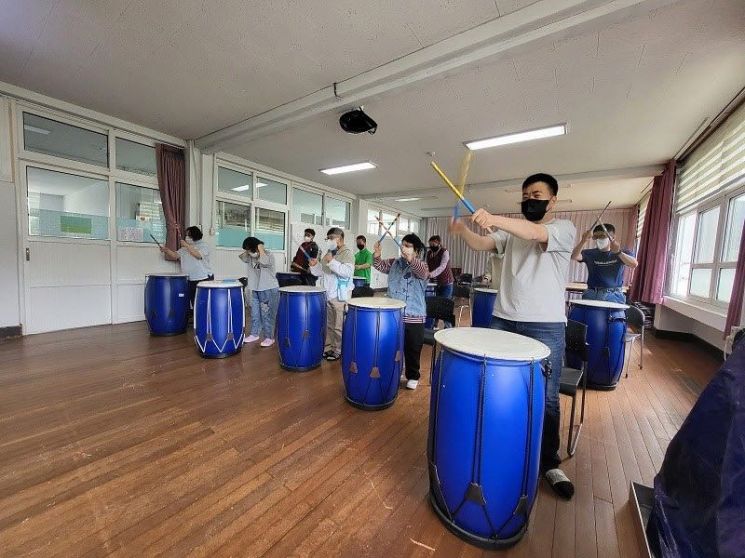 Kimcheon Eomo Elementary School, which closed 18 years ago, is being used as a Support Center for Independent Living of Severely Disabled People.
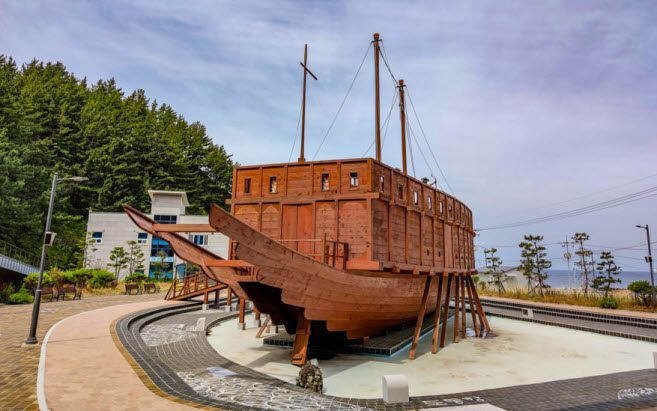
The Taeha Branch of Ulleung Middle School, which closed in 2010, was purchased by Ulleung County and reborn in 2017 as the 'Suto History Exhibition Hall.'
The four-story exhibition hall, built with an investment of 19.2 billion won, is themed around the Sutoje, the Joseon Dynasty's system for governing Ulleungdo. It features a life-size replica of the Suto ship used by Suto officials and their attendants, capturing the attention of visitors.
The exhibition hall visualizes the Sutoje through displays on Ulleungdo's pioneering history, a digital video hall, and interactive exhibits, vividly showcasing the history of Ulleungdo's development and defense.
More than just an exhibition space, it serves as a major tourist attraction on Ulleungdo and a hands-on history learning site for students, while also functioning as a place of pride for residents to reflect on Ulleungdo's identity and pioneering spirit.
The Gyeongbuk Provincial Office of Education is establishing legal and institutional frameworks and proposing customized utilization plans to support the creation of new value from closed schools in collaboration with various local stakeholders.
Once spaces that stood still in time, closed schools are now firmly established as engines of local revitalization and symbols of cooperation and mutual growth.
The Gyeongbuk Provincial Office of Education plans to continue expanding exemplary models of mutual growth that lead regional development while stably securing educational finances through the sale and lease of closed school properties. By putting into practice the vision of 'foundations of hope reborn from abandoned spaces,' closed schools will become a strong link connecting regional regeneration with the education of future generations.
© The Asia Business Daily(www.asiae.co.kr). All rights reserved.
![Clutching a Stolen Dior Bag, Saying "I Hate Being Poor but Real"... The Grotesque Con of a "Human Knockoff" [Slate]](https://cwcontent.asiae.co.kr/asiaresize/183/2026021902243444107_1771435474.jpg)

















