Trump Attacks Court as "Politically Biased"
Warns "Elimination of Tariffs Would Be a Disaster for the Country"
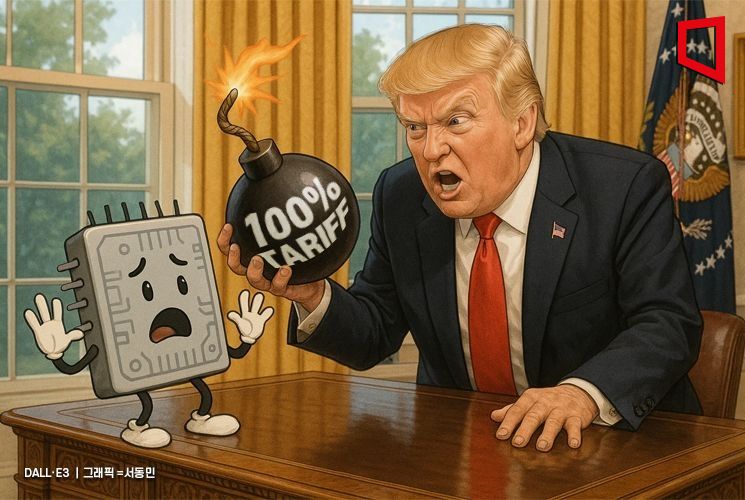
A U.S. court has ruled that most of the tariffs imposed during the administration of former President Donald Trump were "illegal."
According to major foreign media outlets on the 29th (local time), the U.S. Court of Appeals for the District of Columbia Circuit stated that the International Emergency Economic Powers Act (IEEPA), which President Trump used as the basis for his executive order imposing tariffs, "grants the president significant authority to take various actions in response to a national emergency."
The court further noted, "None of these actions explicitly includes the authority to impose or levy tariffs, customs duties, or anything similar."
The panel pointed out, "It appears that when Congress enacted the IEEPA, it did not intend to break with past practice and grant the president unlimited authority to impose tariffs."
The court added, "The law does not mention tariffs (or any synonyms of that kind), nor does it contain any procedural safeguards that clearly limit the president's authority to impose tariffs."
President Trump criticized the court, calling it "politically biased" and insisted via social media that "all tariffs remain in effect."
He further argued, "If these tariffs disappear, it will be a total disaster for the country," adding, "The United States can no longer endure massive trade deficits, unfair tariffs, and non-tariff barriers imposed by other countries."
President Trump also suggested plans to appeal to the Supreme Court, stating, "With the help of the Supreme Court, we will use these tariffs to benefit our country."
This ruling comes as the government appealed a decision made by the U.S. Court of International Trade (USCIT) in May, which ordered the withdrawal of reciprocal tariffs implemented by President Trump under the IEEPA, asserting that the exclusive authority to impose tariffs rests with Congress.
The tariffs at issue include those imposed in February on China, Canada, Mexico, and others, citing fentanyl inflows, and those imposed globally in April, both after President Trump began imposing tariffs. However, product-specific tariffs such as those on steel and aluminum are not included in this case.
Meanwhile, the IEEPA, enacted in 1977, has primarily been used for sanctions or asset freezes against hostile nations. This is the first time it has been used for reasons such as "trade imbalance," "declining manufacturing competitiveness," and "drug smuggling," as was done by President Trump.
© The Asia Business Daily(www.asiae.co.kr). All rights reserved.

















