Live Broadcasts of Korea Cup & Sprint Races Exported to Hong Kong
Elevating the Potential and Possibilities of Horse Racing as an Export Industry
Horse racing is more than just a contest of speed; it is a global sport that encapsulates the history and culture of each nation.
The Epsom Derby, which began in the United Kingdom in 1780, has become a traditional event enjoyed by both the royal family and the public. In the United States, the Kentucky Derby attracted 21.8 million viewers this year and recorded a single-race betting amount of 234.4 million dollars (approximately 327.2 billion won).
During the event period, Louisville, the host city, achieved a hotel occupancy rate of over 90%, resulting in an economic impact of approximately 615.5 billion won for the region.
The Middle East is shaking up the horse racing scene with vast oil wealth. The Saudi Cup, with a total prize of 20 million dollars, and the Dubai World Cup, with 12 million dollars, are among the highest in the world.
This year, Japan’s Forever Young and the United States’ Hit Show won the two competitions, earning approximately 14.5 billion won and 9.9 billion won in prize money, respectively.
On the international stage, “K-Horse Racing” is also rapidly gaining recognition. Last year, it was exported to 26 countries, generating 120 billion won in sales, and received praise from overseas fans for its enhanced fairness, animal welfare, and high-definition broadcasts. Night racing, urban accessibility, and year-round festivals further expand its potential as a K-culture-style leisure activity.
In particular, the Korea Cup and Korea Sprint, now in their eighth year, are growing into international brands. More than 70 horses were pre-registered, with a final list of eight overseas entrants, most of whom are top contenders with international ratings of 110 or higher.
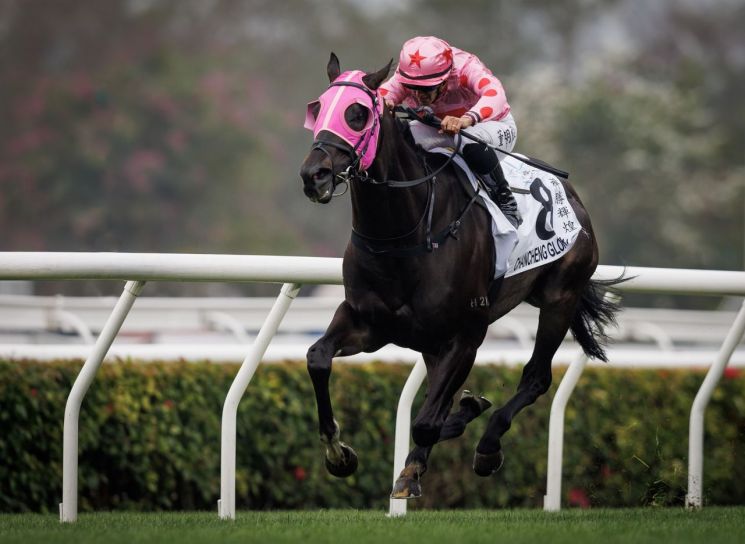
The participation of Hong Kong’s representative horse, Chengcheng Glory, is especially significant as it led to the export of live Korean horse racing broadcasts to Hong Kong. Hong Kong only imports live broadcasts of races featuring its own horses or international G1-level events, so with this export, the Korea Racing Authority expects to generate at least 10 billion won in revenue.
Chengcheng Glory has recorded 8 wins in 29 starts and approximately 4 billion yen (about 4 billion won) in prize money. This year, the horse won the G3 Centenary Vase and placed highly in G1 races, consistently demonstrating strong competitiveness.
Dura Erede, considered the next-generation star of Japanese horse racing, rose to stardom by pulling off a 90-to-1 upset in the 2022 G1 Hopeful Stakes. Since then, the horse has established itself as a dirt-track powerhouse, finishing third in consecutive G1 Champions Cups. Its career record stands at 2 wins from 18 starts, with total prize money of approximately 1.9 billion won.
Tagano Beauty, representing Japan in the Korea Sprint, is a seven-year-old veteran known as the icon of consistency. With 6 wins in 40 starts and about 3 billion won in prize money, Tagano Beauty is renowned for its powerful finishing kick and is considered a “trustworthy horse.” The jockey is Shu Ishibashi, who has previous experience winning in Korea.
Chikappa, also from Japan, is a new sprinter born in 2021, with 5 wins from 17 starts and approximately 1.4 billion won in prize money. Last year, Chikappa won the JPN2 Tokyo Hai and finished second in the JPN1 JBC Sprint, showing rapid progress. This race has drawn attention as Japanese horse racing legend Yutaka Take will be riding Chikappa.
© The Asia Business Daily(www.asiae.co.kr). All rights reserved.

![Clutching a Stolen Dior Bag, Saying "I Hate Being Poor but Real"... The Grotesque Con of a "Human Knockoff" [Slate]](https://cwcontent.asiae.co.kr/asiaresize/183/2026021902243444107_1771435474.jpg)














