Returned Early Morning on the 28th, Shares Summit Outcomes with Presidential Aides
First Main Budget and Government Organization Act Await the New Administration
President Lee Jaemyung returned to Korea through Seoul Airport in the early morning of August 28 after completing a six-day, three-night state visit that included summits with the United States and Japan. Upon his return, President Lee is expected to share the outcomes of the trip with his aides and review the numerous domestic and international issues awaiting attention.
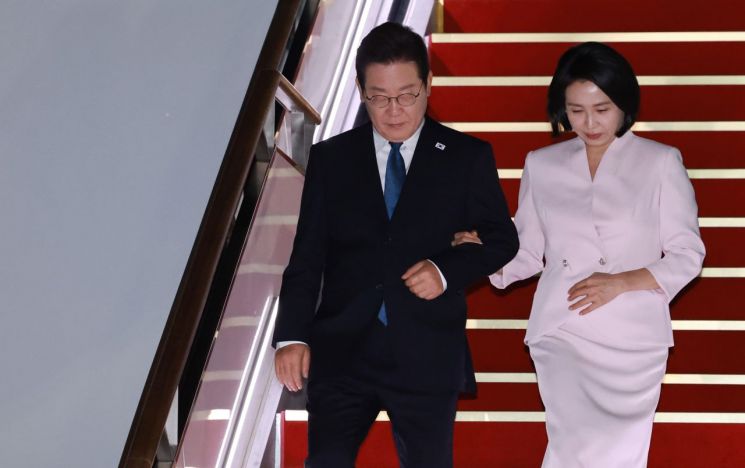
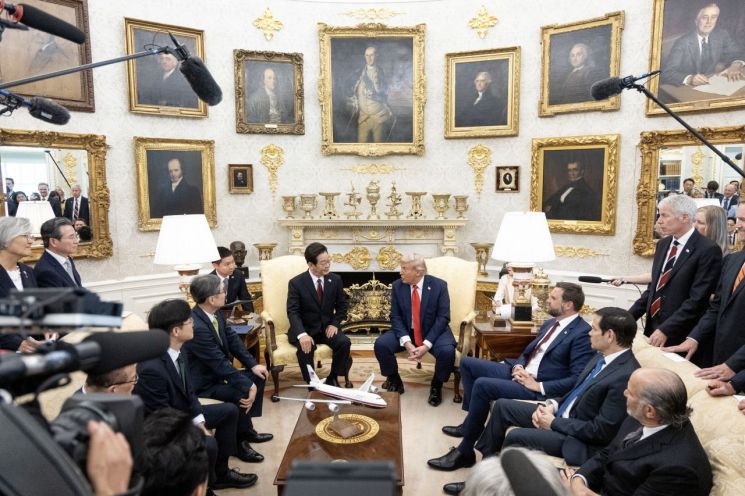
The most significant achievement of this trip is considered to be the establishment of a relationship of trust with U.S. President Donald Trump. Although tensions had previously arisen due to President Trump's social media posts, the Korea-U.S. summit proceeded in a friendly atmosphere, thanks to President Lee's "barrage of compliments." However, challenges remain, such as finalizing the details of the U.S. investment fund and accommodating additional demands from the Trump administration.
During his visit to the United States, President Lee elicited a positive response from President Trump by showering him with praise. For instance, President Lee complimented the White House remodeling overseen by President Trump as "elegant," and, taking into account Trump's aspirations for the Nobel Peace Prize, urged him to "be a peacemaker." In response, President Trump praised President Lee, saying he "has more determination than any other leader to resolve the North Korea issue" and is "a truly outstanding figure representing Korea."
Even just before the summit, President Trump's social media posts heightened tensions. However, President Lee directly clarified the facts in a public press briefing, which led to the disappearance of President Trump's adversarial stance and prevented any "unexpected bills" from the U.S. side. After the tariff negotiation was concluded on July 31, the U.S. continued to make additional demands, such as opening up the agricultural market. There was also the possibility of further unreasonable requests from the U.S. regarding security issues, such as increasing defense spending and strengthening checks on China. President Lee also mentioned on the flight to Washington on August 24 that "there are demands to change the terms of the negotiations."
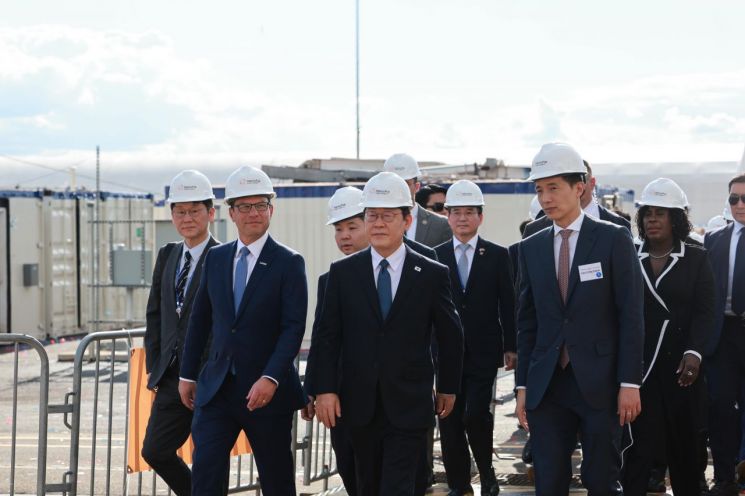
President Lee also solidified the will for Korea-U.S. cooperation, leveraging the shipbuilding industry. He stated, "A renaissance is taking place in the United States not only in shipbuilding but also in manufacturing, and I hope Korea can be a part of it." President Trump responded, "I hope that through cooperation with Korea, shipbuilding will be revived in the United States." President Lee further emphasized at the Philly shipyard that through the MASGA (Make American Shipbuilding Great Again) project, "Korea and the United States will achieve a win-win outcome as both shipbuilding industries advance together."
In terms of North Korea policy and security, the two leaders reached a consensus by first proposing the resumption of U.S.-North Korea dialogue. When asked by reporters whether he would attend the Asia-Pacific Economic Cooperation (APEC) summit to be held in Gyeongju this October, President Trump left open the possibility of meeting with North Korean State Affairs Commission Chairman Kim Jong Un. Although sensitive security issues were not discussed in detail, some progress was made as President Lee agreed to the U.S. request for increased defense spending.
Prior to the Korea-U.S. summit, President Lee met with Japanese Prime Minister Shigeru Ishiba in Japan on August 23, creating an atmosphere conducive to the development of Korea-Japan relations and strengthening Korea-U.S.-Japan cooperation. President Lee plans to build on this foundation to create a "virtuous cycle" structure among the alliances.
There are still details to be worked out going forward. The structure and operation of the U.S. investment fund, which is central to the tariff negotiations, have yet to be determined. Policy Chief Kim Yongbum explained, "Once the memorandum of understanding between the two countries is finalized, such issues will be discussed in detail." Unpredictable additional demands from the Trump administration also remain a key concern. The U.S. side continues to raise issues such as the realignment of U.S. Forces Korea, further opening of the agricultural market, and the export of Google Maps data.
Domestically, the government must also process the first main budget and the Government Organization Act in succession. Starting with the regular National Assembly session on September 1, the administration will need to push forward on pending issues. As calls for a more measured approach to certain reform bills gain traction, President Lee's ability to coordinate state affairs may be put to the test. During an onboard press conference before his departure, President Lee remarked, "The roles of the ruling party leader and the president are different."
© The Asia Business Daily(www.asiae.co.kr). All rights reserved.



















