On August 27, Daol Investment & Securities analyzed that the passage of the second amendment to the Commercial Act by the National Assembly could make it possible for Hyundai Motor Group to restructure its governance into a more transparent system.
Yoo Jiwoong, a researcher at Daol Investment & Securities, explained, "The second amendment to the Commercial Act includes the introduction of cumulative voting and the expansion of separate election for audit committee members, suggesting that governance restructuring could accelerate within the next two years."
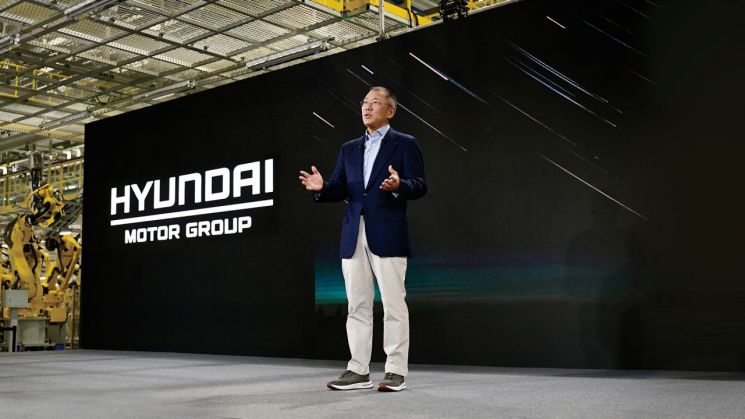
Previously, on August 25, the National Assembly, led by the ruling party, passed the second amendment to the Commercial Act, often referred to as the "Stronger Commercial Act," in a plenary session. The key points of the amendment are the mandatory introduction of cumulative voting for listed companies with assets of 2 trillion won or more, and expanding the separate election of audit committee members from one to two or more.
Researcher Yoo believes that the passage of the amendment could provide a breakthrough for Hyundai Motor Group to resolve its circular shareholding structure.
He stated, "The core of Hyundai Motor Group's governance structure is Hyundai Mobis, which holds a 20.88% stake in Hyundai Motor. However, due to the impact of cumulative voting, the influence that can be exercised when appointing directors at Hyundai Motor will gradually decrease. It is highly likely that Hyundai Motor Group will pursue a share swap between the 16.9% stake in Hyundai Mobis held by Kia and the assets owned by Chairman Chung Euisun."
Through this, he believes it is possible for Hyundai Motor Group to realize a transparent governance structure in the form of Chairman Chung Euisun → Hyundai Mobis → Hyundai Motor → Kia.
Researcher Yoo explained, "To restructure the governance, it is essential for Kia to secure the 4.7 trillion won value of its stake in Hyundai Mobis. Over the next two to two and a half years, the possibility of utilizing Chairman Chung's shares in Hyundai Glovis or Boston Dynamics will become clearer."
Meanwhile, he also noted that the so-called "Yellow Envelope Act" (amendments to Articles 2 and 3 of the Labor Union Act), which was passed along with the second amendment to the Commercial Act, presents a strong justification for accelerating the era of robotics.
Researcher Yoo said, "The Yellow Envelope Act allows workers at parts suppliers to expand the scope of industrial action against automakers, which are the primary contractors. Conversely, this could provide automakers with a clearer justification for production automation, including the use of humanoid robots."
He added, "Automakers basically have a tripartite supply system for most parts, so the likelihood of structurally expanded labor-management negotiations is not expected to be high. Furthermore, as many parts suppliers are expanding orders to global OEMs outside of Hyundai Motor Group, strikes targeting Hyundai Motor are not realistically easy to carry out."
© The Asia Business Daily(www.asiae.co.kr). All rights reserved.