Free Flu Vaccinations for High-Risk Groups Including Children, Pregnant Women, and Seniors
Switch to Trivalent Vaccine Based on WHO Recommendations
Vaccinations Available Nationwide Regardless of Address
Simultaneous COVID-19 and Flu Shots Possible, But at Different Sites
KDCA Commissioner Im Seungkwan Urges Eligible Individuals to Get Vaccinated This Winter
The Korea Disease Control and Prevention Agency (KDCA) announced on August 25 that it plans to conduct the 2025-2026 seasonal influenza (flu) national vaccination program from September 22 of next month through April 30 of next year.
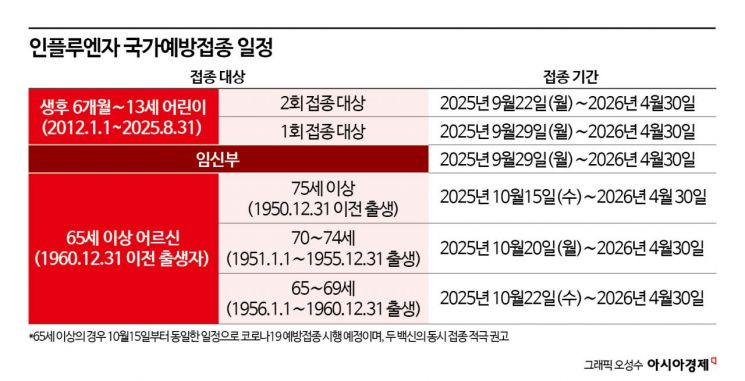
Children aged six months and older up to 13 years old (born between January 1, 2012, and August 31, 2025), pregnant women, and seniors aged 65 and older (born on or before December 31, 1960), who are at higher risk of severe illness, will be eligible for free vaccination.
The vaccination will begin on September 22 with children who require two doses, followed by children who require only one dose and pregnant women on September 29, and then seniors aged 75 and older on October 15, with vaccinations administered sequentially by age group.
This season’s national influenza vaccination program will switch from the existing quadrivalent vaccine to a trivalent vaccine, in accordance with recommendations from the World Health Organization (WHO) and the review of the National Immunization Advisory Committee.
The trivalent vaccine excludes the B/Yamagata virus antigen, which has not been detected globally for a long period, from the quadrivalent vaccine. It has been confirmed that the trivalent vaccine is equivalent in effectiveness and safety to the quadrivalent vaccine. The United States switched from the quadrivalent to the trivalent vaccine for the 2024-2025 season, and Japan, Taiwan, and the United Kingdom also plan to make the switch this season.
The national influenza vaccination can be received at any nearby designated medical institution or public health center, regardless of one’s registered address. There are about 23,000 designated medical institutions nationwide, which can be checked through local public health centers or the Immunization Helper website.
When going for vaccination, individuals should bring identification, and after receiving the vaccine, they should remain at the facility for 20 to 30 minutes to monitor for any adverse reactions before leaving. The most common adverse reactions are redness and pain at the injection site, which usually resolve within a day or two.
The influenza vaccine can be administered at the same time as the COVID-19 vaccine. However, if both vaccines are given simultaneously, they must be injected into different sites on the body.
Im Seungkwan, Commissioner of the KDCA, stated, "Vaccination is a highly effective means of reducing hospitalizations and deaths caused by influenza and lowering the overall disease burden," and added, "I urge all those eligible for the national vaccination program to make sure to get vaccinated in preparation for this winter’s outbreak."
© The Asia Business Daily(www.asiae.co.kr). All rights reserved.












