Increase in Cyanobacteria Cell Counts at Mulgeum and Mary on August 21
Waterworks Headquarters Activates Algae Barrier Facilities
"100% Removal of Algae Toxins" During Purification Process
An algae alert has been elevated to the "Warning" level at the Mulgeum and Mary points of the Nakdong River.
The Busan Metropolitan Waterworks Headquarters announced on August 21 that the algae alert at the Nakdong River Mulgeum-Mary point had been raised from "Attention" to "Warning." The alert was issued by the Nakdong River Basin Environmental Office.
The number of harmful cyanobacteria cells at the Mulgeum-Mary point was recorded at 24,439 cells per milliliter (ml) on August 4 and 11,802 cells per milliliter on August 18. These figures both exceed the "Warning" level threshold of 10,000 cells per milliliter for two consecutive measurements.
The "Attention" level alert was first issued at this location on May 29, but conditions temporarily eased in June and July due to rainfall. However, since August, factors favorable to algae proliferation, such as rising water temperatures and a lack of rainfall, have persisted, causing cell counts to increase again and prompting the elevation to the "Warning" level. The city expects algae populations to continue increasing, as temperatures are forecast to remain above average for the time being.
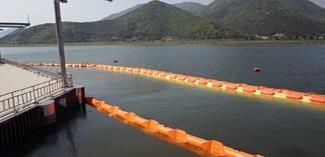
In response to the "Warning" alert, the Waterworks Headquarters has activated algae barriers and spraying facilities, strengthened chlorine and ozone treatment, adopted high-efficiency coagulants, and shortened the backwashing cycles of filtration beds to reinforce the water purification process. Additionally, two algae removal vessels are operating near the water intake to minimize algae inflow.
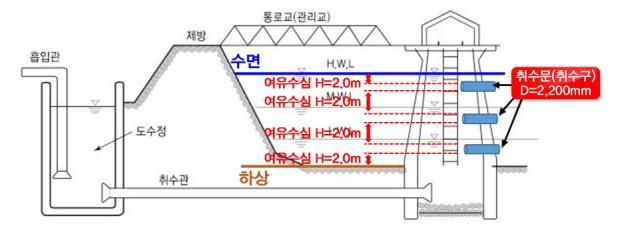
The regional wide-area water supply construction project, conducted in cooperation with Yangsan City, is also progressing rapidly. Once the water intake tower, which allows for selective intake by water depth, is completed, it is expected to secure a safer water source less affected by algae.
Furthermore, to address concerns about tap water safety, the headquarters has shortened the analysis cycle for algae toxins and odor substances in both raw and purified water from twice a week to daily. In particular, in addition to the six types of microcystins, four more substances-anatoxin, nodularin, cylindrospermopsin, and beta-methylamino-L-alanine-are now being analyzed to strengthen water quality monitoring.
The headquarters emphasized, "Algae toxins are 100% removed during water purification, and there has never been a single case of detection in tap water in the Busan area."
The Ministry of Environment recently overhauled the algae alert system, changing the water sampling point from 3 kilometers upstream of the Mary Water Intake Plant to just 50 meters upstream, and shortening the analysis period from the previous 3.5 days to within one day. As a result, the alert system will now allow for same-day alerts, which is expected to speed up response times.
Kim Byunggi, head of the Waterworks Headquarters, stressed, "Even if some algae toxins are detected at the water source, they are completely removed during the purification process. We will focus on ensuring a stable supply of tap water based on advanced purification facilities and technology so that citizens can use tap water with confidence."
© The Asia Business Daily(www.asiae.co.kr). All rights reserved.













