Death Possible Within 10 Days of Infection
Only 4 Survivors Among 167 Cases in 60 Years
About 10 Infections Reported Annually in the United States
Naegleria fowleri, known as the "brain-eating amoeba," was discovered in tap water, prompting Australian authorities to warn residents to be cautious. It is extremely rare for such a deadly microorganism, which can cause death within 10 days of infection, to be found in a public water supply. On August 18 (local time), Australian media outlets including ABC reported that Naegleria fowleri was detected in village water supplies serving Augathella and Charleville, two small towns located about 750 km west of Brisbane, Queensland, earlier this month. This finding was based on a comprehensive water quality test conducted by the University of Queensland at the request of Queensland Health. Health authorities stated that they are preparing to collect additional water samples from both towns to assess the extent of Naegleria fowleri's spread.
 Naegleria fowleri, known as the "brain-eating amoeba," was found in tap water, prompting Australian authorities to warn residents to be cautious. The photo is not related to the specific content of the article. Pixabay
Naegleria fowleri is a single-celled protozoan that primarily proliferates in warm freshwater at temperatures between 25 and 40 degrees Celsius. It inhabits rivers, ponds, lakes, and hot springs, and can also be found in poorly maintained swimming pools or tap water. However, it does not spread from person to person. The main concern is that once this amoeba enters the human body, it causes primary amoebic meningoencephalitis (PAM). In the early stages of infection, symptoms include headache, confusion, olfactory disturbances, and upper respiratory issues. These are followed by severe headache, fever, vomiting, and neck stiffness. Typically, patients fall into a coma by the fifth day of symptom onset, and most die within a week to ten days.
No Cure Available, Survival Rate Extremely Low
Above all, the most serious issue is that there is currently no definitive cure. As a result, the chances of survival after infection are extremely low. According to the U.S. Centers for Disease Control and Prevention (CDC), from 1962 to 2024, there were 167 reported cases of PAM in the United States, but only four survivors. This microorganism is not a problem unique to Australia. In the United States, about 10 people are known to be infected each year, and in Korea, there was a case in 2022 where a man in his 50s, who had stayed in Thailand for four months, developed the disease after returning home and died.
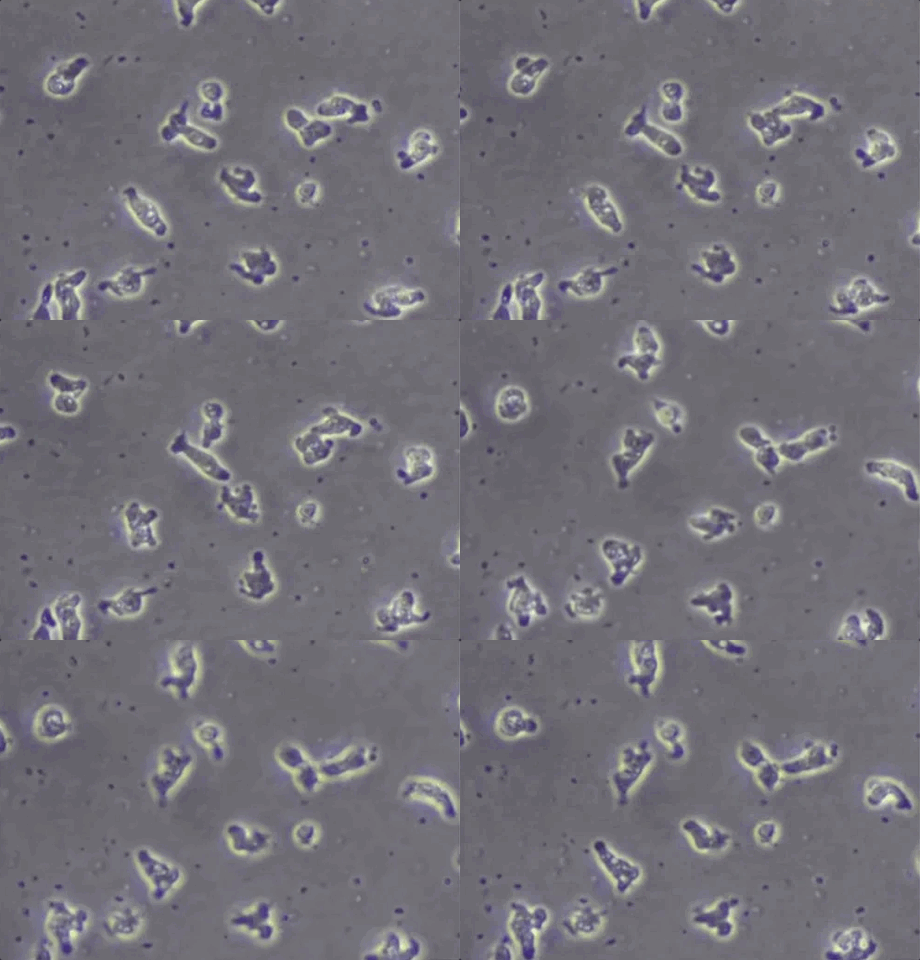 Fowler's free-living amoeba, known as the brain-eating amoeba. Centers for Disease Control and Prevention (CDC), USA
The science media outlet New Atlas described the situation as "extremely serious," noting that one of the most dangerous microorganisms on Earth had been found in the public water supply. In response to the related risks, Queensland health authorities advised residents to use nose clips to prevent water from entering the nose during bathing or washing, to always keep their heads above water in pools or hot springs, and to use only boiled water for nasal rinsing. Furthermore, Australian health authorities stated that they will develop response measures based on the results of additional tests and emphasized that residents should exercise particular caution.
© The Asia Business Daily(www.asiae.co.kr). All rights reserved.


















