Gwangju Faces Overlapping Risks of Heavy Rain, Heat Waves, Aging Infrastructure, and an Aging Population
Urgent Need for Customized Response Systems Including Integrated Care, Disaster Prevention, and AI-Based Risk Prediction
In Gwangju, the convergence of the climate crisis, urbanization, and an aging population is leading to the emergence of "urban-type complex disasters." Experts have pointed out the urgent need for a region-specific response system to protect disaster-vulnerable groups.
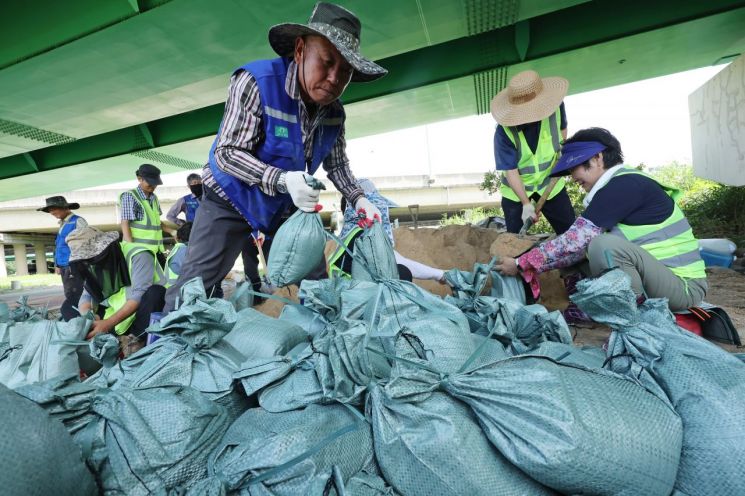 On the morning of the 5th, workers are making sandbags to be used for flood prevention in the parking lot of Sandonggyo Chinsu Park, Dongrim-dong, Buk-gu, Gwangju. Photo by Yonhap News
On August 20, the Gwangju Research Institute published a report titled "Response System Improvement Measures for Protecting Disaster-Vulnerable Groups in Gwangju in the Era of Complex Disasters." The report stated, "This year, Gwangju experienced record-breaking heavy rain and heat waves, which, combined with aging infrastructure and an aging population, have exemplified a typical complex disaster situation." Complex disasters are defined as those in which simultaneous and cascading impacts intersect, and the report emphasized that conventional, individual response methods have clear limitations.
The report classified environments where risk factors such as summer heavy rains and heat waves, frequent flooding, aging infrastructure, and densely populated elderly areas overlap as "urban-type complex disasters." The research team noted, "Structural vulnerabilities, where damage is repeatedly concentrated in the same regions and among the same groups, are difficult to resolve with current laws, regulations, or manuals," and stressed the need for a disaster protection system and resilience enhancement strategy for vulnerable groups in Gwangju.
In particular, the report pointed out that vulnerable residents, including those in precarious housing, the elderly, people with disabilities, migrants, and platform workers, are repeatedly experiencing multi-layered damages such as flooding, isolation, power outages, and information blind spots.
As countermeasures, the research team proposed: ▲ legal institutionalization of the definition of complex disasters ▲ clarification of response principles for each type of damage ▲ an integrated neighborhood-level care and disaster prevention model ▲ a mobile notification system ▲ and the establishment of a one-stop recovery support platform. They also highlighted the need to introduce smart disaster management technologies, such as risk prediction and decision-making support using artificial intelligence (AI) and digital twin technologies.
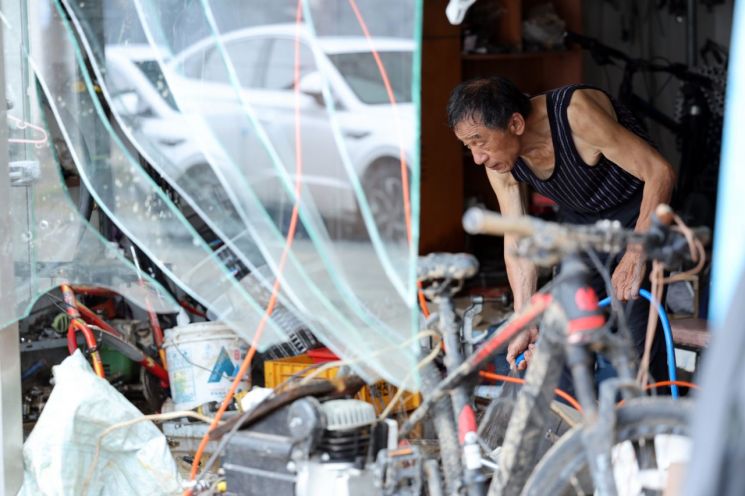 On the 4th, when extreme heavy rain fell again after 17 days, a resident was washing away muddy water at a store in Sinan-dong, Buk-gu, Gwangju. Photo by Yonhap News
Additionally, the report emphasized the importance of resolving information and evacuation blind spots for high-risk groups by providing multilingual voice alerts, improving access to shelters, and building a database for single-person households.
The Gwangju Research Institute researchers stated, "Complex disasters require an integrated response that goes beyond simple damage recovery to encompass citizens' psychological and social recovery, as well as the resilience of local communities." They recommended, "To address disaster inequality and establish a citizen-participatory recovery governance system, Gwangju must become a sustainable city where everyone can feel safe."
© The Asia Business Daily(www.asiae.co.kr). All rights reserved.


















