Three Main Directions and Principles Outlined by the Government
Industry Commits to Reducing NCC Capacity by Up to 3.7 Million Tons
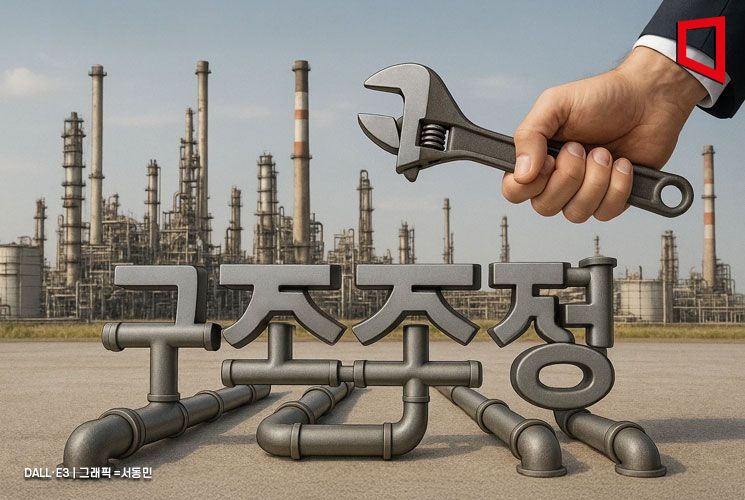
The government and the petrochemical industry are launching a large-scale restructuring initiative focused on reducing excess capacity and shifting to high value-added products. The government has outlined a restructuring direction centered on cutting excess capacity and transitioning to high value-added products, while the industry has responded by agreeing to a voluntary pact that includes reducing naphtha cracking center (NCC) capacity by 2.7 to 3.7 million tons, marking the official starting point for comprehensive restructuring.
On August 20, during the Ministerial Meeting on Industrial Competitiveness Enhancement, the government finalized the broad framework for restructuring. Specifically, it set out three main directions: ▲ reduction of excess capacity and transition to high-value specialty products ▲ securing financial soundness ▲ minimizing shocks to regional economies and employment. The three guiding principles are: ▲ simultaneous implementation across three petrochemical industrial complexes ▲ sufficient self-help efforts as a prerequisite ▲ provision of tailored government support packages.
An official from the Ministry of Trade, Industry and Energy stated, "This policy marks the starting line for restructuring the entire petrochemical industry," emphasizing that "it is not a temporary response to individual companies' crises, but a 'rule-setting' aimed at fundamentally improving the industry's structure."
At the 'Voluntary Business Restructuring Agreement Ceremony for the Petrochemical Industry's Rebound' held at the Korea Chamber of Commerce and Industry, the industry expressed concrete intentions to reduce capacity and transition in line with government policy. Based on consulting results, the plan is to cut NCC production capacity by 2.7 to 3.7 million tons and shift from general-purpose products to high value-added and eco-friendly products. This reduction accounts for 18 to 25 percent of the current domestic production capacity of 14.7 million tons.
This figure was proposed by Boston Consulting Group (BCG) through an industry self-consulting process, in response to the spread of overseas low-cost (LCC) facilities and intensifying competition in general-purpose products. A Ministry of Trade, Industry and Energy official explained, "This is a realistic target that the industry also agrees with."
However, there are criticisms that the government support measures are too abstract, lacking concrete financial and tax policies. In response, a ministry official stressed, "The significance of this policy lies in establishing the rules and roadmap, rather than the scale of support." The official added, "Support packages will differ depending on each company's situation and level of self-help efforts. The circumstances of Lotte, Hyundai, and Yeocheon NCC are all very different. Support will not be uniform but customized to each company."
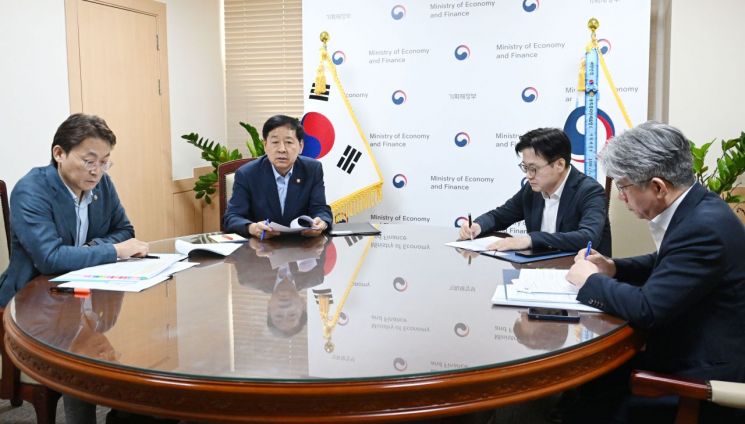
The government has also taken a firm stance against "free-rider companies." While government support will back companies actively engaging in restructuring, those that are passive or attempt to benefit from other companies' capacity reductions without participating will be excluded. Minister of Trade, Industry and Energy Kim Jungkwan also stated, "We will respond firmly to companies that expect government support without responsible self-help efforts."
There was also discussion about the possibility of institutional support, such as easing the Fair Trade Act. However, a ministry official said, "Once each company's restructuring plan is finalized, we will consult with relevant agencies such as the Fair Trade Commission," avoiding any preemptive statements. Regarding concerns about industry uncertainty due to potential declines in crude oil and naphtha prices if the war in Russia ends, the official said, "We will monitor market fluctuations, but structural recession is a separate issue," once again emphasizing the need for restructuring.
The government will also implement measures to mitigate the impact on regional economies and employment. Yeosu City in South Jeolla Province was designated as an "Industrial Crisis Preemptive Response Area" in May, and additional designation of Seosan City in South Chungcheong Province is under review. The Ministry of Employment and Labor will also designate Yeosu as a "Employment Crisis Preemptive Response Area" under the new system, providing employment retention subsidies and livelihood stabilization loans.
Minister Kim stressed, "Bold and swift restructuring is the only breakthrough for our petrochemical industry to secure future competitiveness," and urged, "Companies must proactively engage in business restructuring with a sense of urgency that now is the only time."
© The Asia Business Daily(www.asiae.co.kr). All rights reserved.
![Clutching a Stolen Dior Bag, Saying "I Hate Being Poor but Real"... The Grotesque Con of a "Human Knockoff" [Slate]](https://cwcontent.asiae.co.kr/asiaresize/183/2026021902243444107_1771435474.jpg)

















