1,572 Consultations on Counterfeit Goods in the Past Three Years
High Proportion in Bags, Shoes, and Cosmetics
Beware of Excessively Low Prices and Phrases Implying Counterfeiting
A recent investigation into the distribution of counterfeit goods on domestic and international online platforms has revealed a high volume of information that raises suspicions of counterfeiting, such as prices that are excessively low compared to official websites and language suggesting counterfeit status. As a result, consumers are being urged to exercise caution.
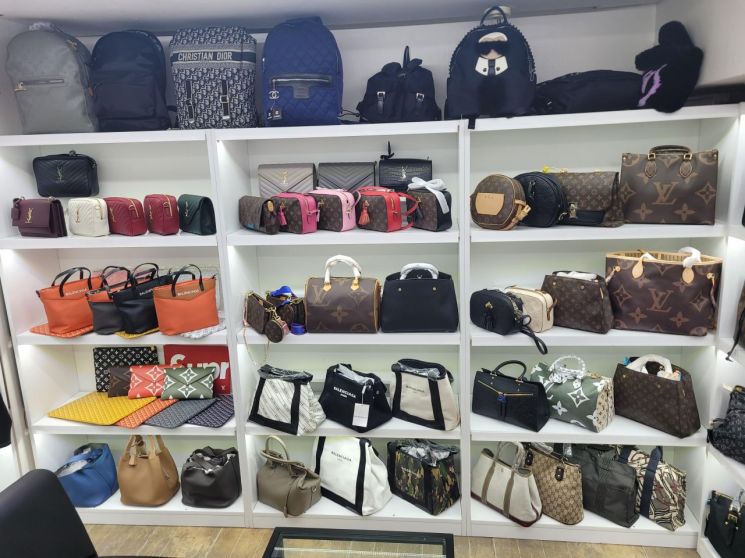
According to the Korea Consumer Agency on August 19, a total of 1,572 reports related to counterfeit goods on major domestic and international online platforms were filed with the 1372 Consumer Counseling Center and the International Transaction Consumer Portal over the past three years. By product category, bags accounted for 21% (330 cases), shoes 14.5% (228 cases), cosmetics 12.5% (196 cases), audio equipment 10.9% (171 cases), and apparel 9.4% (147 cases). The number of reports regarding bags has continued to increase over the past three years, especially for high-priced overseas brand products.
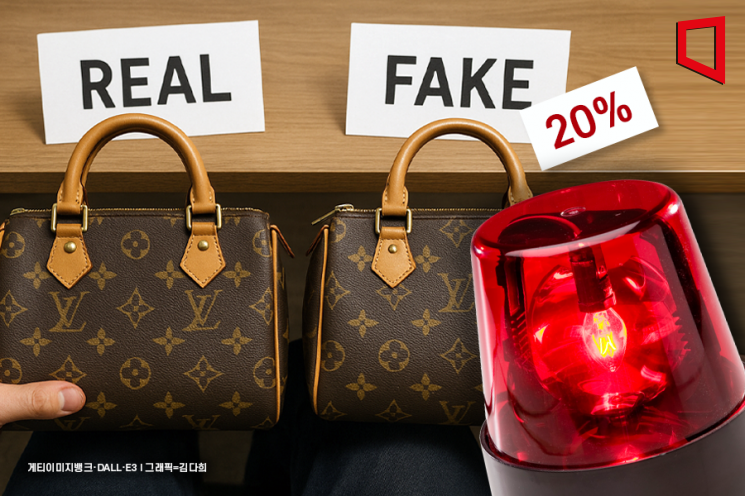
Products sold at prices significantly lower than those on official websites were often suspected of being counterfeit. An investigation of 147 products sold on eight major domestic and international online platforms found that, among 40 items sold on overseas shopping sites such as AliExpress and Temu, 72.5% (29 items) were offered at prices around 20% of the official site price. A Korea Consumer Agency official stated, "Since it is difficult for consumers to verify the authenticity of products themselves, extra caution is needed when purchasing items offered at excessively low prices."
Language implying counterfeit status was also found. On social networking service (SNS) platforms such as Naver Band and Instagram, 51.8% (14 out of 27) of product posts used expressions like "genuine-level" that suggest the items may be counterfeit. In addition, 66.7% (18 posts) encouraged transactions through external channels or operated private channels that required seller approval for membership.
A survey of 1,000 consumers who had purchased counterfeit goods on eight platforms within the past year found that, among the 500 consumers who unknowingly purchased counterfeits, about half (49%) did so without checking authenticity in advance. The most common reason, cited by 36.7%, was "trust in the online platform." Furthermore, 58.6% did not request a refund even after discovering the item was counterfeit, mainly because "the refund process is complicated or takes too long" (60.4%).
Additionally, among the 500 consumers who knowingly purchased counterfeit goods, 68.4% responded that they "were not aware of the legal issues associated with the distribution of counterfeits," indicating a low sense of responsibility regarding the purchase of counterfeit products.
The Korea Consumer Agency emphasized, "Purchasing counterfeit goods is an act that infringes on a brand's intellectual property rights," and added, "In the case of health supplements or cosmetics, there is a possibility of safety issues such as physical harm caused by counterfeits, so it is necessary to raise consumer awareness to eradicate the purchase of counterfeit goods."
The Korea Consumer Agency has shared the results of this investigation with relevant government agencies and requested that the businesses surveyed take measures such as: developing strategies to block the sale of counterfeits on shopping malls; restricting the use of counterfeit-related terms on SNS platforms; and providing advance guidance on how to report counterfeit goods.
© The Asia Business Daily(www.asiae.co.kr). All rights reserved.













