July CPI Falls Short of Expectations, September Rate Cut Seen as Certain
Besant: "Fed Should Start with a Big Cut in September, Lower Rates by Up to 1.75 Percentage Points"
U.S. Treasury Yields Plunge: 10-Year Down 7bp, 2-Year Down 5bp
Focus on July PPI and Retail Sales Data to Be Released on the 14th and 15th
The three major U.S. stock indexes on the New York Stock Exchange were showing gains in early trading on the 13th (local time). The buying momentum continued as the Consumer Price Index (CPI) for July, released the previous day, came in below expectations, easing concerns about inflation and raising hopes for a rate cut by the Federal Reserve (Fed). U.S. Treasury yields were also falling sharply.
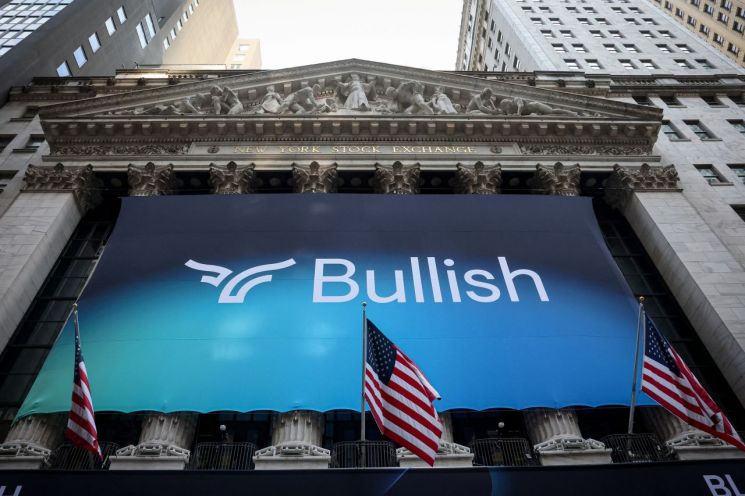
As of 10:31 a.m. on the New York Stock Exchange, the blue-chip Dow Jones Industrial Average (Dow) was up 291.49 points (0.66%) from the previous session, standing at 44,750.1. The large-cap S&P 500 index rose 14.44 points (0.22%) to 6,460.2, and the tech-heavy Nasdaq index climbed 39.332 points (0.18%) to 21,721.237. Both the S&P 500 and Nasdaq indexes were setting new intraday record highs, following their all-time highs the previous day.
By stock, AMD was surging 5.72%. Apple was up 1.14%. Nvidia was down 1.03%. Restaurant chain Cava Group was plunging 16.66% after reporting results that missed expectations. The Russell 2000 index, which consists of small-cap stocks expected to benefit from lower borrowing costs if rates are cut, was up 0.98%.
The market rally was driven by heightened expectations of a rate cut in September. According to the U.S. Department of Labor, the CPI for July 2025 rose 2.7% year-on-year, matching June's figure (2.7%) and coming in below the market consensus of 2.8%. While President Donald Trump's tariff policies are affecting prices, the impact appears less severe than anticipated, leading investors to take a September rate cut as a given.
The interest rate futures market is currently pricing in a 99.9% probability that the Fed will cut its benchmark rate by 0.25 percentage points to a range of 4.0-4.25% at the September Federal Open Market Committee (FOMC) meeting. The probability of a total cut of 0.5 percentage points by October and a total cut of 0.75 percentage points by December stands at 70.5% and 57.6%, respectively.
Ulrike Hoffmann-Burchardi, U.S. Chief Investment Officer (CIO) and Global Head of Equities at UBS Global Wealth Management, said, "With the continued weakening of the labor market, the U.S. central bank will resume rate cuts next month," adding, "We expect cuts of 0.25 percentage points at each meeting, totaling 1 percentage point by January 2026."
Following the recent slowdown in hiring and the milder-than-expected inflation data, the Trump administration has stepped up its pressure for rate cuts. U.S. Treasury Secretary Scott Besant said in a Bloomberg TV interview that the Fed should cut rates by as much as 1.75 percentage points, starting with a 'big cut' of 0.5 percentage points in September. He also emphasized that if the Fed had known in advance about the worsening employment figures released two days after the July 30 FOMC meeting, "it might have cut rates in both June and July."
President Trump also urged a rate cut immediately after the July CPI was released the previous day, stating, "Powell, who always moves too late, should cut rates right now."
Some on Wall Street have pointed out that the market, focused solely on rate cut expectations, is overlooking negative factors such as labor market weakness and deteriorating growth rates.
Warren Pies, co-founder of 3Fourteen Research, said, "There is a seasonal buying trend at the beginning of August, and investors are hastily and mistakenly interpreting this as a summer rally that everyone wants to believe in," adding, "I think they are missing concerns about the labor market and growth outlook."
Key economic indicators remaining this week include the Producer Price Index (PPI) and retail sales for July. The PPI, to be released on the 14th, is expected to rise 0.2% from the previous month, a larger increase than June's 0%. Retail sales are forecast to increase 0.5%, a slight slowdown from June's 0.6% growth.
U.S. Treasury yields are falling sharply as expectations for rate cuts grow, following both the July CPI release and Secretary Besant's remarks. The 10-year U.S. Treasury yield, the global benchmark for bond rates, was down 7 basis points (1bp = 0.01 percentage points) from the previous session at 4.23%, while the 2-year yield, which is sensitive to monetary policy, was down 5 basis points from the previous day at 3.67%.
© The Asia Business Daily(www.asiae.co.kr). All rights reserved.












