Rotterdam's Wisdom of Living with Water
"A Land of Four Seasons Like Spring" Turns into a Land of Extreme Heat
Climate's Impact on Socioeconomics...
Adaptation for Recovery and Productivity
Magok District in Seoul:
A Domestic Model Combinin
The name of Rotterdam, the Netherlands' second-largest city, originates from the phrase "building a dam (dam) on the Rot (river)." The history of this city, where over 90% of the land lies below sea level, has long been defined by its struggle with water.
Rotterdam's Wisdom: Living with Water
However, since the 2000s, Rotterdam has shifted its policy to "accepting and living with water, rather than blocking it." Opened in 2013, Rotterdam's Benthemplein Water Square serves as a recreational space for citizens under normal conditions, but during heavy rains, it temporarily stores rainwater to prevent flooding.
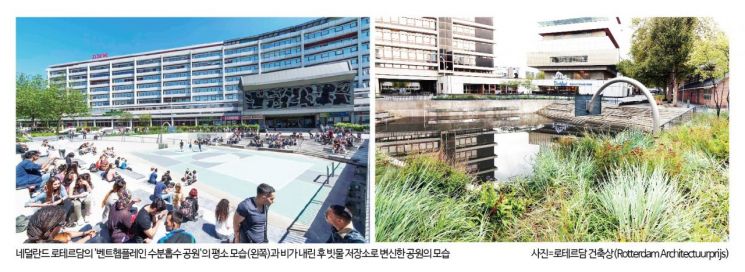
The "green roof" subsidy program, implemented since 2008, has resulted in the creation of green roofs spanning the equivalent of 50 soccer fields within a decade, helping to absorb rainwater and mitigate the urban heat island effect.
This philosophy of "Living with Water" forms the foundation of the Netherlands' climate adaptation policy, which has become a global example of turning water from a crisis into an opportunity.
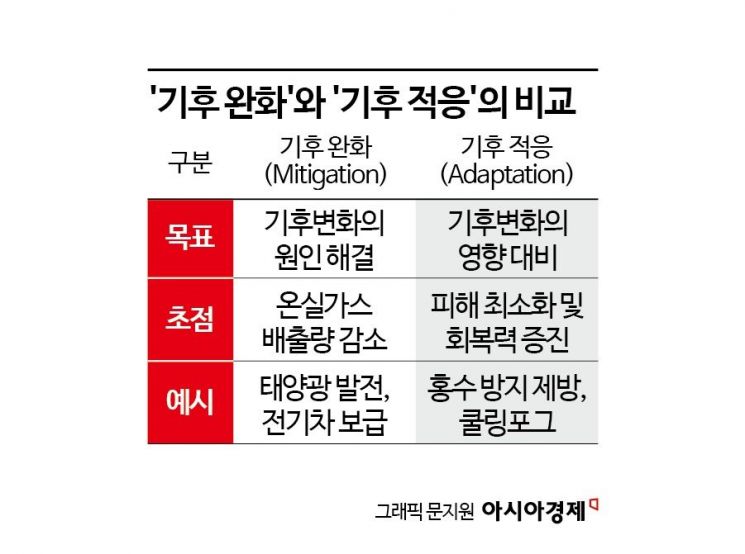
Climate change response is divided into "mitigation" and "adaptation." Mitigation refers to slowing the pace of climate change to buy time-efforts to reduce carbon emissions, such as the Paris Agreement, are representative examples. Until now, the focus has mainly been on how to mitigate. However, now is the time to seriously consider adaptation, as climate change is progressing at an unprecedented speed.
"Land of Four Springs" Reduced to a Land of Scorching Heat
Iceland, once one of the coldest countries on earth with an average temperature ranging from 2 to 11 degrees Celsius, recorded a temperature of 26.6 degrees on May 15, setting a new record for the highest May temperature in its history.
Yunnan Province in China, known for its mild climate and often described as "a place where all four seasons feel like spring," typically has an average temperature of around 25 degrees Celsius in June. However, last June, Yunnan turned into a land of extreme heat, with temperatures exceeding 40 degrees. In 2023, the region suffered from severe water shortages due to drought, but in June of this year alone, nearly 500mm of torrential rain fell within 24 hours, causing the worst flooding in a century and resulting in significant damage.
In June, Phoenix, Arizona, in the southwestern United States, experienced a record-breaking heatwave, with the highest temperature reaching 48.9 degrees Celsius and 27 consecutive days over 37.8 degrees Celsius (100 degrees Fahrenheit), leading to numerous cases of heat-related illnesses. California also suffered enormous damage from several record-breaking wildfires between May and July.
Climate's Blow to Socio-Economics... Adaptation for Recovery and Productivity
Climate experts have said, "We have already crossed the Rubicon." Myungin Lee, Director of the Heatwave Research Center and Professor of Urban and Environmental Engineering at Ulsan National Institute of Science and Technology (UNIST), emphasized, "Adaptation is crucial to reduce the damage from climate disasters, which are occurring in diverse and complex ways across regions, and to maintain the resilience and productivity of socio-economic systems in the face of a changing climate."
Korea is no exception. In July of this year, Korea experienced extreme weather, alternating between heatwaves and heavy downpours. The national average temperature was 27.1 degrees Celsius, the second highest on record after 1994, and some regions exceeded 40 degrees. Seoul experienced 23 consecutive tropical nights, the highest ever recorded, and in mid-July, Seosan in South Chungcheong Province recorded 438.5mm of rainfall in a single day, while Sancheong-gun in South Gyeongsang Province saw 793.5mm over several days, resulting in significant loss of life and property.
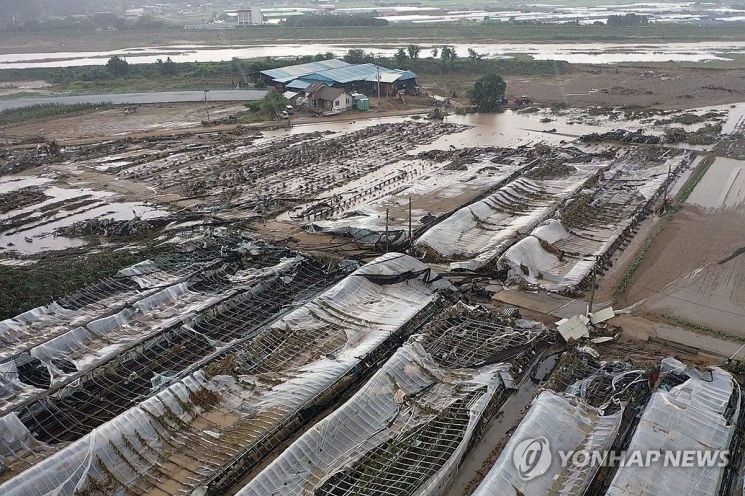 On the morning of the 21st last month, restoration work was underway on the Sancheong-daero section in Sinan-myeon, Sancheong-gun, Gyeongnam, where soil had poured down due to heavy rain and a landslide that occurred the previous day. Photo by Yonhap News
Against this backdrop, Seoul's "Rainwater Bank" project and the "Water Circulation Ecological City" initiative in Magok District, Gangseo-gu, are being recognized as exemplary cases of climate adaptation. These projects focus not just on water recycling, but on restoring the urban water circulation system. As of April 2024, about 6,700 rainwater banks have been installed, reducing the inflow to the sewage system during heavy rains to prevent flooding, and allowing the stored water to be reused for landscaping and cleaning, saving up to 250,000 won in annual water bills.
Magok District: A Domestic Model Combining Economic Feasibility and Effectiveness
In Magok District, Gangseo-gu, Seoul, rainwater management facilities have been integrated throughout the city, including parks, roads, and building rooftops. The Magok M Valley Complex 15 Park, for example, serves as a recreational area for residents under normal conditions, but during heavy rainfall, it can store about 14,000 tons of rainwater to prevent local flooding. According to Seoul's analysis, the introduction of such infrastructure can reduce flood volume for a 30-year frequency event by about 2%, with additional environmental benefits such as improved water quality, mitigation of the heat island effect, and reduced tap water usage. The Magok case demonstrates that climate adaptation can be both economically viable and effective-a domestic model for others to follow.
Seoul is actively incorporating Low Impact Development (LID) into urban planning, increasing the time rainwater can infiltrate the ground through permeable pavements and green roofs. This strategy seeks to absorb climate shocks by changing the nature of urban surfaces, rather than simply expanding drainage infrastructure.
This approach aligns with the Netherlands' philosophy of climate adaptation. Rather than blocking external threats with levees, it involves drawing these threats into everyday spaces and systems, designing cities to absorb their energy.
One Dollar Invested in Adaptation Saves Ten in Social Costs
The United Nations Environment Programme (UNEP) analyzes that "investing one dollar in climate adaptation can save up to ten dollars in social costs." The Magok District case supports this analysis, demonstrating not only reduced recovery costs but also improved public safety, environmental enhancement, and increased urban competitiveness. Like Rotterdam's water-absorbing parks, everyday spaces can transform into defensive infrastructure during climate crises.
Hoesung Lee, former Chair of the Intergovernmental Panel on Climate Change (IPCC), also emphasized, "Investments in climate adaptation deliver climate resilience and economic security much faster than mitigation investments," highlighting their "immediate and local nature."
The level of climate adaptation may become a metric for evaluating a country. Director Lee stated, "In advanced countries, property damage from natural disasters may inevitably increase in proportion to economic size, but loss of life must be minimized. This could be the true measure of an advanced nation."
He further noted, "Proactive preparation for natural disasters based on science and technology, the streamlining of disaster management policies, and heightened public awareness and civic consciousness must come together," adding, "The fact that heat-related casualties continue to occur year after year is highly significant."
Property Damage May Occur, but Loss of Life Reflects a Nation's Level
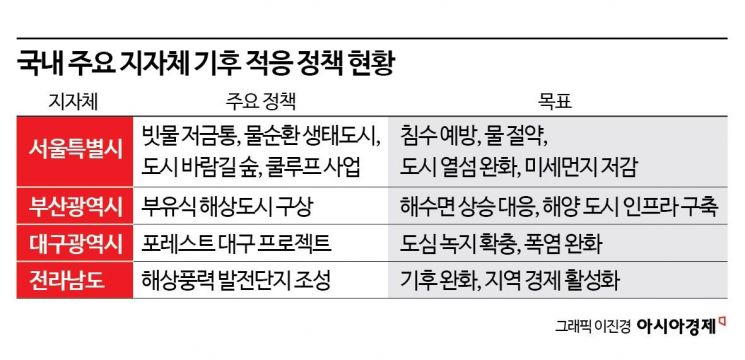
This is the context in which major local governments, including Seoul, are racing to introduce city-level climate adaptation strategies. Seoul is working to mitigate the urban heat island effect by creating "urban wind path forests" and implementing the "Cool Roof" project, which uses highly reflective materials on building rooftops.
Busan is pursuing the construction of a "floating maritime city" in North Port, aiming for completion by 2030. In collaboration with UN-Habitat and the American company Oceanix, this project seeks to embrace the sea as a new living space, rather than raising breakwaters or reclaiming coastlines to cope with rising sea levels. It could become a symbolic example of humanity shifting its response to climate change from resistance to coexistence.
Daegu is promoting the "FoRest Daegu Project," creating a green healing belt along the Geumho River and surrounding forests. South Jeolla Province is establishing an "offshore wind power complex" to increase the share of renewable energy, simultaneously pursuing climate change mitigation and revitalizing the local economy.
The Power to Make Adaptation a Reality: Institutional and Everyday Integration
Climate adaptation is not just a task for governments or experts. Amid threats of heatwaves, floods, and droughts, small actions in daily life can be the fastest-acting response.
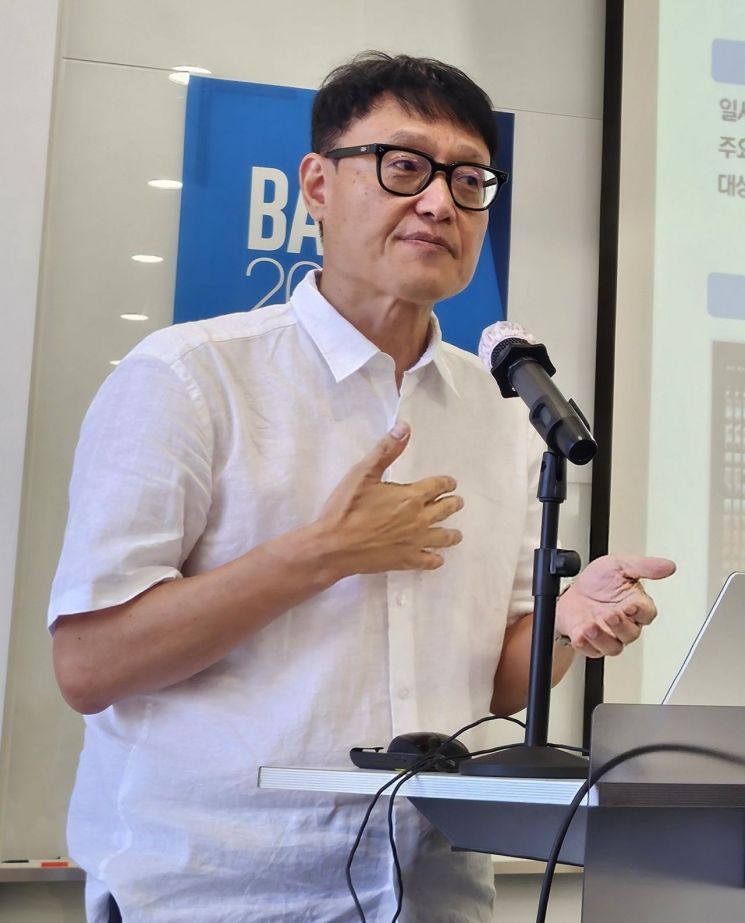 Myungin Lee, Professor at Ulsan National Institute of Science and Technology (UNIST). Photo by Jonghwa Kim
Director Lee points out, "Guidelines for preparation are steadily spreading through broadcasting and media, and public interest is growing, but in many cases, people still rely solely on personal responses to heatwave damage." He emphasizes, "It is important to develop a sense of urgency regarding increasingly severe weather disasters, and to incorporate not only short-term forecasts but also weekly outlooks into daily and work plans."
Institutional improvements remain a challenge. While strengthened measures such as mandatory rest periods at construction sites during heatwaves are being introduced, there are still areas where responses are insufficient. For example, the lack of systematic protection for outdoor workers or clear cancellation and refund policies for outdoor activities during heatwaves must be addressed to embed climate adaptation throughout society.
However, adaptation is also an opportunity. Industries such as cooling technology, functional clothing, safety equipment, and renewable energy are rapidly growing in response to climate change. Environmental changes, such as increased solar power generation during summer, are also creating new productivity.
When daily practices, institutional measures, and the evolution of industry and technology work together, climate adaptation becomes not just an abstract slogan, but a concrete capability that sustains society.
© The Asia Business Daily(www.asiae.co.kr). All rights reserved.














