Six Murals of Changdeokgung Palace Revealed for the First Time
Works by Modern Masters Including Kim Kyujin and Kim Eunho
The final royal court paintings of the Joseon Dynasty are being unveiled to the public for the first time in over a century.
The National Palace Museum of Korea, under the National Heritage Administration, announced on August 13 that it will hold a special exhibition titled "The Reverently Painted Murals of Changdeokgung" in its special exhibition hall from August 14 to October 12. For the first time, the exhibition will showcase six murals from Changdeokgung Palace, which are registered as National Cultural Heritage.
These murals are considered the last court paintings of the Joseon royal family. They were created during the reconstruction of the inner hall of Changdeokgung in 1920, after the original was destroyed. The murals decorated the living quarters of Emperor Sunjong and Empress Sunjeonghyo, who had abdicated the throne at the time. Each mural measures between 180 and 214 centimeters in height and between 525 and 882 centimeters in width, making them monumental works rarely seen in scale.
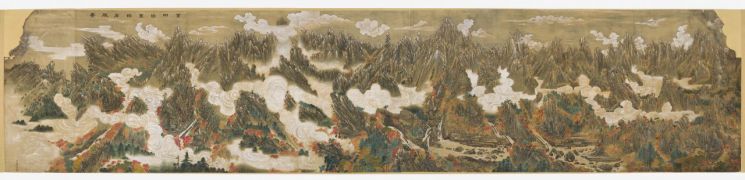
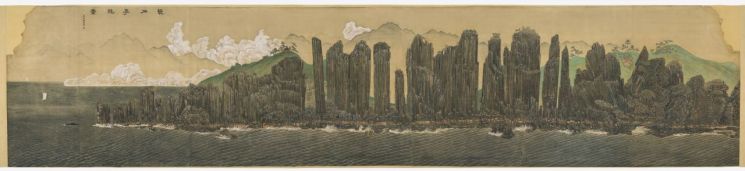
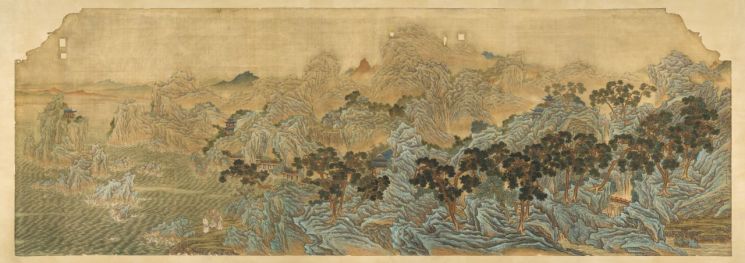
Many of Korea's leading modern artists participated in the creation of these murals. The mural "Chongseokjeongjeolgyungdo" in Huijeongdang, which panoramically depicts the towering cliffs of Chongseokjeong, and "Geumgangsan Manmulchoseunggyeongdo," which portrays the mystical and grand autumn scenery of Mount Geumgang enveloped in clouds, are both works by Kim Kyujin, who founded the Seohwa Research Society in 1915. He completed these pieces based on sketches he made while touring Mount Geumgang in person.
A museum official explained, "At that time, Mount Geumgang was emerging as a new subject in court paintings. The murals reflect both the spiritual significance of this sacred mountain, symbolizing the national spirit, and the contemporary trend of developing it as a tourist destination."
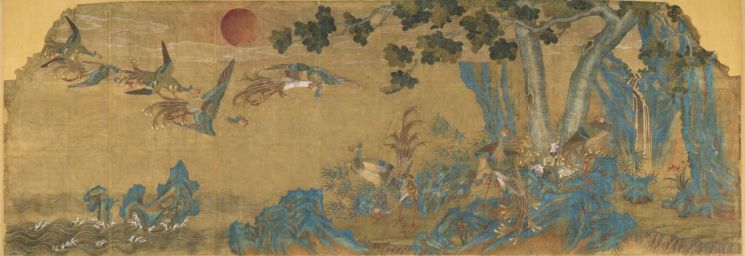
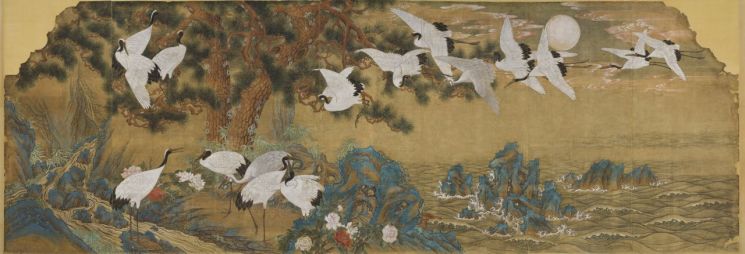
In Daejojeon Hall, facing each other, are "Bonghwangdo," a collaborative work by Jeongjae Oilyoung and Mukro Lee Yongwoo, and "Baekhakdo," painted by Idang Kim Eunho, known for "Geumchabongnapdo." Each mural features the sun and moon, representing the harmony of yin and yang, and they share similarities in the arrangement of objects and use of color. The phoenix, symbolizing peace and marital harmony, and the crane, one of the ten symbols of longevity, are recurring motifs in royal court paintings.
In Gyeonghungak, visitors can view "Joilseongwando" by Sinsan Noh Suhyun, who later became a professor at Seoul National University's College of Fine Arts after liberation, and "Samseongwanpado" by Cheongjeon Lee Sangbum, a prominent modern landscape painter. These works depict the immortal realm, removed from the mundane world. By featuring peaches and turtles-symbols of longevity-along with a young attendant and three immortals boasting of their ages, the murals express wishes for the emperor and empress's long life and peace.
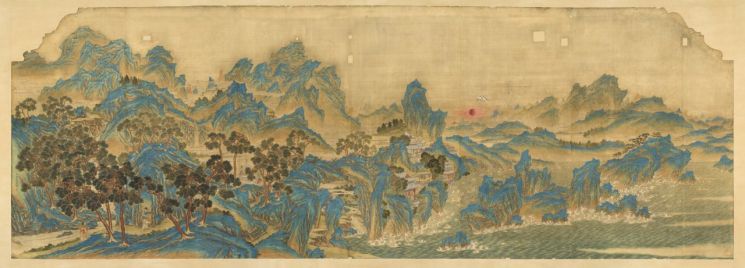
While all the murals are rendered in the traditional blue-green landscape style of the royal court, they also display modern characteristics. Unlike earlier Joseon court painters, the artists included their names alongside the phrase "geunsa" (reverently painted and presented), thereby asserting their individual identities as artists. Technically, these are not murals painted directly onto the walls but "attached murals," created on silk, mounted on paper, and then affixed to the walls, which is significant from an art historical perspective.
The National Heritage Administration has preserved and treated the murals, which remained in the inner hall, since 2014. The originals are now housed at the National Palace Museum of Korea, while replicas and facsimiles have been installed in the inner halls of Changdeokgung Palace. The exhibition also features immersive media art that recreates the scenic beauty of Mount Geumgang, the fluttering wings of phoenixes and cranes, and the world of immortals in real-time response to visitors' movements.
The museum is also presenting a media art piece titled "The Reverently Painted Murals, Awakened Again," inspired by the Changdeokgung murals. This immersive video installation responds to visitors' movements, bringing to life the breathtaking scenery of Mount Geumgang, the fluttering wings of phoenixes and cranes, and the world of immortals enjoying eternal life. A museum official stated, "We hope this exhibition will widely promote the excellence of palace architecture, royal court painting, and the achievements of Korea's modern art both domestically and internationally."
© The Asia Business Daily(www.asiae.co.kr). All rights reserved.














