Published in the Journal of Orthopaedic Research - Spine (JOR Spine, IF=3.4)
A recent study has found that epidural pharmacopuncture using placental extract is effective in improving nerve damage, inflammation, and pain caused by spinal stenosis.
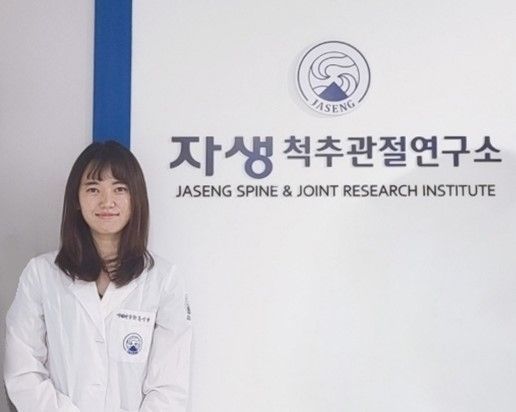 Jinyoung Hong, Ph.D., Spine and Joint Research Institute, Jaseng Hospital of Korean Medicine. Jaseng Hospital of Korean Medicine
The Spine and Joint Research Institute at Jaseng Hospital of Korean Medicine announced on August 12 that the results of this study were published in the SCI(E)-level international journal "Journal of Orthopaedic Research - Spine (JOR Spine, IF=3.4)."
Spinal stenosis is a condition in which the spinal canal narrows due to spinal degeneration, compressing the nerves and causing symptoms such as lower back pain, radiating pain in the lower limbs, and decreased sensation and muscle strength in the legs. Neurogenic claudication, where symptoms worsen during walking, is a characteristic feature. In particular, as the elderly population increases, there is growing interest in spinal stenosis, and the need for safe non-surgical treatments is rising, especially since older patients face higher surgical risks and concerns about complications.
In Korean medicine, spinal stenosis is treated with an integrative approach that includes acupuncture, pharmacopuncture, Chuna manual therapy, and herbal prescriptions. Among these, pharmacopuncture involves injecting the active ingredients of herbal medicines into the body, combining the effects of herbal medicine and acupuncture. Especially, epidural pharmacopuncture, which injects the treatment between the dura mater surrounding the spinal cord and the vertebrae, can maximize therapeutic effects by focusing on inflammation and pain around the nerves.
This study analyzed the effect of Jaha-geo (placental extract) pharmacopuncture, one type of pharmacopuncture, in treating spinal stenosis. Jaha-geo is a complex of bioactive substances (HPE) extracted from human placenta, rich in antioxidants and cell regeneration factors, and is known for its excellent efficacy in tissue recovery and immune modulation. In Korean medicine, it has traditionally been used for purposes such as kidney and blood tonification, and in modern times, it is being researched and used in various fields including regenerative medicine and skin care.
Accordingly, Dr. Jinyoung Hong's research team first conducted cell-level experiments with Jaha-geo pharmacopuncture. The team induced oxidative stress damage in dorsal root ganglion (DRG) neurons, which are sensory neurons related to pain, and then administered Jaha-geo pharmacopuncture at concentrations of 2.5mg/mL and 5mg/mL. The results showed a significant increase in neuronal survival rates, growth of axonal projections, and inhibition of pain-related proteins such as TRPV1, CGRP, and IB4, confirming the analgesic effect of Jaha-geo pharmacopuncture.
Subsequently, in animal experiments, experimental rats with induced spinal stenosis received epidural Jaha-geo pharmacopuncture at concentrations of 10mg/kg and 20mg/kg, five times a week for four weeks. As a result, the expression of M1 macrophage-related factors (iNOS, TNF-α, COX-2), which induce inflammatory responses, was significantly inhibited in a dose-dependent manner. In addition, M2 macrophage factors (ARG1, CD206), which induce anti-inflammatory effects, were activated more than twofold, demonstrating anti-inflammatory efficacy.
Positive results were also observed in functional recovery and safety evaluations. In assessments of motor function based on gait analysis, the group treated with Jaha-geo pharmacopuncture showed a markedly faster recovery rate compared to the untreated group, and pain sensitivity to external stimuli was significantly reduced. Notably, even with repeated epidural Jaha-geo pharmacopuncture, no adverse reactions such as changes in body weight or liver values were observed, confirming its safety.
Dr. Jinyoung Hong, Ph.D., of the Spine and Joint Research Institute at Jaseng Hospital of Korean Medicine, stated, "Unlike steroid-based injection therapies, Jaha-geo pharmacopuncture poses fewer concerns about side effects and offers the potential for fundamental treatment, including nerve regeneration and inflammation suppression. We hope that further expanded research will enable its application in clinical practice in the future."
© The Asia Business Daily(www.asiae.co.kr). All rights reserved.
!["The Woman Who Threw Herself into the Water Clutching a Stolen Dior Bag"...A Grotesque Success Story That Shakes the Korean Psyche [Slate]](https://cwcontent.asiae.co.kr/asiaresize/183/2026021902243444107_1771435474.jpg)
















