Tracing the Ecology, Boundaries, Existence, and Memory of the DMZ through Diverse Media and Approaches
Purchase Warehouse Transformed into Exhibition Hall
Exhibiting Collected Sounds and Flora and Fauna from the DMZ
Artworks Displayed Throughout the Grassy Fields of Paju Imjingak Peace Nuri
An exhibition has been organized in the Demilitarized Zone (DMZ), a symbol of war and division, to explore the new possibilities for peace that may emerge there. The exhibition features 26 works by 10 domestic and international artists, displayed across Tongilchon Village, Gallery Greaves, and the Paju Imjingak Peace Nuri area.
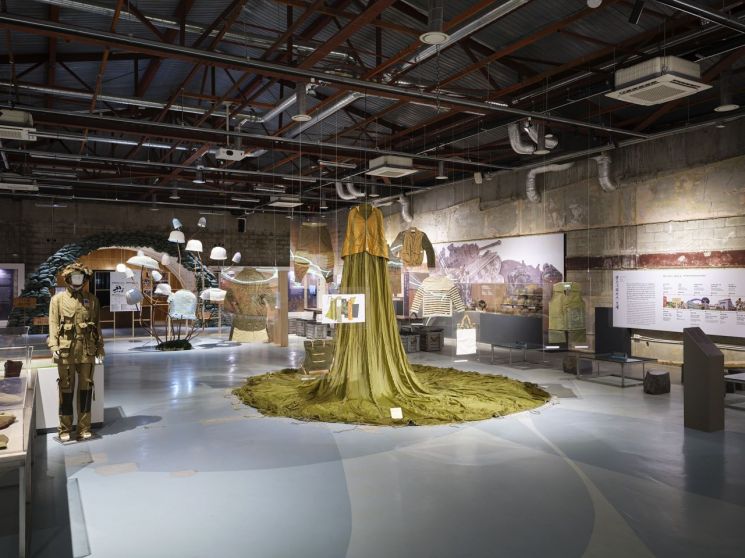 Interior view of Gallery Greaves. Works made from materials such as parachutes, military uniforms, and tents scheduled for disposal were exhibited. Gyeonggi-do
The title of this exhibition, "UNDO DMZ," is borrowed from Haegue Yang's 2020 work "DMZ Flight." While "undo" is commonly translated as "to revert to the original state," it also carries the ambiguous meanings of "to open" and "to unravel." The exhibition invites visitors to imagine a new future in a place marked by the scars of war and division, yet paradoxically, where wildness and biodiversity are being restored.
Tracing the Ecology, Boundaries, Existence, and Memory of the DMZ through Diverse Media and Approaches
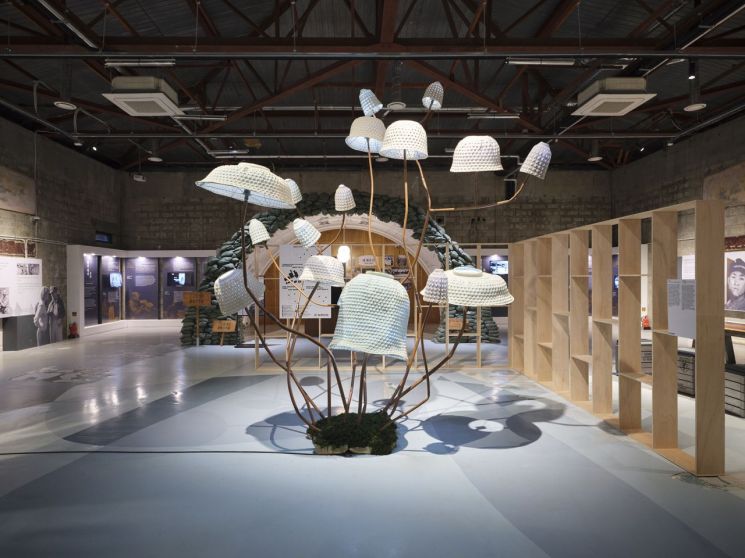 Interior view of Gallery Greaves. The artwork facing forward is "Soil to Soul" by artist Osangmin, made with aramid yarn, a material used in bulletproof vests. Gyeonggi-do
Gallery Greaves, repurposed from Camp Greaves?the oldest U.S. military base in Korea, used by the U.S. military from 1953 to 2004?now hosts a large number of works created using military supplies. Lee Sangmin's "Soil to Soul" utilizes aramid yarn, a material used in bulletproof vests, to form patterns resembling mushroom mycelium. Through this, the artist draws attention to entities that exist around us but are often unrecognized and overlooked. Lee Sangmin stated, "I wanted to explore the theme of 'relationships' through the physical language of fibers, which appear fragile yet possess a strong structure." The fashion brand RE:CODE sought to explore the circulation of materials and the transformation of meaning through works made from discarded tents, military uniforms, and parachutes. A RE:CODE representative explained, "By reinterpreting military supplies, we pursued the possibilities of peace and transformation."
Purchase Warehouse Transformed into Exhibition Hall
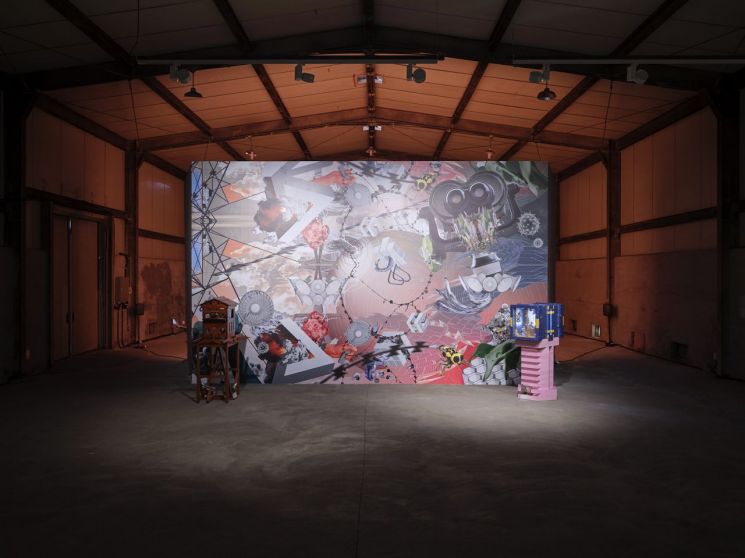
For this exhibition, the purchase warehouse in Tongilchon Village, located within the Civilian Control Line, was specially reorganized as an exhibition hall. The largest space in the purchase warehouse is occupied by Haegue Yang's "DMZ Flight." This work focuses on the forces that influence both the human and natural worlds that exist behind the DMZ, blending seemingly unrelated objects to express collapsed temporality and spatiality through a digital collage. Haegue Yang explained, "Because the DMZ is a space with restricted access, it is, paradoxically, a space where abstraction can easily intervene." Behind the main piece, a video work featuring the fictional bee "Bonghee" offers a reflection on the human world, marked by division, the Cold War, tension, and conflict.
Exhibiting Collected Sounds and Flora and Fauna from the DMZ
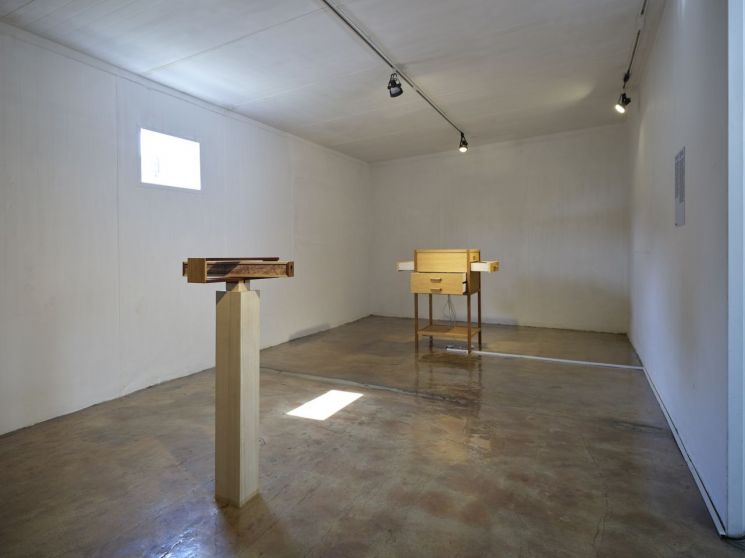
In the cultural and arts space located opposite the purchase warehouse exhibition hall, works utilizing sounds collected from the DMZ are on display. Kim Jun's "Mixed Signals" is a rotating sound object, creating the sensation of sounds emanating from all directions as the sound box rotates. Park Joonsik's "Flowers Blooming on (Sorrowfully) Fertile Land" captures the unique ecological environment of the DMZ Paju area. The work recalls forgotten times and the memory of nature by drying or immersing the remains of various plants and animals in special solutions.
Artworks Displayed Throughout the Grassy Fields of Paju Imjingak Peace Nuri
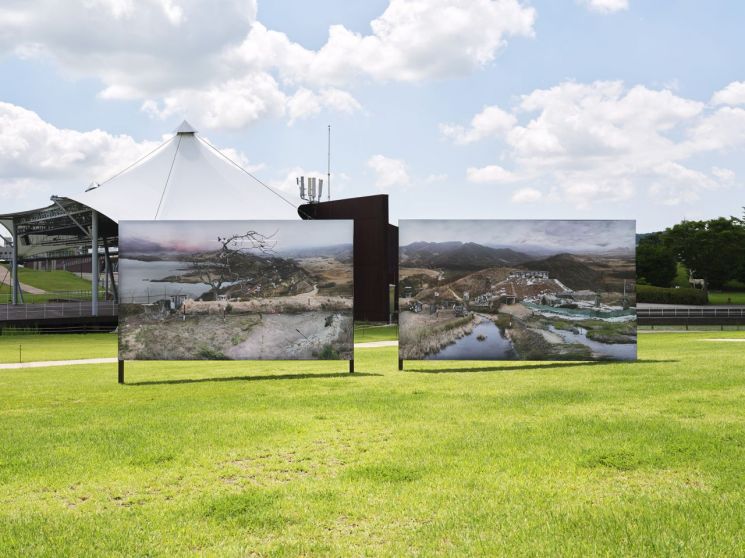
In addition, a variety of artworks are spread across the green lawns of Paju Imjingak Peace Nuri. The exhibition includes works by Haegue Yang that visually express the energy of the DMZ, as well as pieces by Won Sungwon that contemplate the relationships of life through depictions of animals and plants.
Kim Sunjung, artistic director of Art Sonje Center and curator of this exhibition, commented, "This exhibition is an attempt to observe, through the eyes and works of artists, the process by which the DMZ?long a remnant of tension and war for over 70 years?is being restored by the power of nature itself over time."
The exhibition runs until November 5. Gallery Greaves can be accessed via gondola without complicated identification procedures, while Tongilchon Village can be reached using the peace tourism shuttle.
© The Asia Business Daily(www.asiae.co.kr). All rights reserved.














