Senator Cotton: "Tan Effectively Controls Dozens of Chinese Companies"
Stock Price Drops 3.1%
On August 7 (local time), U.S. President Donald Trump called for the immediate dismissal of Lip-Bu Tan, the newly appointed CEO of American semiconductor company Intel.
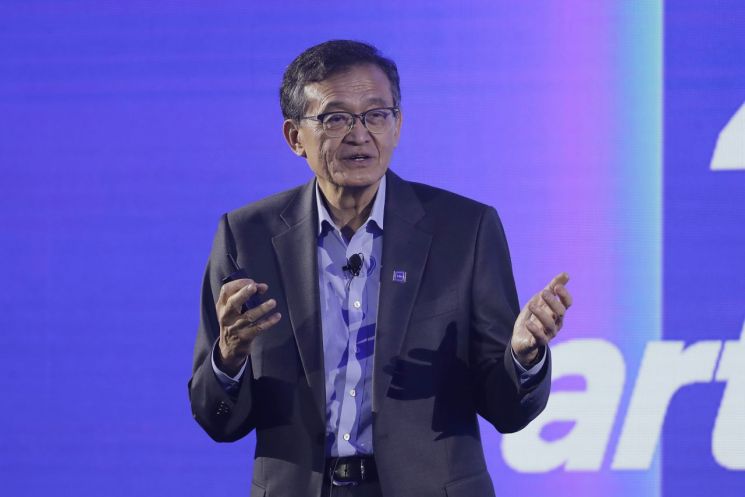
On his social media platform Truth Social, President Trump stated that Intel CEO Lip-Bu Tan "must resign immediately due to serious conflicts of interest," adding, "There is no other solution to this issue." It appears that Trump believes Tan's past investment activities could threaten U.S. efforts for semiconductor self-sufficiency and national security.
Previously, Senator Tom Cotton, the Republican chairman of the U.S. Senate Intelligence Committee, claimed in a letter to Intel that "Tan effectively controls dozens of Chinese companies and is known to hold stakes in hundreds of Chinese advanced manufacturing and semiconductor firms. At least eight of these companies are reportedly linked to the People's Liberation Army of China." The letter was published on Senator Cotton's website.
Senator Cotton also mentioned the case of Cadence Design Systems, which Tan previously led. He stated, "This company recently pleaded guilty to illegally selling its products to a Chinese military university and transferring technology to related Chinese semiconductor companies without a license." Senator Cotton added, "At the time, the company was headed by Tan."
The Wall Street Journal (WSJ) reported that Tan founded the venture fund Walden International (hereafter Walden) in 1987 and actively invested in Chinese electronics and manufacturing companies.
This fund was an early investor in China's state-owned semiconductor manufacturer SMIC in 2001, and Tan served on its board until 2018. SMIC produces high-performance semiconductors for AI and military-use chips.
Tan, an ethnic Chinese of Malaysian descent, was born in Malaysia, studied at Nanyang Technological University in Singapore, graduated from MIT in the United States, and later became a naturalized U.S. citizen. He was appointed as Intel CEO in March this year, succeeding Pat Gelsinger.
Following the pressure for Tan's resignation, Intel's stock price plunged more than 3%. On the New York Stock Exchange that day, Intel closed down 3.14% at $19.77. This was the first time in three trading days since August 4 that the stock closed below $20. Since Tan's appointment, Intel's stock price had risen by about 15% due to strong restructuring measures.
© The Asia Business Daily(www.asiae.co.kr). All rights reserved.
![User Who Sold Erroneously Deposited Bitcoins to Repay Debt and Fund Entertainment... What Did the Supreme Court Decide in 2021? [Legal Issue Check]](https://cwcontent.asiae.co.kr/asiaresize/183/2026020910431234020_1770601391.png)
















