Trump's 50% Tariff Deals a Direct Blow to Brazil and India
Possibility of BRICS Solidarity Mentioned
Discussions on Expanding Payment Systems and Preferential Trade Agreements
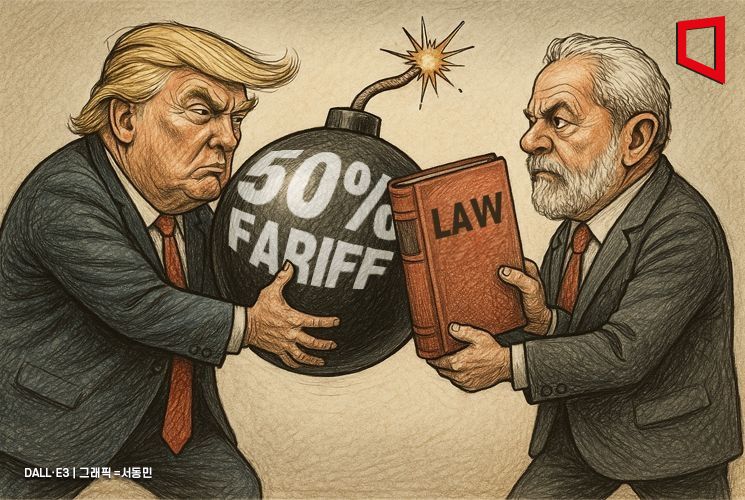
In response to the imposition of high tariffs by U.S. President Donald Trump, Brazil and India, both hit with a "50% tariff bomb," have reaffirmed their commitment to unity and agreed to cooperate on expanding trade based on multilateralism.
The Brazilian presidential office announced in a press release on the 7th (local time) that President Luiz Inacio Lula da Silva of Brazil held a phone call with Indian Prime Minister Narendra Modi for about one hour on that day. The two leaders discussed the global economic situation and made the issue of the United States' unilateral imposition of tariffs a key agenda item.
The Indian government also confirmed the call, with Reuters reporting that "the two leaders exchanged views on a range of topics, including the tariff issue."
Currently, both countries are facing a 50% tariff, the highest level in the world, imposed by the Trump administration. Brazil is subject to the tariff due to the ongoing coup plot trial against former President Jair Bolsonaro, who was a political ally of President Trump. India, on the other hand, faces a 50% tariff as a result of the existing 25% tariff and an additional 25% tariff imposed due to imports of Russian oil.
The Brazilian presidential office emphasized that "Brazil and India share an understanding of the importance of defending multilateralism and reaffirmed the need to respond to current challenges," adding that "they agreed to seek possibilities for deeper integration on this occasion."
President Lula is planning a state visit to India next year, and the two countries have agreed to continue cooperating toward achieving the goal, set during Prime Minister Modi's visit to Brazil last month, of expanding bilateral trade to $20 billion by 2030.
This phone call took place the day after President Lula announced that he would discuss ways to jointly respond to the high U.S. tariffs at the BRICS level.
In an interview with Reuters the previous day, President Lula suggested the possibility of building a "front against Trump" within BRICS, stating, "The first thing I will do is contact China and India."
BRICS has been seeking alternatives to the U.S.-centered dollar hegemony, and in response, President Trump recently warned, "Any country that abandons the dollar will face a 100% tariff on its products in the United States."
The two countries also agreed to expand the scope of the preferential trade agreement between India and the Southern Common Market (Mercosur), and to share technical and operational information regarding their real-time payment platforms: Brazil's Pix and India's UPI, according to the Brazilian presidential office.
In particular, Brazil's Pix system has been targeted by the United States for a Section 301 unfair trade investigation under U.S. trade law, on the grounds that it negatively impacts the U.S. card company market.
President Lula has indicated that "even if a tariff negotiation table is established with the United States, Pix will never be a subject of negotiation."
© The Asia Business Daily(www.asiae.co.kr). All rights reserved.












