2Q Operating Profit Plunges 37% Year-on-Year
Mobile Market Share Falls Below 40%
KRW 250 Billion Reflected for USIM Replacement and Agency Compensation
"Inevitable Impact on Earnings... Telecom Bill Discounts to Be Reflected in Q3 and Q4"
SK Telecom suffered a direct hit to its second-quarter performance due to the USIM information hacking incident, and its earnings in the second half of the year are also expected to be negatively affected. This is because the costs associated with measures such as universal rate discounts and penalty waivers for all customers are scheduled to be reflected in the second half.
On August 6, during the second-quarter earnings conference call held in the afternoon, SKT Chief Financial Officer Kim Yangseop stated, "Temporary impacts on this year's results are inevitable due to the universal USIM replacement for all customers, the Responsibility and Promise program, and the waiver of contract termination penalties," adding, "We believe that regaining customer trust is the most important thing from a mid- to long-term perspective, and we will strengthen our core business fundamentals to ultimately enhance corporate value."
On this day, SKT announced that its consolidated revenue for the second quarter of this year was KRW 4.3388 trillion, with operating profit at KRW 338.3 billion. Compared to the same period last year, revenue decreased by 1.9%, and operating profit plummeted by 37.1%. Net profit during the same period also dropped by 76.2%.
However, only the costs of universal USIM replacement for all customers and compensation for suspended agency operations were reflected in the second-quarter results. These costs amounted to approximately KRW 250 billion. During this period, SKT replaced all customers' USIM cards free of charge and provided compensation to agencies whose new business operations were suspended. CFO Kim explained, "In accordance with accounting principles, we conservatively assumed that all customers could replace their USIMs and reflected the total theoretical cost in the second quarter at once," adding, "In addition, including compensation for agency losses and other factors, one-off costs amounted to about KRW 250 billion."
The company was also unable to avoid a decline in subscribers. This was due to both the increased customer churn following the hacking incident and the inability to accept new subscribers for a certain period during the USIM replacement process. According to wireless communication subscriber statistics from the Ministry of Science and ICT, the number of subscribers who left SKT from April, when the hacking incident occurred, to July 14, when the penalty waiver for number portability was implemented, reached a total of 835,214. SKT's mobile market share also fell below 40%. CFO Kim said, "Compared to the end of March, the number of handset (mobile communication) subscribers decreased by about 750,000 by the end of June, which resulted in a KRW 38.7 billion decrease in mobile communication revenue compared to the first quarter."
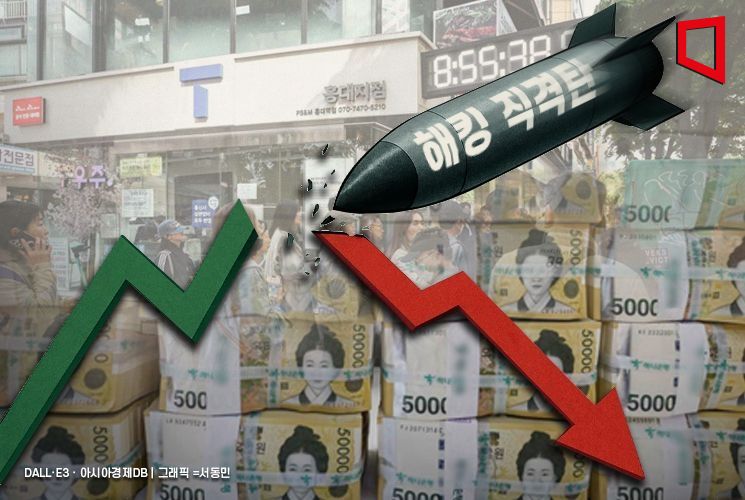
SKT's financial burden is expected to grow even larger in the second half of the year. This is because, under the Responsibility and Promise program, measures totaling about KRW 500 billion will be implemented, including a 50% discount on all customers' bills in August, additional data provided to all customers through the end of the year, and T Membership relay discounts. The cost of penalty waivers for customers who terminate their contracts will also be reflected in the second-half results.
CFO Kim stated, "The Responsibility and Promise program will be fully implemented in the second half, and since the 50% discount on telecom bills, which has the greatest financial impact, is scheduled for the third quarter, we expect a decline in both revenue and operating profit compared to the second quarter," adding, "We have revised our revenue guidance downward from KRW 17.8 trillion to KRW 17 trillion, and operating profit will inevitably fall below last year's level."
However, the growth of the artificial intelligence (AI) business partially offset the decline in second-quarter results. SKT's AI business segment grew by 13.9% year-on-year. The AI data center business recorded revenue of KRW 108.7 billion, up 13.3% from the same period last year, and the enterprise AI service (AIX) business posted KRW 46.8 billion in revenue, a 15.3% increase. The cumulative number of subscribers to the AI agent service 'A.Dot' surpassed 10 million as of the end of last month.
In particular, in the AI data center (AIDC) business, if the Ulsan AIDC, which is being promoted at the SK Group level, becomes operational, annual revenue of around KRW 1 trillion is expected. Lee Hyunwoo, head of SKT's AIDC Promotion Division, emphasized, "From the perspective of the overall AIDC business plan, we aim to secure a cumulative capacity of more than 300 MW (megawatts) by 2030, and with higher utilization rates, we expect annual revenue of around KRW 1 trillion by 2030," adding, "The Ulsan AIDC will feature advanced structural design and cooling systems, which will provide a profitability advantage over previous data centers."
© The Asia Business Daily(www.asiae.co.kr). All rights reserved.












