About 30 Registered Monks and Staff Leave the Temple
Shaolin Temple's Annual Income Reaches Nearly 200 Billion Won
The renowned Chinese temple Shaolin, frequently featured in martial arts novels, is currently suffering from an unexpected internal conflict. After the recent replacement of the abbot, who caused public controversy due to a scandalous private life, it is now reported that an increasing number of monks are leaving Shaolin Temple as internal discipline has been tightened.
On July 29, the Shaolin Temple Administration hurriedly appointed Su Yinlu, who was previously the abbot of Baima Temple, as the new abbot, replacing Seungxin, who stepped down due to corruption allegations. The former abbot, Seungxin, is currently under investigation by relevant authorities for charges including embezzlement and private appropriation of temple assets, serious violations of monastic discipline, inappropriate relationships with multiple women, and fathering illegitimate children.

The former abbot, who stepped down due to his dissolute private life, is also being criticized for excessively commercializing Buddhism and Shaolin Temple, reducing them to mere tools for making money. During his tenure as abbot, the annual income of Shaolin Temple reportedly exceeded 1 billion yuan (about 193 billion won). Shaolin Temple owns 795 trademarks and more than 60 branches worldwide, with much of its revenue coming from donations by numerous visitors.
Amid growing public criticism of this commercialization and perceived corruption, the newly appointed abbot has launched reform policies aimed at restoring the temple's image by strengthening monastic discipline and curbing commercialization. The first policies implemented include mandatory morning chanting, morning farming, afternoon meditation, confiscation of mobile phones, and a ban on entertainment. However, Taiwan media report that these measures have led to an increasing number of monks leaving Shaolin Temple in protest.
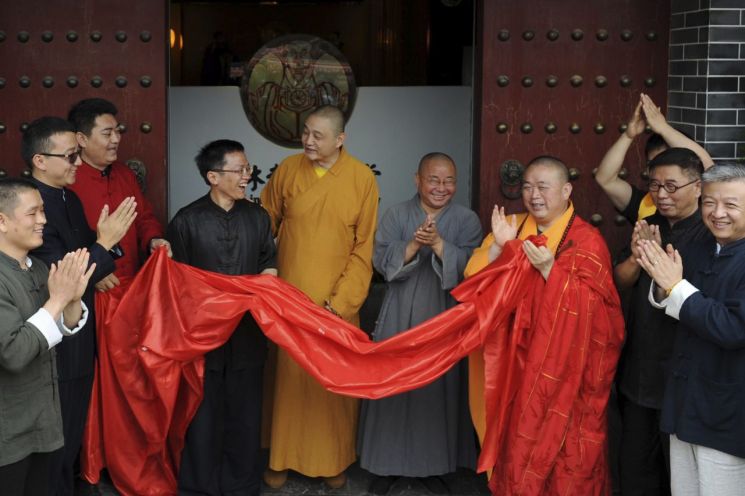 Seungxin Siungshin (third from right), former abbot of the Shaolin Temple in China, is attending the opening ceremony of a meditation center held on June 28, 2015, in Xi'an, Shanxi Province, northwest China, and is conversing with participants. Photo by AP Yonhap News
Shaolin Temple, one of the largest temples in China, is known to have about 300 registered monks, with around 150 residing there. More than 30 monks have left the temple as resignations continue. In an effort to prevent further commercialization, the temple has drastically revised the business model introduced by the former abbot and discontinued the sale of many products that had been criticized. On his first day in office, the new abbot, Su Yinlu, introduced five new regulations: a ban on commercial performances, a ban on expensive inauguration ceremonies, the reorganization of temple shops, encouragement of self-sufficient agriculture, and reform of income distribution.
Wave of resignations among monks as commercial activities end
The "warrior monks," who once asked visitors to scan QR codes for donations, are no longer seen, and some previously paid materials are now on display for free. Incense sticks, which used to cost hundreds or even thousands of yuan, are now provided free of charge by the temple, and there are no longer street vendors selling incense. The tradition of monks engaging in both farming and meditation has also been restored.
Monks are now required to attend study sessions at 4:30 a.m., recite Buddhist scriptures, work in the fields, and practice meditation and martial arts in the afternoon. Mobile phones must be handed in, entertainment activities are prohibited, and monks are not allowed to leave the temple on weekends without permission. In addition, all commercial activities, including global tours by Shaolin martial arts monks and cultural or creative shops, have reportedly been suspended.
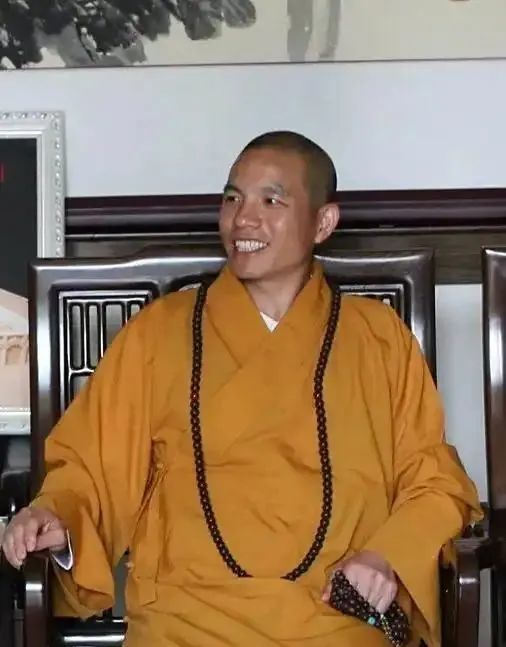 The former abbot of Shaolin Temple in Henan Province, known as a symbol of Chinese Buddhism and the birthplace of Kung Fu, is under investigation by authorities for embezzlement and other charges, while a new abbot has been appointed. Su Yinlu is the newly appointed abbot.
A young monk wrote on social media, "I used to look up scriptures on my phone, but suddenly having my phone confiscated feels like losing an arm." Those leaving due to the new reform policies include not only monks but also employees working at Shaolin Temple. A souvenir shop worker who had worked at the temple for 12 years said that she used to earn more than 10,000 yuan (about 1.93 million won) per month in dividends, but now has no choice but to leave since the shop has closed. Most of the resignations are reportedly from monks and staff who depended on commercial activities, as well as younger monks accustomed to a more relaxed management style.
Meanwhile, Shaolin Temple is located on Songshan in Henan Province and is known as "Songshan Shaolin Temple." It was founded during the reign of Emperor Xiaowen of the Northern Wei dynasty, one of the Five Hu (Hu) minority dynasties, in 495. Shaolin Temple became famous for martial arts during the time of Bodhidharma and Emperor Taizong of the Tang dynasty. Legend has it that Bodhidharma trained both mind and body through martial arts, and that 13 Shaolin monks saved Emperor Taizong's life. The plaque inscribed "The World's Number One Famous Temple," which hangs at Shaolin Temple, is also said to have been written by Emperor Taizong. During the Ming dynasty, Shaolin monks took the lead in wars against Japanese pirates. As Shaolin's fame grew, strong men from all over the country gathered there, earning it the reputation as the "holy land of Chinese martial arts."
© The Asia Business Daily(www.asiae.co.kr). All rights reserved.














