FKI Holds Roundtable on the Korea-US Economic Alliance
Yoo Myunghee: "We Must Devise Strategies to Resolve Practical Issues for Korean Companies While Building a Mutually Beneficial Structure with the US"
"Difference in Positions Between Korea and the US... Clear Principles and Standards Needed"
US Experts: "Significant Impact Expected from Korea's Large-Scale Investments"
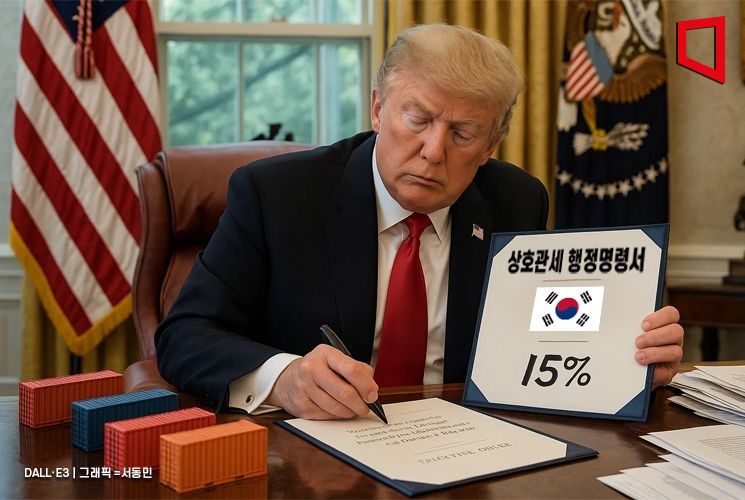
Regarding the outcome of lowering mutual tariff rates to 15% through negotiations with the United States, Korean trade experts emphasized the significance of temporarily resolving market uncertainty. However, they also advised that efforts must continue in future detailed negotiations to address the issues faced by domestic companies.
Yoo Myunghee, former Minister for Trade and currently a professor at Seoul National University Graduate School of International Studies, stressed at the roundtable discussion titled "The Evolving Korea-US Economic Alliance: Beyond Tariffs to Technology and Industrial Cooperation" hosted by the Federation of Korean Industries at the FKI Tower Conference Center in Yeouido, Seoul, on the morning of August 5, "It is now time to devise strategies that can resolve the practical issues faced by our companies while building a mutually beneficial cooperation structure with the United States in the detailed negotiations."
As a panelist in the second session of the roundtable, Yoo also stated, "In a trade environment where high tariffs and protectionism in the United States have become the new normal, it is necessary to strengthen our technological competitiveness to overcome these challenges. At the same time, we must actively consider strategies for market diversification." She further emphasized, "As concerns about the hollowing out of domestic industries grow with our companies focusing their investments on the United States, it is more important than ever for the government to create an environment that can maintain manufacturing competitiveness through proactive deregulation policies."
Lee Jaemin, former Chairman of the Korea Trade Commission and Dean of Seoul National University School of Law, who also participated as a panelist, prefaced his remarks by saying, "It is premature to assess the substantive impact at this stage." However, he added, "Since the actual negotiations are only at the beginning, it is necessary to respond meticulously and strategically so that our position can be sufficiently reflected in the interpretation and implementation of key issues." Choi Seokyoung, former Ambassador to the Geneva Mission and currently an advisor at Lee & Ko, also commented, "As additional discussions on security issues such as defense cost-sharing and adjustments to the role of US Forces Korea are expected through upcoming summits and documentation processes, strategic preparation for these matters is required." He further advised, "Given the differences in positions between Korea and the United States in the process of establishing the $350 billion investment fund, the government must respond with clear principles and standards."
Kim Changbeom, Vice Chairman of the Federation of Korean Industries, who hosted the roundtable, said in his opening remarks, "Despite the relatively tight timeline compared to other countries, our negotiating team's creative efforts have led to a conclusion at a level similar to or even more favorable than that of major advanced countries." He added, "Cooperation between Korea and the United States must evolve beyond tariffs into technology and industrial cooperation." Kim Bongman, Head of International Affairs at the Federation of Korean Industries, stated, "Since the greatest overarching uncertainty that persisted since the launch of the Trump administration has now been removed, we hope that more practical benefits can be achieved through future detailed negotiations." He continued, "In preparing for these negotiations, the public and private sectors should work together as 'Team Korea.' The government should listen as much as possible to the voices of companies, especially those entering the US market, while our companies should play their necessary roles from the perspective of the national interest."
US experts also participated in the roundtable via online video connection, sharing their assessments of the recent Korea-US trade negotiations and their implications from an American perspective. Jeffrey Schott, Senior Fellow at the Peterson Institute for International Economics (PIIE), said, "I hope that this investment commitment will actually lead to expanded production in the United States and revitalize trade between the two countries." Patrick Cronin, Asia-Pacific Security Chair at the Hudson Institute, predicted, "With large-scale investment commitments in key industries, Korea will serve as a strong and capable ally of the United States in the future."
© The Asia Business Daily(www.asiae.co.kr). All rights reserved.

















