Renamed from Battery Research Institute to Future Technology Institute
SK On has launched the 'Future Technology Institute', initiating its policy of 'technology-driven growth'.The company aims to rapidly secure next-generation technologies to create a decisive momentum for future growth and accelerate its expansion.
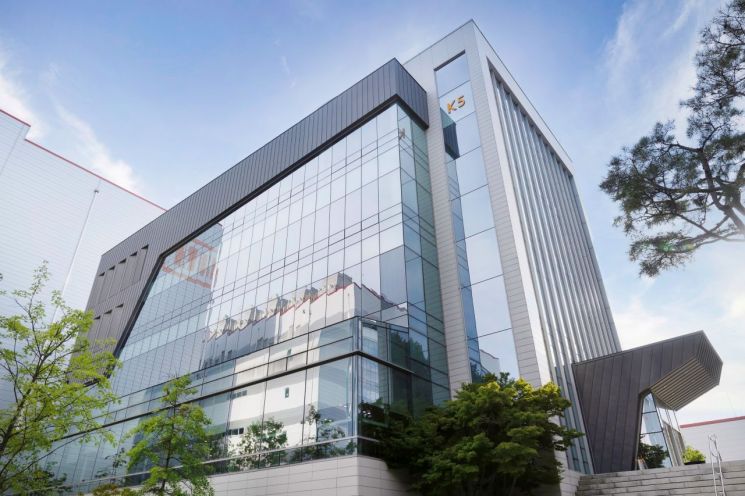
On August 3, SK On announced that it has changed the name of its 'SK On Battery Research Institute' in Daejeon to the 'SK On Future Technology Institute'.
Park Kisoo, the inaugural head of the SK On Future Technology Institute (formerly Head of R&D), stated, "Global technological competition is intensifying and market conditions are changing rapidly," adding, "Based on a clear research and development (R&D) strategy, we will grow SK On into a technology-driven company."
First, the SK On Future Technology Institute plans to diversify chemistry and form factors?such as all-solid-state batteries, lithium iron phosphate (LFP) batteries, and prismatic batteries?to execute strategic projects.
In particular, as part of its focus and selection of future technologies, the institute will accelerate technology development to secure 'price competitiveness' and 'product safety' as short-term strategic tasks. On the price side, it will promote the commercialization of cell-to-pack technology (assembling battery cells directly into packs) and dry electrode process technology. In terms of safety, it will shorten the development period for semi-solid batteries and thermal runaway prevention solutions.
The Future Technology Institute also plans to complete the development of LFP and mid-nickel cell-to-pack technologies within this year and build a pilot plant for the dry electrode process by the end of the year to secure product viability.
Additionally, the institute aims to produce prototypes of semi-solid batteries?which use a gel-type polymer-oxide composite electrolyte offering higher safety compared to liquid electrolyte batteries?on a pilot line by the end of next year.
For example, the thermal runaway prevention solution can effectively suppress temperature increases inside the pack by utilizing immersion cooling technology. The immersion cooling technology already completed preliminary verification last year and is currently being developed in cooperation with automakers.
SK On expects that, with the upcoming merger with SK Enmove in November, the combined technological capabilities of both companies will further accelerate the development of immersion cooling technology.
The SK On Future Technology Institute has played a pivotal role in SK Group's battery business even before its establishment as an independent entity. In 1985, the Yukong Ulsan Technical Support Research Institute began developing Korea's first energy storage battery system, and since 1991, it has been actively engaged in electric vehicle battery development. After the launch of the SK Daedeok Institute of Technology in 1995, the lithium-ion polymer battery developed in 2010 was installed in Korea's first mass-produced pure electric vehicle.
SK Daedeok Institute of Technology was the first in the world to develop the NCM9 battery, which contains 90% nickel, in 2019. As the nickel content was raised to about 90%, the institute focused on ensuring safety. By introducing 'Z-folding' technology in the battery manufacturing process, it enhanced safety and demonstrated global competitiveness.
© The Asia Business Daily(www.asiae.co.kr). All rights reserved.

















