Major Reservoirs in Iran Dry Up
Tehran Faces Water Shortage Crisis
"Day Zero" Possible, Experts Warn
There is a warning that Tehran, the capital of Iran, which is currently experiencing the 'worst drought' due to a severe heatwave, could face a large-scale water outage within a few weeks.
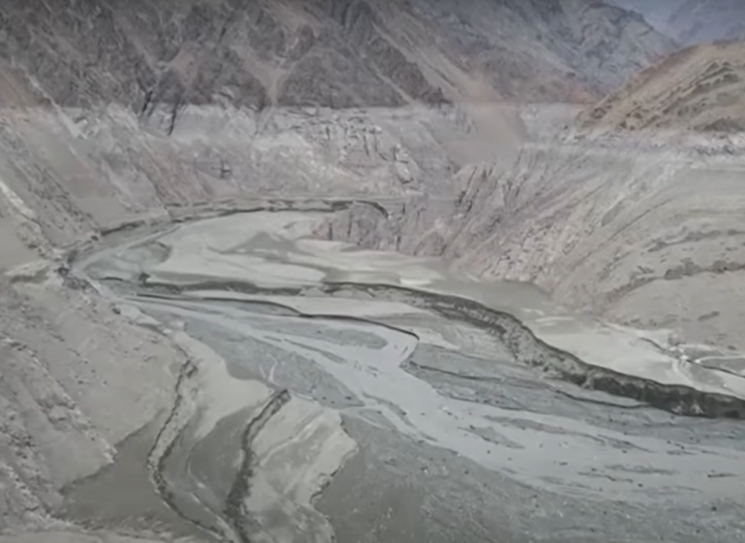 As drought continues in Iran, major reservoirs are drying up, intensifying the water crisis. Photo by Iran International
According to CNN on July 31 (local time), Iran is facing a severe water shortage crisis nationwide, with major reservoirs drying up rapidly.
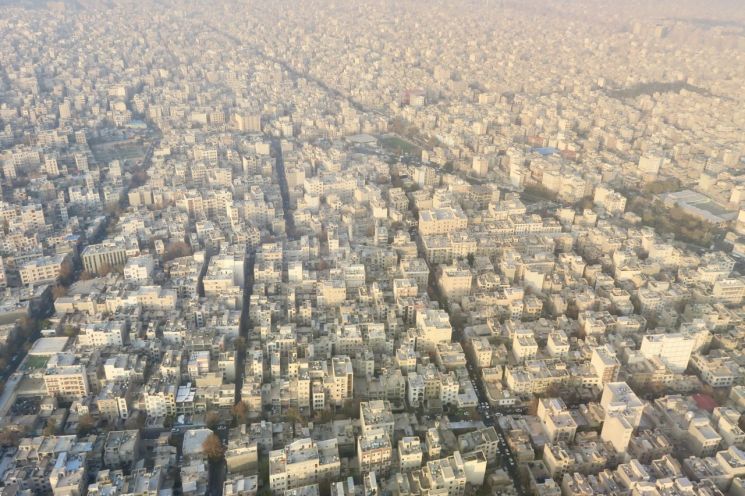
Iran has long suffered from chronic water shortages due to its arid climate. However, this crisis is even more serious because it is occurring in Tehran, a city with a population of 10 million. There are concerns that if water consumption in Tehran does not decrease, the city could face a complete water cutoff.
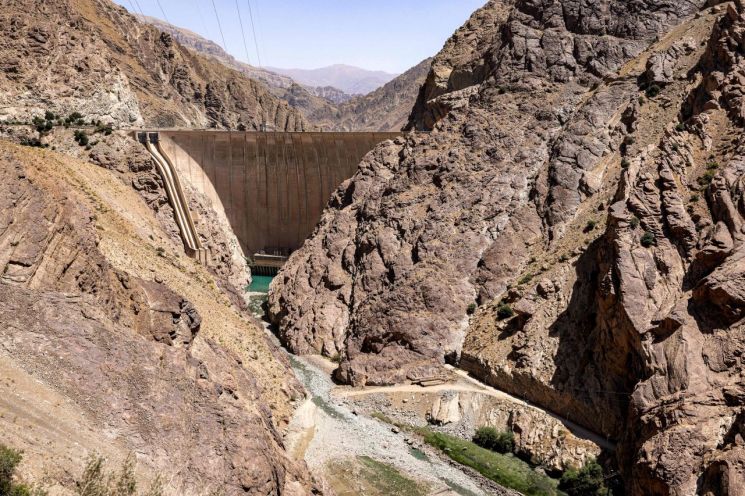 Iran's state media reported that water and electricity supplies across the country have been cut off due to a severe heatwave, and reservoir levels have dropped to their lowest in a century. AFP Yonhap News
Iranian President Masoud Pezeshkian stated at a cabinet meeting on July 29, "If we do not make an urgent decision today, we will face a situation in the future that cannot be resolved."
Both Iranian authorities and Tehran residents have begun efforts to conserve water. Authorities have reduced Tehran's water pressure to half its normal level, resulting in water usage restrictions for 80% of all households. CNN reported, "Residents living in high-rise apartments sometimes have no water at all," and added, "Those who are financially well-off are rushing to install storage tanks."
The Iranian government has also declared a one-day public holiday in several regions nationwide, including Tehran, in order to reduce electricity and water consumption. The government is considering additional measures. Iranian government spokesperson Fatemeh Mohajerani said, "We are considering a week-long holiday so that Tehran residents can temporarily leave the city and reduce water usage."
Nevertheless, there remains a strong sense of crisis that the water shortage will persist. Kaveh Madani, director of the United Nations University Institute for Water, Environment and Health and former deputy head of Iran's Department of Environment, said, "Day Zero could arrive within a few weeks."

"This Water Crisis Is Due to the Government's Mismanagement"
The causes of the current water crisis are cited as a combination of decades of poor water management, a severe imbalance between supply and demand, and climate change. However, experts point to the government's mismanagement of water as the primary cause.
Amir Aghakouchak, professor of civil and environmental engineering at UC Irvine, told CNN, "Excessive groundwater extraction, inefficient agriculture, and neglected urban water consumption?these human activities have driven the region into a state of 'water bankruptcy'." Director Madani also emphasized, "This is not just a crisis, but a state of 'water bankruptcy' with irreversible damage."
In fact, in Tehran, some areas have subsided by more than 25 centimeters per year due to excessive groundwater extraction to accommodate the rapidly growing population. Professor Aghakouchak said, "Tehran is suffering from long-term and structural imbalances, which threaten the very foundation of water security for its citizens."
Iranian Minister of Energy Abbas Aliabadi told Mehr News Agency, "Out of Iran's 31 provinces, only one is not experiencing water shortages." When asked about the possibility of water cutoffs, he said, "I hope it does not come to that."
Only 'Band-Aid' Responses Without Fundamental Solutions... Experts Express Concern
Experts have pointed out that short-term measures cannot provide a fundamental solution to the water crisis. Director Madani noted that authorities are responding with 'band-aid' measures such as new water transfer projects. He said that while technical solutions such as seawater desalination and wastewater reuse are necessary, they only temporarily alleviate symptoms without addressing the root causes.
He argued that the entire economic structure should be reformed to reduce water-intensive agriculture, which accounts for about 90% of total water use, and shift toward industries and services that require less water. However, he noted that this would not only be economically and politically painful, but also unlikely to be realized given the current government system and the sanctions imposed on Iran.
Professor Aghakouchak said, "Iran's water crisis goes beyond environmental and technical issues; it is a political and structural problem," adding, "The water crisis cannot be separated from the crisis of governance." However, Director Madani said, "If Tehran can hold out until the end of September when the autumn rains arrive, there is hope to avoid 'Day Zero.'"
© The Asia Business Daily(www.asiae.co.kr). All rights reserved.














