6 Out of 10 Say "Coffee Is a Daily Routine"
Caffeine Intake Moderated for Health... Demand for Decaf on the Rise
As coffee has become an essential item for boosting energy in daily life, there is a clear trend of people trying to control their caffeine intake alongside growing interest in health. In addition, interest in and experience with decaffeinated coffee, or "decaf," is also expanding.
According to a "Coffee Consumption and Decaffeinated Coffee U&A Survey" conducted by market research firm Embrain Trend Monitor on August 3, 2025, targeting 1,200 men and women aged 13 to 69 nationwide, 58.9% of all respondents said that "coffee is close to a daily routine." More than half (53.0%) agreed that "the time spent drinking coffee is an important healing time in daily life," and a significant portion (46.3%) said, "I drink coffee to recharge my energy with caffeine," confirming that coffee is considered an essential item for gaining vitality in everyday life.
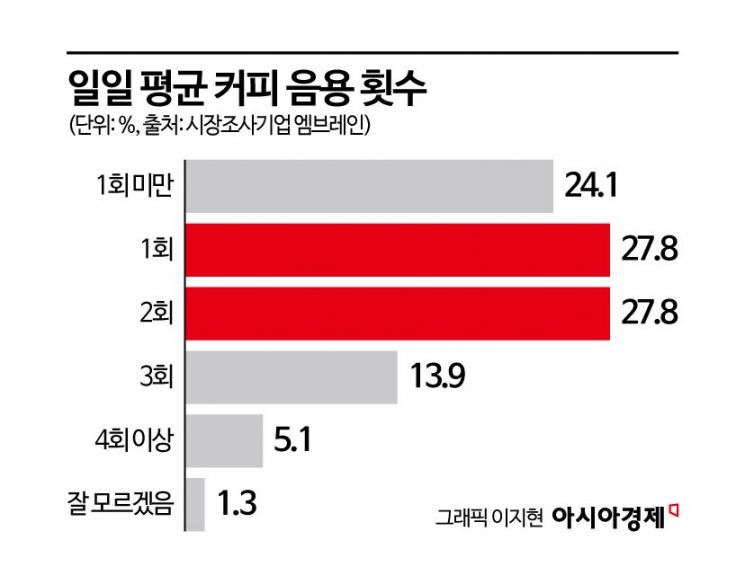
However, it is also noteworthy that there is a simultaneous tendency to refrain from drinking coffee despite its high popularity. Nearly half (49.2%) of respondents agreed that "for health reasons, it is better to drink as little coffee as possible," with this trend being particularly pronounced among younger age groups. These generations showed a stronger tendency to consciously reduce coffee consumption compared to other age groups, and a relatively high number reported that their coffee drinking frequency had decreased compared to before. This reflects the characteristics of younger people who prioritize health and are moving to reduce unnecessary caffeine intake.
As a result of this trend, preference for decaffeinated coffee is increasing. Decaf coffee has become increasingly popular, with 73.6% of all respondents?about 7 out of 10?having tried it. In particular, the experience rate of drinking decaf coffee among people in their teens, twenties, and thirties stood out compared to other age groups (teens 46.5%, twenties 83.5%, thirties 86.0%, forties 78.0%, fifties 72.5%, sixties 75.5%). For these generations, drinking decaf coffee is seen as part of a healthy lifestyle, suggesting that they are likely to become a major customer base for decaf coffee in the future.
Most people usually drink decaf coffee at coffee shops (74.7%, multiple responses), and the proportion of consumption during late evening hours is higher compared to regular coffee. Many respondents said they choose decaf coffee when visiting cafes late at night (51.1% agreement) or when they have already had coffee earlier (47.1%), indicating that decaf coffee is often chosen as an alternative in specific situations.
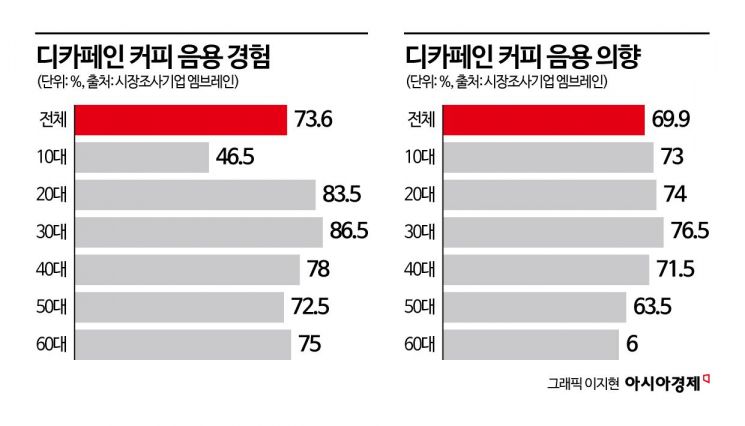
In addition, general consumers highly value the fact that they can enjoy coffee without the burden of caffeine. A significant portion of respondents agreed that decaf coffee is good because it can be enjoyed even late at night without worry (67.6%) and that it is good to be able to enjoy the taste of coffee while reducing caffeine intake (62.5%). Even those who are not sensitive to caffeine recognized that "decaf coffee" can be a good option (48.4%).
In particular, 78.8% of respondents said that decaf coffee would be a good alternative for people sensitive to caffeine, confirming that it is becoming a reasonable alternative for those looking to reduce their caffeine intake. As a result, 7 out of 10 respondents said they intend to drink decaf coffee in the future, and 62.4% predicted that the decaf coffee market will continue to grow.
Of course, on the other hand, many expressed concerns that decaf coffee may not be completely caffeine-free (66.8% agreement) and that decaf coffee is often more expensive than regular coffee (59.7%). For decaf coffee to become firmly established in the market, it will be important to provide reliable information and to set an acceptable and appropriate price range.
© The Asia Business Daily(www.asiae.co.kr). All rights reserved.














