Jeonse and Monthly Rent Transactions Fall to 40,000 Range
Monthly Rent Transactions Drop Below 20,000
Moving Demand Turns Cautious Due to Loan Regulations

One month has passed since the implementation of the 6·27 loan regulations, and the number of apartment jeonse and monthly rent transactions in the Seoul metropolitan area plummeted to just over 40,000 in July. Typically, when sales transactions decrease, jeonse and monthly rent transactions tend to increase. However, last month, both sales and rental transactions declined simultaneously. The intensified loan regulations have caused greater confusion in the market, leading tenants to postpone their moving decisions. As unusual trends emerge in the jeonse and monthly rent market, which is at the forefront of residential stability, the concerns of ordinary citizens have deepened.
Monthly rent transactions decrease by 10,000... Jeonse transactions down 26% compared to previous month
On August 4, according to an analysis by Zigbang of the Ministry of Land, Infrastructure and Transport's actual transaction price disclosure system, the number of new and renewed jeonse and monthly rent transactions for apartments in the Seoul metropolitan area (Seoul, Gyeonggi, Incheon) this month was 22,965 and 17,157, respectively. This is the lowest monthly transaction volume recorded since 2023.

Last month was the first time in the past three years that the number of jeonse and monthly rent transactions fell below 50,000. Since February and March 2023, when the monthly transaction volume in the Seoul metropolitan area exceeded 70,000, the figure has remained between 50,000 and 60,000 until now.
Among these, monthly rent transactions fell into the 10,000 range for the first time in three years. The number of jeonse transactions also dropped by 26.3% compared to the previous month (31,144 cases). Over the past three years, the number of jeonse transactions in the metropolitan area has consistently remained around 30,000, and monthly rent transactions around 20,000.
Even considering that July is the off-season for the rental market, this is an unusual decline. Typically, July sees less moving demand due to the rainy season and summer vacations. Last year, the number of jeonse and monthly rent transactions remained at about 60,000 from the beginning of the year through May, then sharply dropped to 57,101 in June and 57,277 in July. However, last month’s figure (40,122) is significantly lower even compared to last year.
Tenant demand shifts to wait-and-see amid market confusion... Some say monthly rent contraction is temporary
The impact of loan regulations has led to a contraction in the jeonse and monthly rent market. Real estate agencies have seen a sharp decline in customers searching for jeonse and monthly rent properties. The reduction of the jeonse loan guarantee ratio in the metropolitan area from 90% to 80% has made it more difficult to obtain loans, which is believed to have contributed to this trend. The limit for the government-backed Bogeumjari jeonse loan has also been reduced by at least 40 to 60 million won depending on the category (youth, newlyweds, newborns), resulting in more ordinary citizens giving up on moving. With the government announcing additional regulations, more people have adopted a wait-and-see approach.
The head of a real estate agency in Chang-dong, Gangbuk-gu, said, "The Chang-dong area is relatively affordable for jeonse, so many newlyweds look for homes here. Even a small reduction in loans has a big impact. Since the loan regulations, there have been almost no customers looking for jeonse properties." The head of another real estate agency near Haengdang-dong, Seongdong-gu, also said, "Not only sales but also jeonse and monthly rent inquiries have dropped sharply. The market is so chaotic that many customers are waiting for things to calm down. This year, the entire market feels particularly frozen."
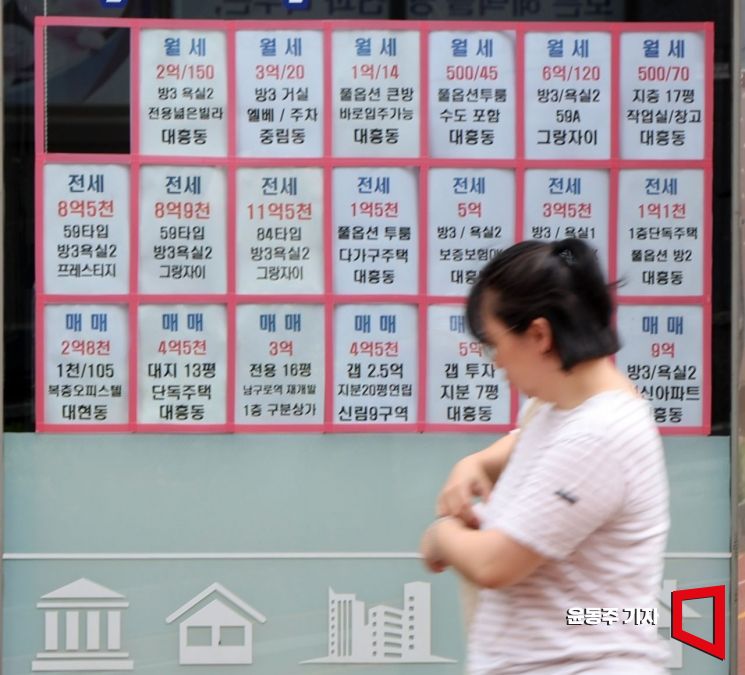
Experts analyze that the loan regulations have brought a temporary freeze to the jeonse and monthly rent market. Yoon Sumin, a real estate specialist at NH Nonghyup Bank, said, "Overall, transactions in both the sales and rental markets appear to be stalled. Since sales, jeonse, and monthly rent are organically linked, the sharp drop in sales may have led to a simultaneous decline in transaction volume." Park Wongap, chief researcher at KB Kookmin Bank, also interpreted, "As loan regulations caused a sharp drop in sales and even jeonse was contracted, the movement of people looking to move homes has temporarily stopped."
Along with loan regulations, the implementation of the third-stage stress DSR (Debt Service Ratio) from last month has also had an impact, as demand rushed to the market in the first half of the year to avoid the new rules. As DSR regulations are strengthened, loan limits are expected to decrease significantly, leading to a surge in last-minute demand before July. According to actual transaction data from the Ministry of Land, Infrastructure and Transport, the total number of apartment sales transactions in Seoul in the first half of this year was 42,584, a 53% increase compared to the first half of last year (27,744). Kim Eunsun, head of the Big Data Lab at Zigbang, explained, "The sharp increase in real estate sales transactions in the metropolitan area in the first half of the year partially affected the decrease in jeonse and monthly rent transactions, as some rental demand shifted to sales."
The decrease in jeonse and monthly rent transactions is not expected to continue in the long term. As loan regulations have effectively blocked gap investment (sales with jeonse), the supply of jeonse properties may sharply decrease. As a result, there are predictions that jeonse transactions will drop and demand will shift to the monthly rent market. Yang Jiyeong, a specialist at Premier Pathfinder, said, "As loan regulations have raised the bar for jeonse loans, we expect more tenants to turn to guaranteed monthly rent contracts in the future."
© The Asia Business Daily(www.asiae.co.kr). All rights reserved.














