Core PCE Price Index Rises 2.8% Year-on-Year, Surpassing Forecasts
Real Personal Consumption Remains Stagnant
Inflation Improvement Stalls... 61% Expect No Rate Cut in September
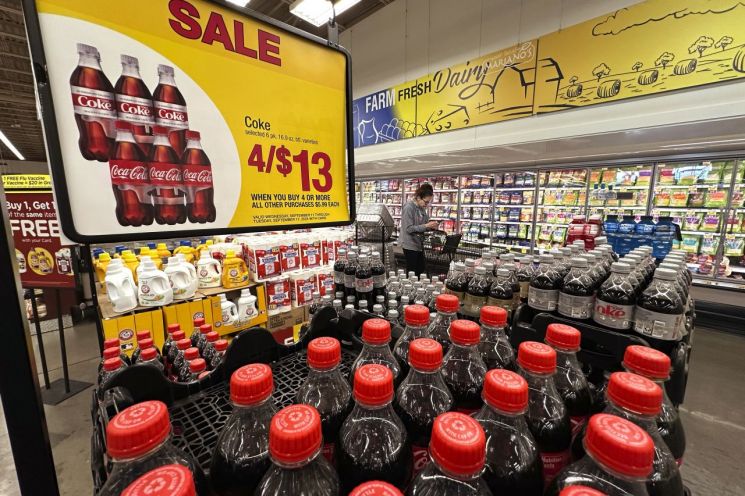
Last month, the United States' Personal Consumption Expenditures (PCE) inflation rate exceeded market expectations. Analysts attribute the accelerated rise in prices to President Donald Trump's tariff hike policies, which have led to increased product prices.
On the 31st (local time), the US Department of Commerce announced that the PCE price index for June rose by 2.6% year-on-year. This figure surpasses the market forecast of 2.4% and marks a greater increase than in May, when the rate was 2.5%.
On a month-on-month basis, prices rose by 0.3%, higher than May's 0.2% increase, and in line with market expectations.
The core PCE price index, which excludes the highly volatile categories of energy and food, rose by 2.8% year-on-year, exceeding the market expectation of 2.7%. This is the same level as in May. Compared to the previous month, the core index increased by 0.3%, matching expectations and showing a larger rise than May's 0.2%. The Federal Reserve closely monitors the core PCE price index as a key indicator of inflation.
The main factors behind June's price increases include higher prices for goods such as furniture, sporting goods, and clothing. Analysts point out that the rise in import prices due to tariff hikes is being partially passed on to consumers. The June Consumer Price Index (CPI) also confirmed price increases in items with high import dependence, such as toys and home appliances.
While the pace of price increases has accelerated, consumer spending has remained stagnant, showing a diverging trend.
Real personal consumption, adjusted for inflation, increased by 0.1% compared to the previous month. Although this is an improvement from May's 0.2% decrease, it still indicates near-stagnation.
The fact that inflation has stopped slowing suggests that upward pressure on prices remains. At the same time, stagnant consumer spending could be interpreted as a sign of economic slowdown.
This data was released one day after the US Federal Reserve decided to keep its benchmark interest rate unchanged at 4.25~4.5% per year. At a press conference following the Federal Open Market Committee (FOMC) meeting the previous day, Fed Chair Jerome Powell commented on the inflation outlook related to tariff policies, stating, "The impact of tariffs is beginning to be more clearly reflected in the prices of certain goods," and added, "We will have to wait and see how this affects overall economic activity and prices."
In the market, expectations for a rate cut are rapidly diminishing. According to the CME FedWatch tool at the Chicago Mercantile Exchange, the probability of rates remaining unchanged in September stands at 61% as of today. This probability rose from 39.2% a week ago to 52.4% the previous day, and increased again following the release of the PCE inflation data.
© The Asia Business Daily(www.asiae.co.kr). All rights reserved.
![Clutching a Stolen Dior Bag, Saying "I Hate Being Poor but Real"... The Grotesque Con of a "Human Knockoff" [Slate]](https://cwcontent.asiae.co.kr/asiaresize/183/2026021902243444107_1771435474.jpg)
















