From the Beginning, U.S. Pressed for Further Opening of Agricultural and Livestock Markets
Korea Maintains Principle: "Beef and Rice Are the Red Line"
Trade Chief: "Past Mad Cow Disease Candlelight Protests and Recent Opposition from Livestock Industry Influenced Negotiations"
South Korea has reached an agreement with the United States to lower the 25% reciprocal tariff, which the U.S. was set to impose on South Korea starting August 1, to 15%. There was no additional market opening for agricultural and livestock products such as rice and beef, which the U.S. had requested.
On July 31, Yeo Han-koo, Head of Trade Negotiations at the Ministry of Trade, Industry and Energy, stated during an online briefing on the "Results of the Korea-U.S. Tariff Negotiations," "There is no additional market opening for agricultural products in the agreement announced today between Korea and the United States." He added, "We persistently explained and persuaded the U.S. side that Korean agricultural products are highly sensitive, citing past events such as the 2008 mad cow disease candlelight protests, and we managed to defend that position."
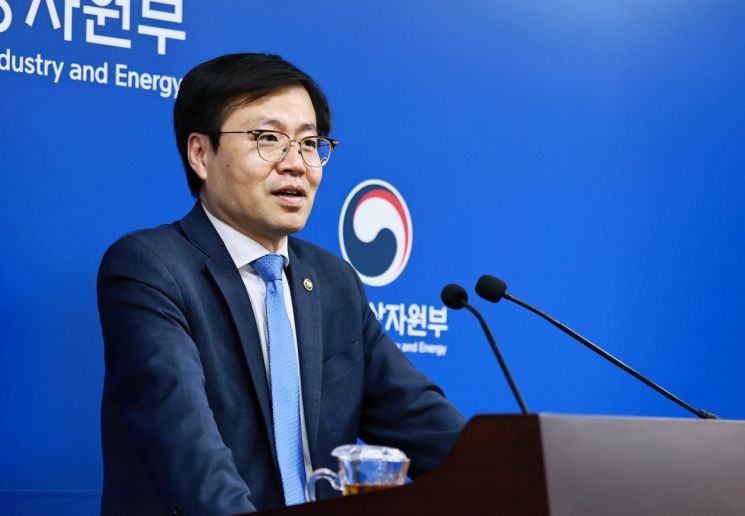 Hyeon Gu Yeo, Director General for Trade Negotiations, Ministry of Trade, Industry and Energy. (File photo)
From the early stages of the negotiations, the U.S. side demanded additional market opening for agricultural products from South Korea. However, the South Korean government emphasized that rice and beef were non-negotiable items. Yeo stated, "From the outset, the Korean government has made it clear that beef and rice are so-called 'red line' items that cannot be negotiated." He continued, "Nevertheless, the U.S. side repeatedly pressured for beef market opening, arguing that countries such as Japan, China, and Taiwan are also importing beef from cattle over 30 months old."
In response, the South Korean government highlighted that, under the Korea-U.S. Free Trade Agreement (FTA), 99.7% of the Korean market is already open, and U.S. agricultural products are already being imported into Korea. In fact, U.S. beef currently holds the top market share in Korea's beef import market, and from the U.S. perspective, Korea is the largest importer of U.S. beef in the world.
Despite these explanations from the Korean side, the U.S. continued to demand further opening of the beef market. At this point, Yeo began carrying photos of the 2008 mad cow disease candlelight protests to show to the U.S. side. Yeo explained, "At some point, I started carrying aerial photos of the candlelight protest at Gwanghwamun, where about one million people had gathered, and showed them to the U.S. Trade Representative and the U.S. Secretary of Commerce to appeal emotionally and persuade them." He added, "Recently, I have also actively explained and persuaded the U.S. side about the strong opposition from Korea's agricultural and livestock industry to lifting age restrictions on beef imports, as well as the political and industrial sensitivity of Korean agricultural products. I believe these efforts were effective in defending our position."
Yeo expressed concern that pressure from the U.S. to improve non-tariff barriers would continue in the future. He said, "The U.S. will likely keep raising tariffs in its own market while pressuring other countries to lower theirs, and will continue to demand improvements and exert pressure regarding non-tariff barriers that could contribute to the U.S. trade deficit." He concluded, "Although this round of negotiations has concluded, rather than being complacent, we must prepare fundamental countermeasures such as improving systems related to non-tariff barriers and strengthening our competitiveness."
© The Asia Business Daily(www.asiae.co.kr). All rights reserved.
![Clutching a Stolen Dior Bag, Saying "I Hate Being Poor but Real"... The Grotesque Con of a "Human Knockoff" [Slate]](https://cwcontent.asiae.co.kr/asiaresize/183/2026021902243444107_1771435474.jpg)











