Malaysian Game Market to Grow at an Average Annual Rate of 7.55%
'Digital Malaysia' Policy Drives Foreign Investment
"Comprehensive Localization Needed, Including Genre Diversification and Technology"
There are suggestions that Korean companies should target the Malaysian game market, which is showing leading growth in Southeast Asia, by employing niche strategies and comprehensive localization approaches.
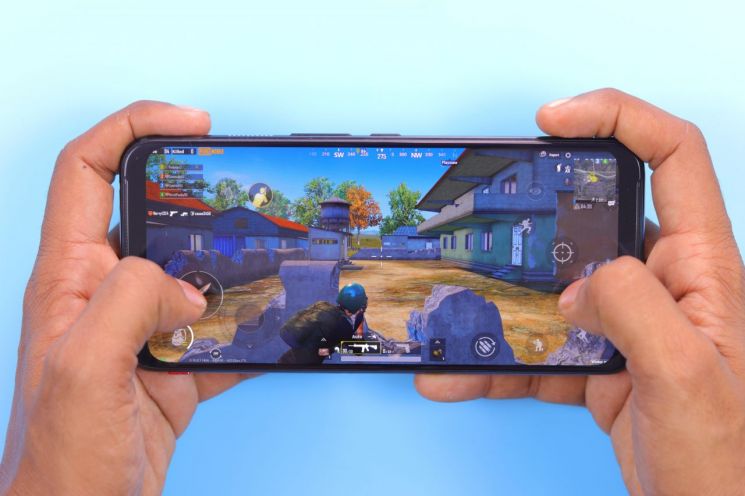
On July 31, the Korea Creative Content Agency stated in its recently published report, "Trends in the Malaysian Game Market and Strategies for Korean Companies’ Entry," that genres in which Korean developers have strengths?such as story-driven role-playing games (RPGs) and collection-based RPGs?are advantageous for entering the Malaysian market.
In particular, the report pointed out that there are no locally developed intellectual properties (IP) among the top-grossing mobile games in Malaysia. This is attributed to a lack of experience in areas such as publishing, which limits commercialization. Therefore, by combining the proven user acquisition, live operations, and marketing expertise of Korean publishers with the cultural understanding of local developers, it is believed that hit titles can be created.
The report also emphasized the need to lower entry barriers through a comprehensive localization strategy. Malaysia’s multi-ethnic, multilingual, and multireligious structure requires deep localization that goes beyond simple text translation. The Agency stated, "It is necessary to naturally integrate local myths and historical elements into game stories to foster emotional resonance," and added, "Expressions related to religion or ethnicity are particularly sensitive and require close collaboration with local cultural experts."
Furthermore, it stressed that "technical localization is also important," noting that the high proportion of low-spec Android devices makes optimization essential. For PC and console games, accessibility should be enhanced through mobile integration and cross-platform design. Regarding payments, it advised that integration with local payment services such as GrabPay should be completed before game launch to minimize initial churn rates.
The Malaysian game market is expected to grow at an average annual rate of 7.55% until 2027, reaching $870 million (approximately 1.1 trillion KRW). This outlook is based on the Malaysian government's "Digital Malaysia" policy, which aims to establish the country as a leading hub for digital content production in Southeast Asia by 2030.
Amid active local IP development, foreign investment in the digital content industry is also rapidly increasing. According to the report, foreign investment grew from 550 million ringgit (about 150 billion KRW) in 2022 to 1.6 billion ringgit (about 439.9 billion KRW) in 2023. In fact, global companies such as Xsolla and ESL Gaming have begun establishing local bases.
The Agency stated, "Malaysia is driving qualitative change in the Southeast Asian game industry," adding, "Mobile games account for 70% of total revenue, while the PC and console game markets are also growing rapidly and drawing attention."
It further explained, "China has signed a memorandum of understanding (MOU) with Malaysia to establish a 'Gaming·Digital Content Fund,' and Sony Interactive Entertainment has set up a technical support studio in Malaysia?the only one in Southeast Asia. This symbolically demonstrates Malaysia’s evolution as a hub for high-quality game development."
© The Asia Business Daily(www.asiae.co.kr). All rights reserved.

















