V-Shaped Rebound from -0.5% in Q1
The U.S. economy rebounded in the second quarter of this year, recording a 3% growth rate that exceeded expectations. The main reasons for this rebound were a sharp decline in corporate imports and a recovery in consumer sentiment. Despite aggressive tariff policies, the economy escaped negative growth in the first quarter and grew at a faster-than-expected pace.
According to the U.S. Department of Commerce on July 30 (local time), the advance estimate for real Gross Domestic Product (GDP) in the second quarter showed an annualized growth rate of 3.0% compared to the previous quarter. This is a significant improvement from the 0.5% contraction in the first quarter and surpasses the market forecast of 2.3% compiled by Dow Jones. It also far exceeds the estimated potential growth rate of the U.S., which is in the high 1% range.
The United States releases GDP growth rates in three stages, and this announcement is the first, known as the advance estimate. Subsequent releases will include the preliminary and final estimates in order.
The main drivers of the U.S. economic recovery in the second quarter were the decrease in imports and the improvement in consumer sentiment.
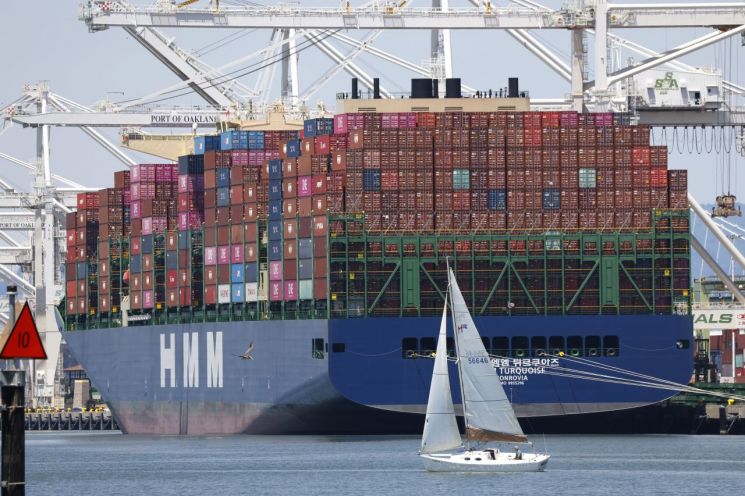
In particular, the decrease in imports had a significant impact on the rise in the growth rate. While exports fell by 1.8% in the second quarter, imports plummeted by 30.3%. As a result, the trade balance improved, and the contribution of net exports to GDP reached 5 percentage points, boosting the overall growth rate.
The situation was different in the first quarter. At that time, U.S. companies moved to secure inventories ahead of the implementation of tariffs, resulting in a 37.9% surge in imports and a widening trade deficit. However, in early April, the U.S. implemented a 10% base tariff globally, which reduced corporate demand for inventory accumulation. Combined with the base effect from the first quarter, imports sharply declined and the trade balance improved in the second quarter.
The consumption sector also showed signs of recovery. Real consumer spending, which accounts for about two-thirds of U.S. GDP, increased by 1.4%, a significant rise from the 0.5% growth in the first quarter.
Inflationary pressures eased somewhat. The core Personal Consumption Expenditures (PCE) price index, the measure most closely watched by the Federal Reserve, rose by 2.5%, a slower pace than the 3.5% increase in the first quarter. This matched market expectations of 2.5%. The core PCE price index, which excludes food and energy, is used to assess underlying inflation trends.
This robust growth in the second quarter is noteworthy because it was achieved despite President Trump's tariff policies. Since announcing reciprocal tariffs in early April, President Trump has reached trade agreements with major countries such as Japan and the European Union (EU), and has entered a "tariff truce" with China, avoiding a full-scale trade conflict. As a result, contrary to initial market concerns, the economic impact of the tariff policies has so far remained limited.
© The Asia Business Daily(www.asiae.co.kr). All rights reserved.

















