"Complete Ban on Social Media for Those Under 16"
YouTube, Initially Excluded, Now Included
Regulations Expected to Become Even Stricter
The Australian government has decided to include YouTube in its upcoming policy to completely ban social media use for those under the age of 16, scheduled to be implemented later this year. By expanding the scope of regulation to cover YouTube, which was initially excluded, social media usage restrictions are expected to become even stricter.
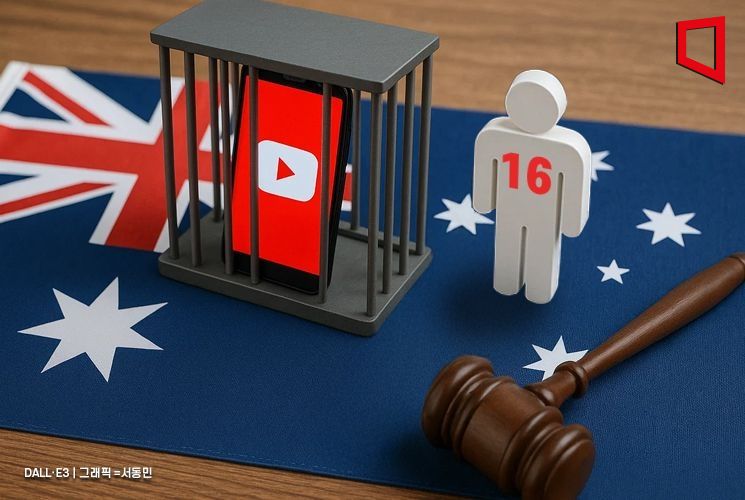
On July 30 (local time), Australian Prime Minister Anthony Albanese announced at a press conference, "Teenagers under the age of 16 will not be able to have YouTube accounts," adding, "They will also be prohibited from having accounts on other platforms such as Facebook, Instagram, Snapchat, TikTok, and X (formerly Twitter)."
He stated, "We know that social media is causing harm to society," and continued, "This (ban) is not the only solution, and we know that greater efforts are needed. However, this will bring about change."
He also added that, just as restrictions on alcohol use by minors are not perfectly enforced, social media age limits may also be imperfectly implemented, but it is still the right decision. As a result, teenagers under the age of 16 will not be able to create their own accounts on social media, including YouTube.
Additionally, social media companies are required to take "reasonable measures" to block access by those under 16. If they fail to do so, they may face fines of up to 49.5 million Australian dollars (approximately 44.5 billion won).
Initially, when the bill containing these provisions passed parliament in November last year, the Australian government decided to exclude YouTube from the ban, citing its potential use for educational purposes.
However, controversy grew as other social media companies, including Meta (which operates Facebook) and TikTok, argued that YouTube should not be exempted.
In particular, last month, when the internet regulatory authorities expressed the opinion that YouTube should also be included in the scope of regulation, the Australian government changed its stance.
On this day, YouTube released a statement asserting that it is "a video-sharing platform with free, high-quality content" and "not a social media platform," and described the government’s announcement as a sudden shift in position.
On the other hand, Adam Marrie, Chief Information Security Officer (CISO) of the cybersecurity company Arctic Wolf, told Reuters that "the Australian government's regulation of YouTube is an important measure to protect children from the unchecked power of Big Tech (large information technology companies)."
He also added that artificial intelligence (AI) is accelerating the spread of misinformation on social media platforms like YouTube.
However, AFP reported that some experts are concerned that, due to the lack of detailed information on specific regulatory methods in the law, it may become a symbolic law that is impossible to enforce.
© The Asia Business Daily(www.asiae.co.kr). All rights reserved.

















