A Next-Generation Hydrogel That Combines High Strength and Conductivity
Enabling Precise Biosignal Detection and Eco-Friendly Energy Generation
A next-generation "all-purpose hydrogel" that is highly sensitive to electrical signals, stretches as well as human skin, and even generates electricity on its own when immersed in seawater, has been developed by a domestic research team.
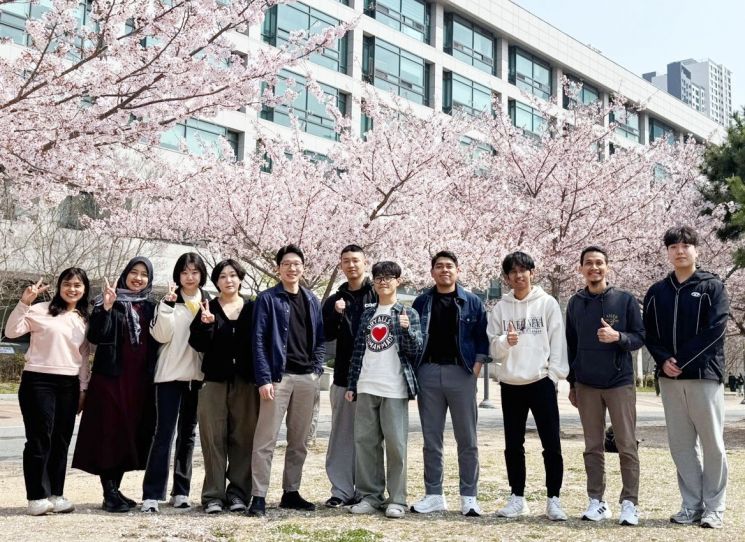
The research team led by Professor Kim Yonghyun (Department of Display Semiconductor Engineering) at Pukyong National University combined xanthan gum, a naturally derived substance, with the biocompatible polymer polyvinyl alcohol (PVA) to develop a high-performance hydrogel that simultaneously maximizes both mechanical strength and electrical conductivity.
The core of this study is the resolution of the "trade-off" between mechanical strength and ionic conductivity?a longstanding challenge in conventional hydrogel research?through an original "dual cross-linking and ionic treatment" process. The team reinforced the hydrogel’s framework by applying both physical and chemical bonds in the "dual cross-linking" step, and then further stabilized the structure and enhanced conductivity through the subsequent "ionic treatment" process.
As a result, the developed hydrogel is more than 20 times stronger than existing hydrogels and can stretch to over four times its original length (with an elongation rate of 410.2%), demonstrating outstanding mechanical properties. At the same time, it achieved a very high ionic conductivity (5.23 S/m). The hydrogel also maintained stability and reliability as a sensor, showing almost no signal distortion (hysteresis) even under repeated movement.
Based on these properties, the research team utilized the hydrogel as a wearable sensor by attaching it to the skin to detect various human movements. The sensor successfully measured not only large joint movements such as those of the fingers and knees but also subtle physiological signals such as pulse, respiration, and swallowing with high precision. In particular, analysis of the collected data using artificial intelligence (AI) demonstrated the ability to distinguish various motions with a high accuracy of 84.9%, proving its potential as a human-machine interface (HMI).
Furthermore, the team demonstrated that this hydrogel can also function as a "generator" for producing eco-friendly energy. This is based on the principle of "osmotic power," where ions move and generate electricity by utilizing the salinity gradient between the inside of the hydrogel and seawater. In practice, by connecting several hydrogels in series, the team succeeded in lighting an LED lamp, confirming its potential as a sustainable energy source.
The results of this study were published in the world-renowned international journal in the field of chemical engineering (IF=13.2) under the title "High-performance PVA/xanthan gum hydrogel via dual cross-linking with ionic treatment for wearable sensing and hydrovoltaic energy generation," recognizing its academic value.
Professor Kim Yonghyun, who led the research, stated, "The hydrogel we developed has overcome the limitations of existing materials by achieving both outstanding mechanical properties and high conductivity. We expect it will contribute to the advancement of various cutting-edge technologies, including next-generation wearable devices capable of precise biosignal detection and eco-friendly power generation devices utilizing marine energy."
© The Asia Business Daily(www.asiae.co.kr). All rights reserved.

















