A Surprise Visit to the US Just Two Days Before the Negotiation Deadline
Focus on Whether This Move Could Offer a Breakthrough in Tariff Reduction
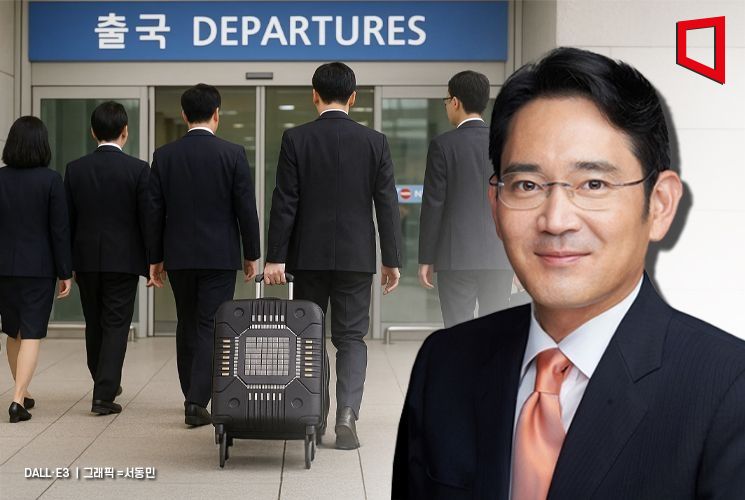
According to business sources on July 30, Chairman Lee Jae-yong, who departed the previous day, is expected to focus on coordinating key proposals and providing behind-the-scenes support related to the US negotiations while in Washington, D.C.
Originally, Lee was scheduled to attend the global CEO event “Google Camp” in Sicily, Italy, at the end of this month, but he reportedly changed his plans and chose to travel to the US instead. It is interpreted that Lee acted to support the government as the negotiation environment became increasingly urgent.
Upon arrival, Lee is expected to postpone inspections of Samsung’s US business operations and instead prioritize reviewing proposals that could be used in the negotiations with the US. Considering the Trump administration’s past efforts to attract large-scale investments from foreign companies into the US, Samsung’s willingness to invest is seen as a card that could attract substantial interest during the talks.
The scale of the investment could approach or even exceed the 61 trillion won announced by Hyundai Motor Group in March. Previously, Samsung Electronics revealed plans to build a foundry (semiconductor contract manufacturing) plant in Taylor, Texas, and to invest an additional $4.4 billion (about 6.4 trillion won) by 2030. Including the amounts already invested in the existing Austin plant and the construction of the Taylor plant, the total investment exceeds 54 trillion won. There is speculation within and outside the business community that the new investment plan linked to these negotiations could be even larger.
However, it is considered more likely that Samsung will convey an intention to invest above a certain level, rather than confirming an actual investment amount. Some analysts point out that even a stated intention to invest at a certain level, regardless of the actual amount, can send a strong message during the negotiations. The European Union (EU) also expressed an intention to invest $600 billion, led by the private sector, during its own tariff negotiations, but this remained at the “intention” stage rather than a concrete plan. There is a strong possibility that Samsung will communicate its investment intentions in a similar manner.
Some observers expect that Samsung’s US investment will be presented in alignment with the “Stargate Project,” which the Trump administration is actively pursuing. Stargate is an ambitious AI infrastructure project promoted by the Trump administration to make the US a global leader in artificial intelligence, but it has recently stalled and is at risk of collapse. There have also been reports of discord among participants in the project, such as OpenAI (US) and SoftBank (Japan). Samsung Electronics’ cooperation is considered crucial in this context. In fact, Samsung Electronics was approached for investment in Stargate as early as February. Sam Altman, CEO of OpenAI, and Masayoshi Son, Chairman of SoftBank Group, visited Samsung Electronics’ Seocho headquarters in Seoul to meet with Lee and discuss cooperation and investment in Stargate.
There is also speculation that the intention to invest at the group level, including Samsung Electronics, will be presented. Samsung SDI is considering establishing additional battery plants in the US to respond to the growing demand for energy storage systems (ESS). This aligns with the need to expand power grids for AI data centers and is drawing attention as it meets the requirements of the Inflation Reduction Act (IRA), which provides tax credits for domestic production in the US. Samsung Electro-Mechanics is reportedly preparing investment plans to localize high-value electronic materials such as semiconductor packaging substrates and ceramic components, thereby strengthening the advanced process supply chain. Samsung SDS and Samsung Research are also said to be considering establishing joint research centers in the US and expanding digital logistics infrastructure based on the use of AI semiconductors. An industry insider commented, “If the group’s leader visits in person to make behind-the-scenes proposals at the group level, it could serve as a negotiation card that supports both supply chain completion and job creation.” In addition, Samsung Electronics is expected to present plans to create jobs and strengthen ties with local communities through the establishment of factories and local subsidiaries. Through these efforts, Samsung Electronics could also meet the requirements to benefit from the US Inflation Reduction Act (IRA).
© The Asia Business Daily(www.asiae.co.kr). All rights reserved.
![Clutching a Stolen Dior Bag, Saying "I Hate Being Poor but Real"... The Grotesque Con of a "Human Knockoff" [Slate]](https://cwcontent.asiae.co.kr/asiaresize/183/2026021902243444107_1771435474.jpg)
















