The Plaza Accord That Artificially Depreciated the Dollar in 1985
Japan and Germany Suffered Economic Blows in the 1990s,
While the US Entered a Period of Exceptional Prosperity
Trump's Tariffs Likely to Further Strengthen 'American Exceptionalism'
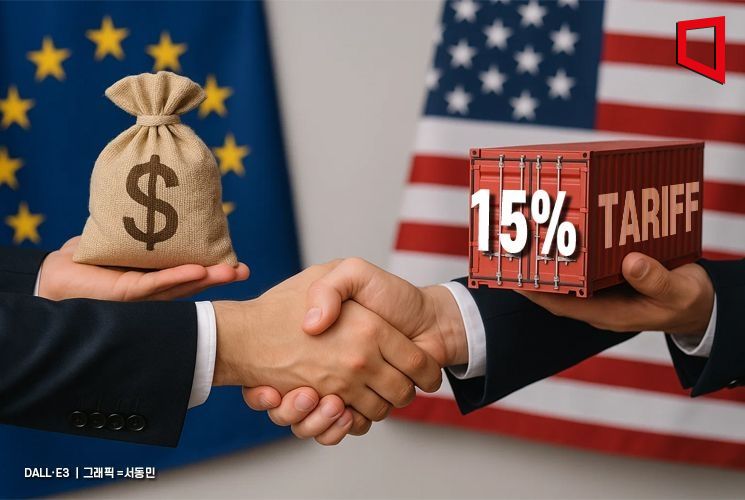
The tariff war is effectively coming to an end with a unilateral victory for the United States. This is why Trump's tariff policy is being referred to as a "second Plaza Accord." In September 1985, at the Plaza Hotel in New York, finance ministers from the five major Western powers (G5)?the United States, France, Germany, Japan, and the United Kingdom?agreed to artificially depreciate the value of the dollar (thereby raising the value of other currencies). As a result, manufacturing powerhouses Japan and Germany suffered significant blows.
On July 29, iM Securities analyzed in its report "Tariffs, the Second Plaza Accord, and the Aftermath?" that, just as Japan and Germany?manufacturing powerhouses?were pushed aside by the United States and the US strengthened its unipolar dominance after the original Plaza Accord, this latest tariff war will further reinforce "American exceptionalism" through another unilateral US victory.
The Plaza Accord That Led to 1990s 'Pax Americana'
Due to the Plaza Accord, the value of the Japanese yen and the German mark?currencies of the then G2 and manufacturing giants?rose sharply. An increase in currency value leads to weakened export competitiveness. The Japanese and German economies managed to endure for two to three years. However, Japan eventually entered its "lost 30 years" following the collapse of its asset bubble around 1990, while Germany, facing both reunification and the collapse of the Soviet system, lost its manufacturing leadership to the United States.
In contrast, the Plaza Accord laid the foundation for a US economic boom and marked the starting point for reclaiming economic hegemony. Although the US economy temporarily stagnated due to the Gulf War in 1990?91, it returned to a fiscal surplus and entered a period of long-term prosperity in the 1990s, fueled by an IT investment boom. The collapse of the Soviet Union and the US economic boom ushered in a unipolar era?politically and economically?known as Pax Americana. Park Sanghyun, an analyst at iM Securities, commented on the recent US tariff negotiations, stating, "The only difference is that tariffs, rather than the dollar, were used as a tool; but the United States demanded unilateral sacrifices from countries running large trade surpluses with it, which is why this can be seen as a second Plaza Accord."
The US Was the Only Winner... and Will Do Even Better
At the time of the original Plaza Accord, the US economy was supported by other advanced nations through the indirect means of a weaker dollar. This time, however, advanced countries have given the US another gift: direct sacrifices through tariffs, along with expanded investment in the US and increased purchases of American products. In 1985, other advanced economies also had strong growth momentum, but today, only the US economy remains relatively robust. Park Sanghyun analyzed, "The exceptionalism of the US economy is likely to gain even more momentum with the conclusion of the tariff negotiations," and added, "As the global supply chain restructuring accelerates, a 'chicken game' among countries other than the US may intensify."
Changes are also expected in US interest rates and the dollar. iM Securities forecasts that US Treasury yields will "stabilize at lower levels." While a 15?20% tariff rate could increase inflationary pressure in the US, for now, the burden of higher tariffs will largely fall on companies exporting to the US. The Federal Reserve (Fed) also has less justification to delay rate cuts, as tariff-related uncertainties have eased. A sharp increase in tariff revenues could also improve the fiscal balance, putting further downward pressure on Treasury yields.
As for the dollar, a firm-to-strong trend is expected rather than further declines. Park Sanghyun stated, "While the reduction in uncertainty following the tariff agreement could strengthen global investors' appetite for risk assets, the fact that the US has achieved a unilateral victory in the tariff war could further reinforce the 'Buy USA' trend among global investors, which will support the dollar."
© The Asia Business Daily(www.asiae.co.kr). All rights reserved.












