A Contract Spanning 8 Years and 5 Months with a Global Major Corporation
The Largest Order Since the Division's Launch in 2017
Will the 2nm Foundry, a Critical Bet, Signal a Turnaround?
Samsung Electronics' foundry (semiconductor contract manufacturing) division has secured a major contract worth 22 trillion won from a global big tech company. Despite repeated setbacks in advanced process technology, the division has achieved its largest-ever success since its establishment in 2017, thanks to persistent efforts and enduring numerous challenges.
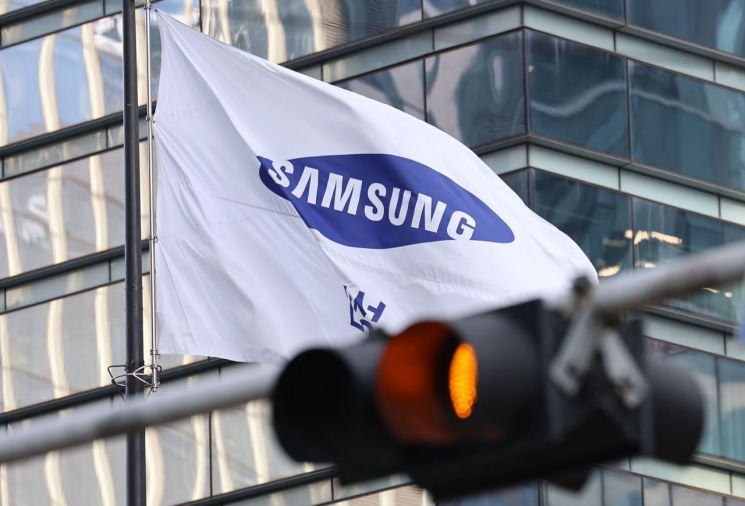
On July 28, Samsung Electronics announced that it had signed a semiconductor contract manufacturing supply agreement worth 22.7647 trillion won. This amount represents 7.6% of its consolidated sales of approximately 300 trillion won as of the end of last year. The contract partner is described as a "global major corporation," and the contract period runs from July 24 of this year to December 31, 2033. This is a long-term contract spanning a total of 8 years and 5 months.
Specific details have not been disclosed. Samsung Electronics explained that, at the request of the contract partner to protect trade secrets, the contract name, partner, and major terms will be made public on the business day following the contract's expiration date.
This contract is expected to serve as a "revival signal" for the foundry division, which has been stagnant for several years. In the first quarter of this year, Samsung Electronics recorded an operating profit of 6.6853 trillion won. The DX (Device Experience) division, which handles TVs, smartphones, and home appliances, posted an operating profit of 4.7 trillion won. However, the DS (Device Solutions) division, responsible for semiconductors, only achieved 1.1 trillion won. This is because, despite the memory division being profitable, the foundry and System LSI divisions have repeatedly suffered losses in the trillion-won range. Such underperformance has been cited as a reason why Samsung Electronics' overall operating profit fell short of market expectations.
The foundry division faced difficulties in mass-producing 3nm (1nm = one billionth of a meter) chips last year, but expectations are high for the 2nm process this year. Samsung Electronics has already mass-produced the "Exynos 2500" application processor (AP) for the Galaxy Z Flip7 using the 3nm process, and plans to produce the "Exynos 2600" for the Galaxy S26 using the 2nm process in the second half of the year.
It is also reported that Qualcomm is considering outsourcing its next-generation premium AP exclusively for Galaxy devices to Samsung Electronics' 2nm foundry process. This could mark a turning point for the foundry division, which recorded an operating loss of over 4 trillion won in the first half of the year.
The securities industry had predicted that, following the second quarter earnings announcement, Samsung Electronics' foundry division would secure new clients including global big tech companies and resolve its operating losses. Park Yuak, a researcher at Kiwoom Securities, stated in a report on July 21, "We expect Samsung Electronics' semiconductor division to regain its technological competitiveness," and added, "The mass production of image sensors (CIS) for next year's Apple iPhone 18 and securing new clients such as Tesla are expected to reduce operating losses."
Meanwhile, following the announcement of the large-scale supply contract, Samsung Electronics' stock price opened at 68,200 won on the day, up 3.4%.
© The Asia Business Daily(www.asiae.co.kr). All rights reserved.

















