LVMH's First-Half Net Profit Plunges 22%... Moncler Also Reports Decline
"Younger Generation Encounters Luxury Price Hikes on Social Media"
The luxury goods industry is faltering as it faces a shift in consumer patterns toward value-for-money purchases.
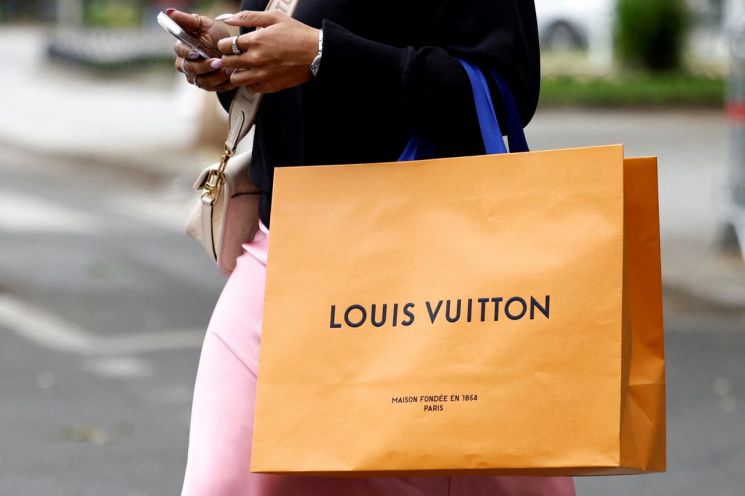
On the 27th (local time), the Wall Street Journal (WSJ) reported that while major luxury brands insist that their recent sales slump is only temporary, analysts on Wall Street believe it may reflect a long-term trend caused by structural changes in consumer preferences.
LVMH, the French conglomerate that owns multiple luxury brands including Louis Vuitton and Dior, announced in its earnings report last week that its sales for the first half of the year fell by 4% compared to the same period last year. During the same period, net profit dropped by as much as 22%. As a result, LVMH's share price on the French stock market had declined by 23% from the beginning of this year through the 25th.
Italian luxury brand Moncler also fueled concerns across the luxury industry when it announced in its earnings report on the 24th that its second-quarter sales had decreased by 1% compared to the same period last year.
Although Bernard Arnault, chairman of LVMH, described this year's poor performance as a temporary phenomenon, the WSJ reported that investors are worried something may be fundamentally wrong. Global investment bank UBS stated that investors have been waiting for two years for European luxury brands to recover, adding, "Investors are beginning to worry about the long-term appeal of the luxury industry."
The WSJ analyzed that while luxury brands aggressively raised handbag prices during the pandemic, consumers shifted their interest toward products offering better value for money. Jewelry brands, which did not raise prices as much over the past four years, have not suffered sales declines. For example, Richemont, which owns brands such as Cartier, saw its jewelry division's sales rise by 11% compared to the same period last year.
There is also analysis suggesting that luxury brands are struggling to attract younger consumers. The WSJ explained, "Stories about unfair practices in the supply chain or excessive pricing in the luxury industry have spread through social networking services (SNS), leading Generation Z to feel disillusioned with luxury goods."
Additionally, the WSJ noted that the global luxury goods industry has grown by 50% compared to ten years ago, but stated, "Even if new designers accurately understand the demands of younger customers, it will be difficult to maintain the same pace of growth as in the past."
© The Asia Business Daily(www.asiae.co.kr). All rights reserved.

![Clutching a Stolen Dior Bag, Saying "I Hate Being Poor but Real"... The Grotesque Con of a "Human Knockoff" [Slate]](https://cwcontent.asiae.co.kr/asiaresize/183/2026021902243444107_1771435474.jpg)














