Coupang, Kurly, and SSG.com Focus on Maintaining Freshness
Additional Cooling Agents and Strict Temperature Control for Refrigerated and Frozen Goods
Large Supermarkets Also Monitor Cold Chain Systems Frequently
Exchange and Refund Services Available for Customer Dissatisfaction
As the midday high temperature approaches 37 degrees Celsius, both online and offline retailers focusing on fresh food are putting extra effort into product storage and delivery. This is due to the expected increase in demand for ordering food to homes or vacation spots during the summer break and holiday season. In addition to competing for faster delivery, companies are strengthening safety management to prevent spoilage of refrigerated and frozen foods and to ensure products are delivered to consumers without any issues.
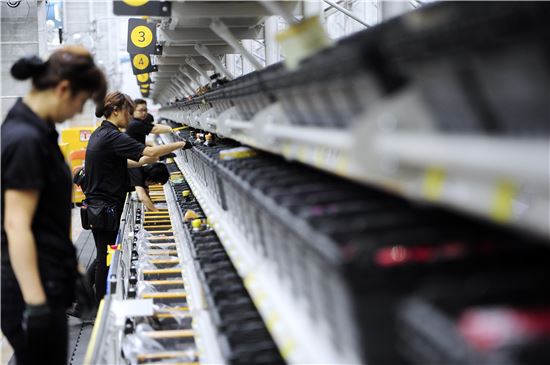 Employees at the Emart Mall cold storage picking area are packing product bundles to be delivered to customers into delivery boxes.
According to the industry on July 27, Coupang is adding approximately 10 to 20 percent more cooling agents (such as dry ice and ice packs) to its delivery items during the hot season in July and August to maintain product freshness. Additionally, the amount of refrigerant is adjusted based on delivery distance and time. Seventy percent of Coupang’s fresh products are delivered to consumers in reusable insulated bags called "Fresh Bags." The Coupang packaging team has set a long-term goal of raising the usage rate of Fresh Bags for fresh food to 80 percent and is continuously working on improvements.
Kurly utilizes its self-developed data collection and analysis system called "Data-fetching Dog (Demungi)" in its operations. Developed in 2015, Demungi has been continuously enhanced by minimizing prediction errors through experiments with multiple variable conditions, introducing new algorithms, and diversifying statistical analyses. According to the company, this has enabled Kurly to maintain a fresh food disposal rate of less than 1 percent.
For the delivery and packaging stages, a "full cold chain system" is in operation. This is a delivery system that maintains optimal temperature during the entire distribution process to prevent products from being exposed to room temperature, thereby ensuring maximum freshness. The temperature for room-temperature and refrigerated products is kept at 4 degrees Celsius, while frozen products are maintained at below minus 18 degrees Celsius. Refrigerated delivery trucks also maintain a temperature below 4 degrees Celsius.
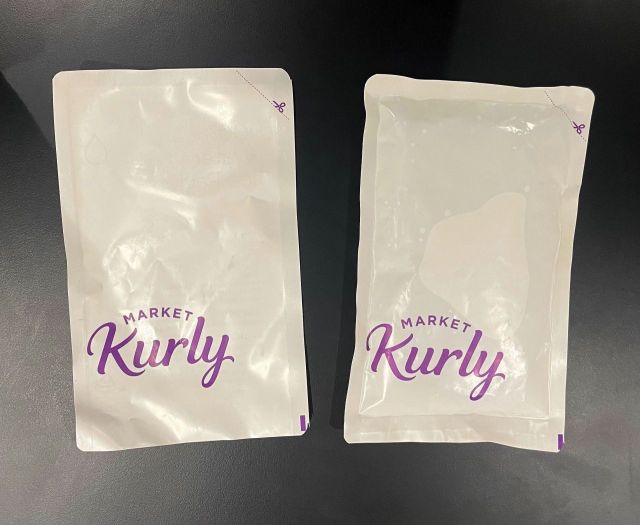
Another notable feature is that the company divides the year into six seasonal periods to set packaging standards. For the summer, it is further subdivided into summer, extreme summer, and tropical night periods. The quantity and increase guidelines for refrigerants are adjusted based on external temperatures to prevent thawing issues. For products vulnerable to cold damage, such as leafy vegetables, items are placed as far as possible from refrigerants, while for frozen products prone to thawing, refrigerants are arranged to ensure cold air is evenly distributed. Detailed guidelines are also in place for these processes.
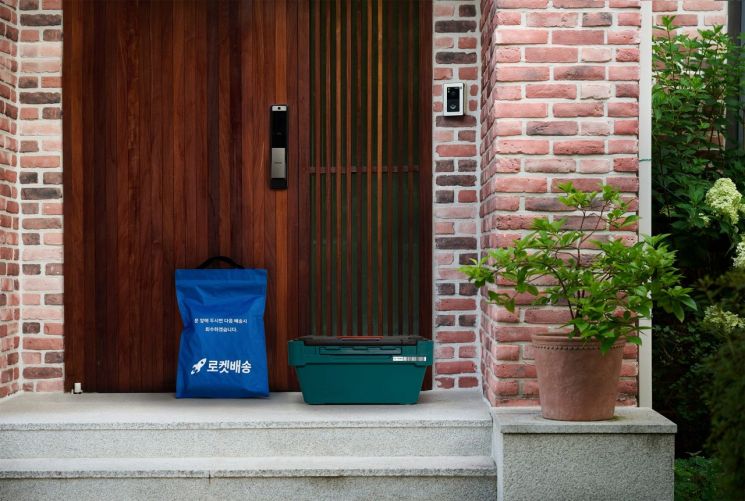 Coupang Logistics Service (CLS) has introduced the industry's first ultra-lightweight reusable 'Eco Bag' and 'New Fresh Bag'. Provided by Coupang
SSG.com manages product freshness by separating temperatures according to product type at its automated logistics center "NE.O." Storage areas for fresh and refrigerated products are kept below 8 degrees Celsius, and frozen product zones are maintained at subzero temperatures. Refrigerated and frozen products are delivered in dedicated cooling agents and separate pouches, and during the summer, additional cooling agents are used to counter rising external temperatures. For vegetables sensitive to freshness, such as leafy and stem vegetables, the operating period has been reduced by more than 30 percent since June 16 for safety reasons. An SSG.com representative stated, "If customers find that the freshness of delivered fresh food does not meet expectations, they can easily request a refund online through our freshness guarantee system."
Large supermarkets that operate both offline stores and delivery services also have systems in place for managing fresh food. Homeplus, for example, has a rule that ready-to-eat foods requiring high freshness, such as sushi, must be sold within 8 hours of preparation. Items like gimbap and sandwiches are also packed with ice packs and insulated bags to further strengthen the cold chain. Store pickers, who handle product selection, follow the routes indicated on the HPD (Homeplus Picking Device, which provides product location and freshness guidelines), picking processed foods (room temperature items) first according to the order on the screen, and then, for freshness, picking fresh foods and frozen foods in sequence starting one hour later. According to the company, pickers select products with the longest expiration dates and highest visual freshness among those received that day and carefully check packaging conditions.
All delivery processes from the logistics center to stores are maintained at optimal temperatures according to product characteristics. A cold chain monitoring system that connects temperature sensors inside logistics vehicles with GPS systems is also in place. This system measures and checks the internal temperature of incoming logistics vehicles, and refrigerated and frozen storage areas in workspaces, as well as refrigerated and frozen showcases at sales counters, are also checked frequently. Since 2018, Homeplus has also implemented the industry's first "Fresh A/S" policy, offering 100 percent exchange or refund if customers are not satisfied with the quality of fresh food.
Additionally, Lotte Mart increases the supply of ice packs by about three times compared to other seasons during the summer and strictly checks whether the cold chain is maintained for summer freshness management. In delivery operations, the internal temperature of vehicles is checked frequently at the time of product dispatch, and the number of temperature checks is increased. For items vulnerable to heat, such as ice cream, they are loaded at the very last stage to minimize exposure to room temperature.
© The Asia Business Daily(www.asiae.co.kr). All rights reserved.













