First Revision Since 1998
Aiming to Address Market Competition Regression
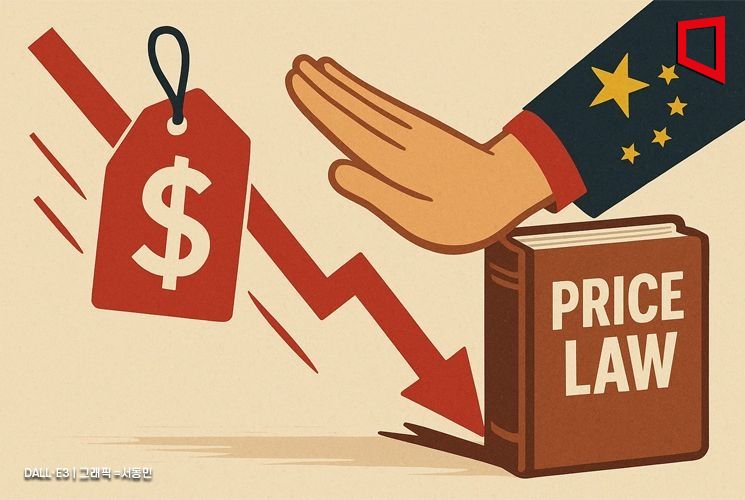
The Chinese authorities are set to comprehensively revise the price law system that has been in place for 27 years. The core objective is to curb excessive low-price competition and establish a new pricing structure that values the digital economy market.
According to state-run Xinhua News Agency and China Economic Net on July 25, the National Development and Reform Commission and the State Administration for Market Regulation released the "Draft Amendment to the Price Law of the People's Republic of China" the previous day and will be accepting public comments until August 23.
 Recently, Chinese delivery companies have been engaging in price competition by issuing a large number of coupons. A Chinese delivery worker is riding a scooter through Beijing. Photo to aid understanding of the article. Photo by EPA.
This amendment marks the first revision of the Price Law since its implementation in 1998, and aims to address the current regression in market competition. It seeks to clarify standards for unfair pricing practices and strengthen related legal responsibilities. Chinese media reported that special attention will be paid to prohibiting unfair acts such as selling large quantities of products at extremely low prices.
The National Development and Reform Commission explained that as the circumstances facing price management have changed, the prices of most goods and services are now determined by the market. It added, "With the constant emergence of new business types and models, the problem of disorderly low-price competition in some industries has become prominent, raising issues regarding price regulation and supervision."
The current Chinese Price Law does not adequately reflect the present economic situation, including the growth of the platform economy and the increase in service consumption. Some have pointed out that the regulations on low-price dumping are complicated and limited in scope to goods and business operators, making them impractical. Guo Liyan, Deputy Director of the Economic Research Institute at the China Macroeconomic Society, noted that such low-price dumping not only leads to decreased profits and losses for industries but also, in the long term, intensifies pressure on the stabilization of business operations and employment expansion.
The draft amendment prohibits selling below cost for reasons other than legitimate price reductions, such as for fresh products, seasonal goods, or surplus inventory, and bans actions intended to drive out competitors or monopolize the market. The amendment also addresses the shortcomings of the current law, which only regulates dumping in the goods sector, by expanding the scope of dumping regulations to include services and platforms. Additionally, it adjusts the criteria for identifying unfair pricing practices such as price collusion, price gouging, and price discrimination.
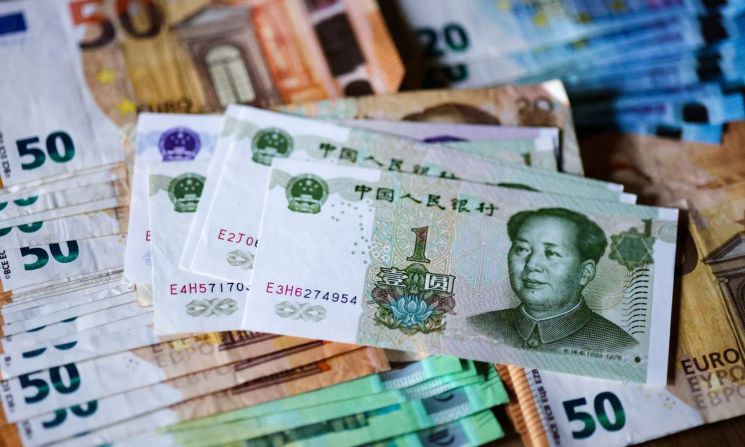
The amendment also adds to the list of unfair pricing practices the forced or bundled sale of goods or provision of services by public enterprises or industry associations using their influence or dominant position. It further bans unfair pricing practices using data, algorithms, or technology.
In addition, the amendment adjusts the penalties for business operators engaged in unfair pricing practices and increases fines for violations of accurate price labeling regulations. It also specifies legal responsibilities for refusing price-related investigations or submitting false information.
Recently, cutthroat competition has intensified across various sectors in China, including major industries such as electric vehicles, solar power, batteries, and food delivery platforms. In particular, Chinese delivery platforms such as Taobao, Ele.me, and Meituan have engaged in fierce competition by distributing large numbers of free delivery and free meal coupons. In response, the authorities have strengthened oversight, including summoning related companies for warnings.
Chinese experts have pointed out that the amendment, in conjunction with the Anti-Monopoly Law and the Anti-Unfair Competition Law, could comprehensively improve the market supervision system. They expect that this will help create a fair competitive environment while also achieving economic development.
© The Asia Business Daily(www.asiae.co.kr). All rights reserved.














